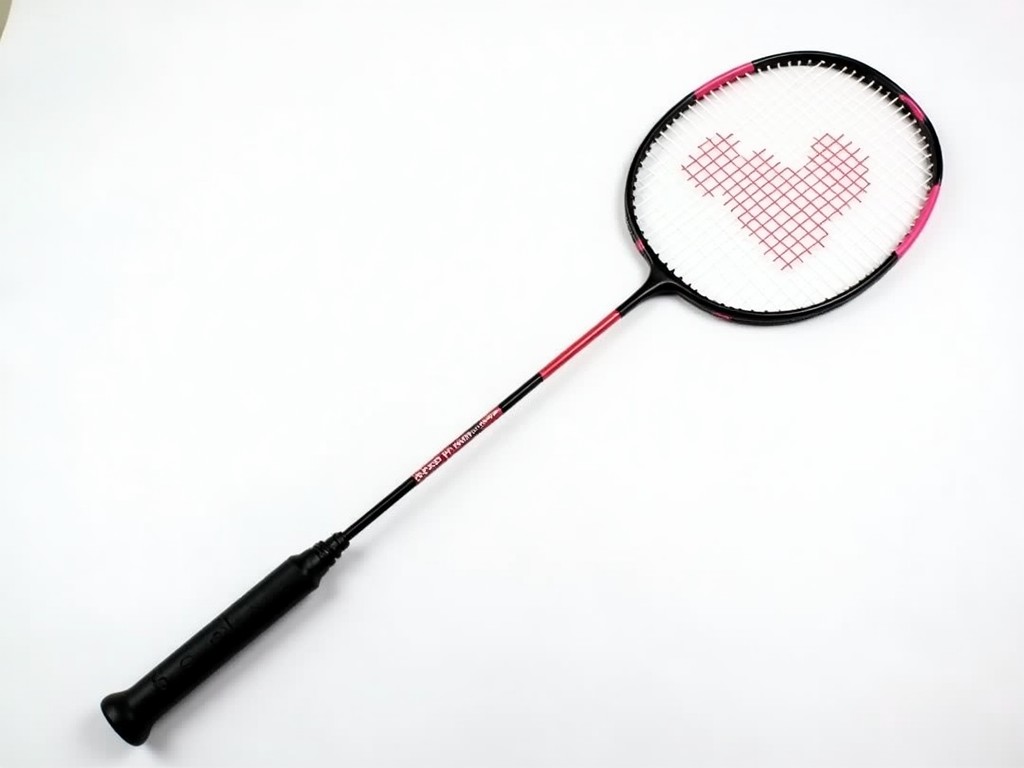
Oem High Lbs Graphite Badminton Racket Top Factory
An OEM high lbs graphite badminton racket is designed for players who require string tensions above 30 lbs, delivering greater shuttlecock control and faster rebound. The frame combines high-modulus
OEM High Lbs Graphite Badminton Racket – Top Factory
Product Overview
An OEM high lbs graphite badminton racket is designed for players who require string tensions above 30 lbs, delivering greater shuttlecock control and faster rebound. The frame combines high-modulus graphite layers with a reinforced throat to resist deformation under high tension loads. This specification reduces frame flex, translating player power into more precise shot placement.
Manufacturers targeting professional clubs, sports retailers, and private label brands source these rackets to meet performance demands without investing in in‑house tooling. The OEM model allows customization of weight distribution, grip size, and cosmetic finishes while retaining the core high‑tension capability.
Key Technical Parameters
Typical racket weight (unstrung) ranges from 84 g to 90 g, with a tolerance of ±2 g to ensure consistent swing feel across batches. The balance point is located between 285 mm and 295 mm from the handle end, providing a head‑heavy bias favored for aggressive smashes.
Shaft stiffness is measured via a deflection test; standard high‑tension models exhibit a deflection of less than 1.8 mm under a 5 kg load, indicating minimal energy loss during impact. Grip circumference options are commonly offered in G4 (86 mm) and G5 (89 mm) sizes, accommodating varied hand dimensions.
Material Composition
The frame utilizes a lay‑up of 40‑ton high‑modulus graphite combined with 12‑ton intermediate modulus layers, arranged in a quasi‑isotropic pattern to optimize tensile strength and vibration damping. A thin polyurethane coating is applied to the outer surface to enhance abrasion resistance.
The shaft incorporates a braided carbon‑fiber core with a resin matrix tuned for a flex modulus of approximately 45 GPa, supporting the high string tension without premature fatigue. The butt cap is typically made from reinforced nylon to provide a secure grip‑to‑frame interface.
Production Process
Prepreg sheets are cut to precise patterns using CNC‑guided dies, then laid into heated molds at 180 °C for 120 seconds to achieve full cure. Post‑mold, the rackets undergo a secondary machining step to trim excess flash and achieve final tolerances of ±0.1 mm on critical dimensions.
Each racket is subjected to a tension‑hold test where strings are clamped at 32 lbs for 24 hours; any frame showing >0.5 mm permanent deformation is rejected. Final finishing includes UV‑stable paint application and laser‑etched branding as per customer specifications.
Customization Options
- Weight adjustment via internal tungsten inserts (±3 g increments).
- Balance point shift through repositioning of graphite layers (head‑light to head‑heavy).
- Grip size selection (G3, G4, G5) with optional over‑wrap thickness.
- Cosmetic finishes: matte, gloss, metallic, or custom color‑matching (Pantone reference required).
All customizations are engineered to maintain the high‑tension integrity of the frame; any modification that alters the lay‑up schedule undergoes a finite‑element validation before tooling release.
Quality Assurance
Incoming graphite prepreg is inspected for resin content (±0.5 %) and fiber alignment using optical microscopy. In‑process checks include dimensional verification of mold cavities after each pressing cycle.
Finished rackets undergo three‑point bend testing to confirm a minimum flexural strength of 250 MPa, and impact resistance is evaluated via shuttlecock strike simulation at 30 m/s. AQL (Acceptable Quality Level) for visual defects is set at 0.65 % for critical cosmetic areas.
Traceability is maintained via laser‑etched lot numbers, enabling root‑cause analysis should any performance deviation arise in the field.
Typical Applications
These rackets are suited for competitive club players who routinely string at 30‑34 lbs to maximize control on drives and net shots. The head‑heavy balance aids in generating power for backcourt clears without sacrificing maneuverability during rapid exchanges.
Private label brands targeting premium sports retailers use the OEM platform to offer a consistent high‑tension product line while varying cosmetic branding to match regional market preferences.
Additionally, national training centers select these rackets for athlete development programs because the reproducible specifications allow coaches to isolate technique variables from equipment variance.
Specification Table
| Parameter | Typical Value | Unit |
|---|---|---|
| Weight (unstrung) | 84 – 90 | g |
| Balance Point | 285 – 295 | mm from handle end |
| Shaft Deflection @ 5 kg | < 1.8 | mm |
| String Tension Range | 28 – 38 | lbs |
| Frame Material | High‑Modulus Graphite (40‑ton) | – |
| Grip Size Options | G4 / G5 | – |
| Finish Thickness (paint) | 20 – 30 | µm |
Values represent typical production outcomes; actual specifications can be adjusted per project requirements following engineering review.
Frequently Asked Questions
Can the racket weight be customized?
Yes, weight can be fine‑tuned using internal tungsten inserts in 1 g increments, allowing adjustment from 82 g to 92 g while preserving balance characteristics.
What information is needed for a quotation?
Required details include target weight range, desired balance point, grip size, preferred finish (color or texture), order quantity, and any specific branding or logo files.
How is quality inspected before shipment?
Each batch undergoes dimensional verification, tension‑hold testing, flexural strength assessment, and visual inspection per AQL 0.65 for critical surfaces. A test report is available upon request.
What packaging options are available for export?
Standard packaging consists of individual racket slots in a corrugated carton with foam corner protection; palletized packaging with heat‑shrink wrap is available for larger volumes to meet ISPM‑15 standards.
Get a Quote
To discuss your OEM requirements for high‑lbs graphite badminton rackets, please provide the specifications outlined above. Our engineering team will review the details and return a detailed quotation, including tooling considerations and lead time estimates.


