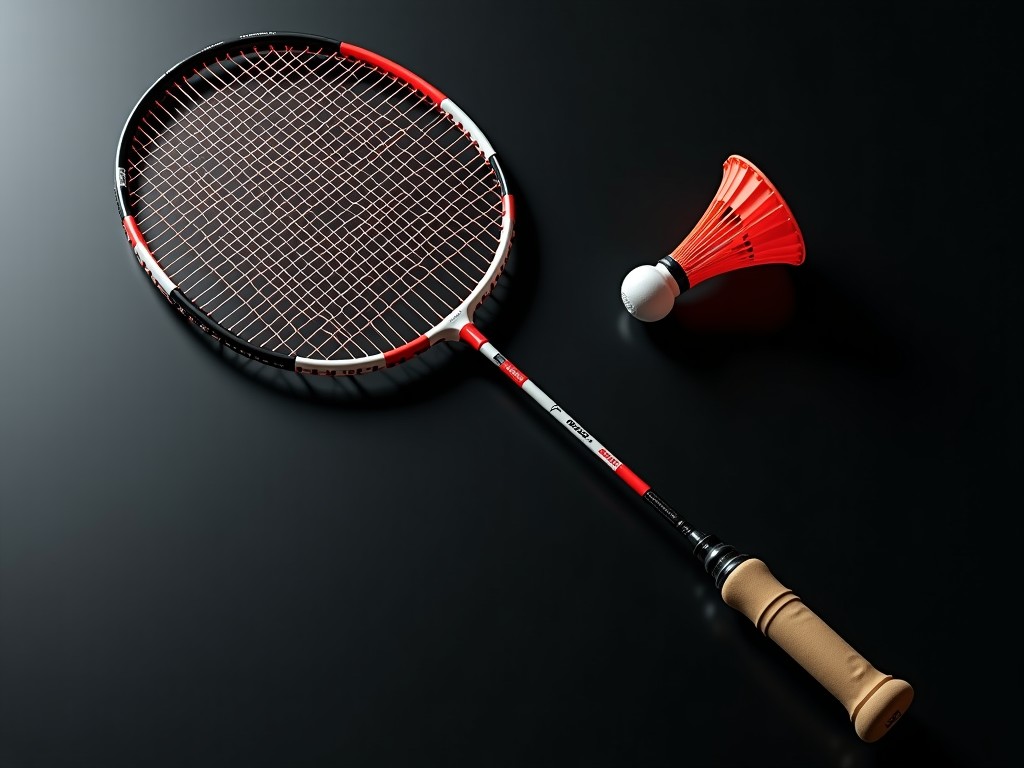
Oem Personalized Carbon Badminton Rackets Company
Carbon fiber provides a high strength‑to‑weight ratio, enabling rackets that are both stiff for power transfer and light enough for rapid swing speeds. The modulus of the carbon layers typically
OEM Personalized Carbon Badminton Rackets
Carbon fiber provides a high strength‑to‑weight ratio, enabling rackets that are both stiff for power transfer and light enough for rapid swing speeds. The modulus of the carbon layers typically ranges from 230 GPa to 400 GPa, depending on the tow size and weave pattern selected.
Layup design influences the flex profile. A balanced layup with 0°/±45°/90° orientations yields a mid‑flex characteristic suitable for all‑court play, while a higher proportion of 0° fibers shifts the flex point toward the handle, increasing head‑heavy feel for aggressive smashes.
Material Options and Construction Details
The frame utilizes pre‑impregnated carbon tape with epoxy resin systems rated for Tg > 150 °C, ensuring dimensional stability under humid indoor conditions. Grommets are made from reinforced nylon 6,6 with a Shore D hardness of 80 to resist string‑cut wear.
Shaft taper can be customized from a uniform 6.8 mm diameter to a progressive taper reducing to 5.5 mm at the throat, affecting torsional stiffness and swing weight. Typical swing weight values range from 78 g·cm² to 92 g·cm² for adult rackets.
- Carbon tow sizes: 1K, 3K, 6K, 12K
- Resin types: standard epoxy, toughened epoxy, UV‑curable variants
- Finish: matte, gloss, or anti‑slip micro‑textured coating
Customization Logic for OEM Projects
Personalization starts with the customer’s performance target: desired balance point, flex rating, and grip size. Engineers translate these targets into specific layup schedules and shaft geometries using finite‑element simulation outputs.
Cosmetic options include laser‑etched logos, sublimated graphics, and custom paint masks. All surface treatments are applied after curing to avoid resin degradation, ensuring adhesion durability of > 500 h under ASTM D3359 tape test.
Packaging is configured per shipment method: individual foam‑lined cartons for air freight, or stacked palletized boxes with corner protectors for sea freight, meeting ISTA 3A standards.
Manufacturing Process Overview
Prepreg sheets are cut to precise patterns using CNC lasers, then laid up in a temperature‑controlled mold at 130 °C under 150 psi pressure. Cure cycles follow a ramp‑soak‑ramp profile to achieve > 95 % degree of cure, verified by DSC analysis.
After demolding, shafts undergo ultrasonic cleaning to remove release agents, followed by precision grinding to achieve tolerance ±0.02 mm on outer diameter. Grommet installation is performed via pneumatic insertion tools calibrated to 0.5 Nm torque.
Final inspection includes static load testing at 150 N to confirm frame integrity, and vibration modal analysis to ensure natural frequencies fall within the 120‑150 Hz range desired for optimal feel.
Quality Control Philosophy
Each batch undergoes statistical process control with Cpk targets > 1.33 for critical dimensions such as shaft diameter and balance point. Non‑conforming parts are segregated and root‑cause analysis is performed using fishbone diagrams before corrective action.
Material traceability is maintained via barcode lot numbers linked to resin supplier certificates and prepreg roll IDs, enabling rapid recall if needed.
Finished rackets receive a 12‑month warranty against manufacturing defects, covering delamination, paint cracking, and grommet failure under normal play conditions.
Technical Specifications
| Parameter | Typical Value | Customizable Range |
|---|---|---|
| Frame Modulus (GPa) | 260‑340 | 200‑450 (based on tow & resin) |
| Swing Weight (g·cm²) | 80‑90 | 70‑100 |
| Balance Point (mm from handle) | 285 | 260‑310 |
| Grip Size (mm) | 22 | 20‑24 |
| Length (mm) | 675 | 660‑680 |
| String Tension Recommended (lbs) | 22‑28 | 18‑30 (player preference) |
Applications in Competitive and Recreational Play
The stiffness‑to‑weight ratio achieved through targeted carbon layup enables rapid racket head acceleration, translating to higher shuttle velocity for offensive strokes. Players seeking quick reaction at the net benefit from lower swing weight configurations, while baseline power players opt for higher modulus shafts that store and release more energy during the smash.
Recreational users gain from the forgiving flex of a balanced layup, which reduces vibration transmission to the arm and lowers the risk of tennis elbow‑type discomfort during extended sessions. The durable finish resists abrasion from frequent contact with court surfaces and racket bags.
Frequently Asked Questions
Yes, shaft length, taper, balance point, and grip size are adjustable according to player specifications. Provide target values and we will generate a layup plan.
Desired weight range, flex preference, cosmetic details (logo, color), order quantity, and delivery timeline. Any required certifications (e.g., REACH) should be noted at this stage.
Standard prepreg carbon with epoxy resin, toughened epoxy for impact resistance, and optional UV‑curable topcoats. Alternative fibers such as aramid‑carbon hybrids are available upon request.
Each rack undergoes dimensional CMM checks, static load testing, modal analysis, and visual inspection per AQL 0.65. Test reports are available on request.
Individual foam‑lined cartons, bulk‑packed corrugated boxes with dividers, and palletized configurations with edge protectors. All meet ISTA 3A for transit safety.
Cartons are sealed with moisture‑barrier liners and strapped to pallets. Shock‑watch indicators are affixed to monitor handling conditions.
For standard configurations, lead time is 3‑4 weeks after sample approval. Custom layups or special finishes may add 1‑2 weeks.
Sample rackets are produced using the exact layup and finish requested, shipped via express courier with tracking. Sample fees are credited toward the first production order.
Ready to Discuss Your Project
Provide your performance targets, cosmetic requirements, and volume expectations. Our engineering team will respond with a detailed feasibility assessment, including estimated costs, tooling considerations, and a provisional timeline.


