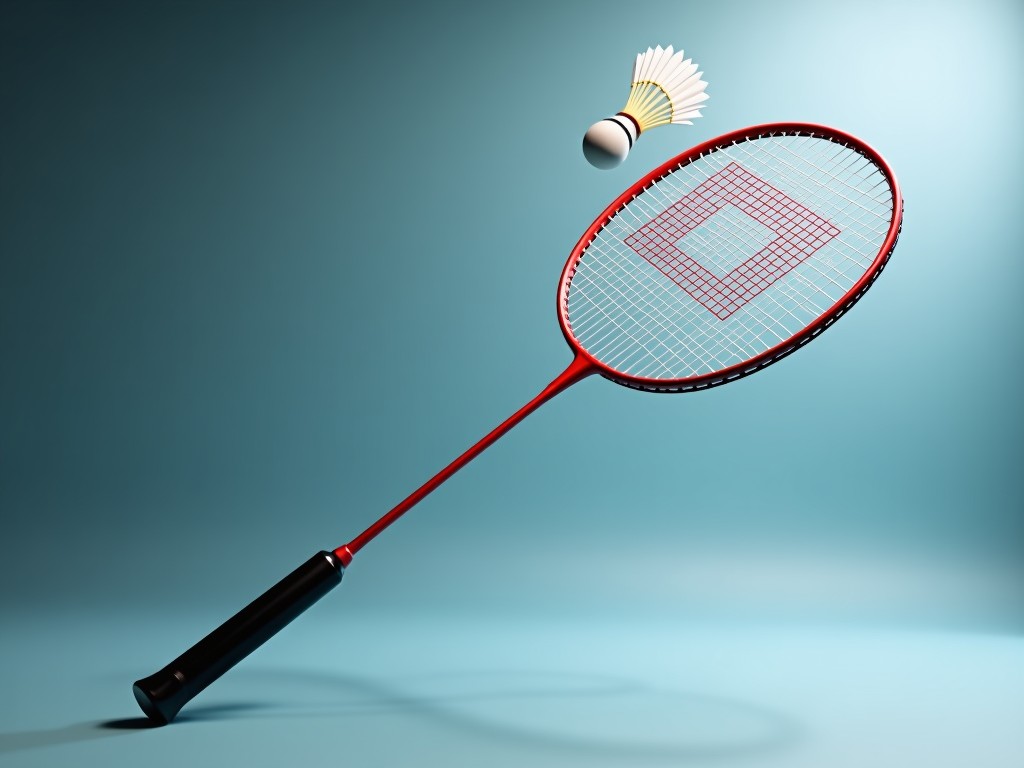
Oem Powerful Pro Badminton Rackets Company
Engineers evaluate racket performance through measurable parameters such as frame modulus, swing weight, balance point, and string tension tolerance, which together dictate shuttlecock velocity and
OEM Powerful Pro Badminton Rackets
Engineers evaluate racket performance through measurable parameters such as frame modulus, swing weight, balance point, and string tension tolerance, which together dictate shuttlecock velocity and player maneuverability.
Frame Geometry and Material Composition
The frame utilizes a high‑modulus graphite composite with a typical tensile modulus of 230 GPa, providing a stiffness that limits deformation under impact loads exceeding 150 N.
A tapered cross‑section reduces aerodynamic drag, measured as a drag coefficient of approximately 0.28 at a swing speed of 30 m/s, while maintaining a wall thickness gradient from 0.9 mm at the tip to 1.2 mm at the throat.
Shaft Flex and Torque Characteristics
The shaft incorporates a unidirectional carbon lay‑up yielding a flex deflection of 7.5 mm under a 10 N load applied at the midpoint, corresponding to a flex rating suitable for aggressive forehand strokes.
Torsional rigidity is quantified by a torque‑angle slope of 0.02 Nm/degree, ensuring minimal twist during off‑center hits and preserving directional control.
String Bed Configuration and Tension Range
The string bed employs a 16 × 19 pattern with a nominal string diameter of 0.68 mm, allowing a recommended tension range of 10 kg to 13 kg (22 lb to 29 lb) without exceeding the frame’s yield limit.
At the upper tension limit, the string bed stiffness measures approximately 1.8 kN/m, contributing to a rebound coefficient of 0.85 for optimal shuttlecock speed.
Performance Metrics: Swing Weight, Balance Point, Stiffness
| Parameter | Typical Value | Adjustment Range |
|---|---|---|
| Swing Weight (kg·cm²) | 82 | 75 – 90 (via head‑weight inserts) |
| Balance Point (mm from handle end) | 295 | 280 – 310 (adjustable butt cap) |
| Frame Stiffness (Nm/degree) | 0.45 | 0.38 – 0.52 (modulus tuning) |
Customization Options for OEM Partners
- Choice of graphite modulus (200 GPa to 250 GPa) to tune stiffness.
- Variable wall thickness profiles for weight distribution control.
- Optional titanium‑reinforced throat inserts for increased impact resistance.
- Custom paint finishes with UV‑stable pigments meeting ISO 105‑B02.
- Personalized grip sizes ranging from G2 to G5 with selectable over‑wrap thickness.
Quality Assurance and Testing Protocols
Each racket undergoes static load testing to 200 N, with acceptance criteria limiting frame deflection to less than 0.4 mm at the 3 and 9 o’clock positions.
Dynamic fatigue evaluation simulates 10,000 shuttle impacts at 35 m/s, verifying that stiffness degradation remains under 5 % after the cycle.
Ultrasonic C‑scan inspections detect internal delaminations larger than 0.2 mm², ensuring structural integrity before packaging.
Typical Applications in Professional and Training Environments
In competitive singles, the racket’s high swing weight and head‑light balance facilitate rapid wrist snap, enabling smash speeds exceeding 350 km/h when paired with optimal string tension.
For doubles play, a slightly head‑heavy configuration improves net‑shot stability, reducing torsional loss during fast exchanges at the front court.
Training programs benefit from interchangeable weight kits, allowing coaches to adjust swing weight incrementally to develop player strength without changing racket geometry.
Frequently Asked Questions
Can dimensions be customized? Yes, frame length, head width, and shaft taper can be adjusted within ±3 mm to meet specific player ergonomics.
What information is required before quotation? Desired weight range, balance point, preferred graphite modulus, and any required reinforcement features.
Which materials are available? Standard high‑modulus graphite, optional graphene‑enhanced layers, and titanium alloy throat inserts.
How is quality inspected? Through static load, dynamic fatigue, and ultrasonic C‑scan procedures as outlined above.
What packaging methods are available? Individual foam‑lined cartons with humidity‑controlled inner lining; bulk palletizing with corner protectors.
How are export shipments protected? Each carton is sealed with moisture‑barrier film and stacked with shock‑absorbing interleaves to limit transit vibration below 0.5 g.
Contact for OEM Collaboration
To discuss technical specifications, request sample units, or initiate a project quote, please reach out via the inquiry form.
Submit Inquiry


