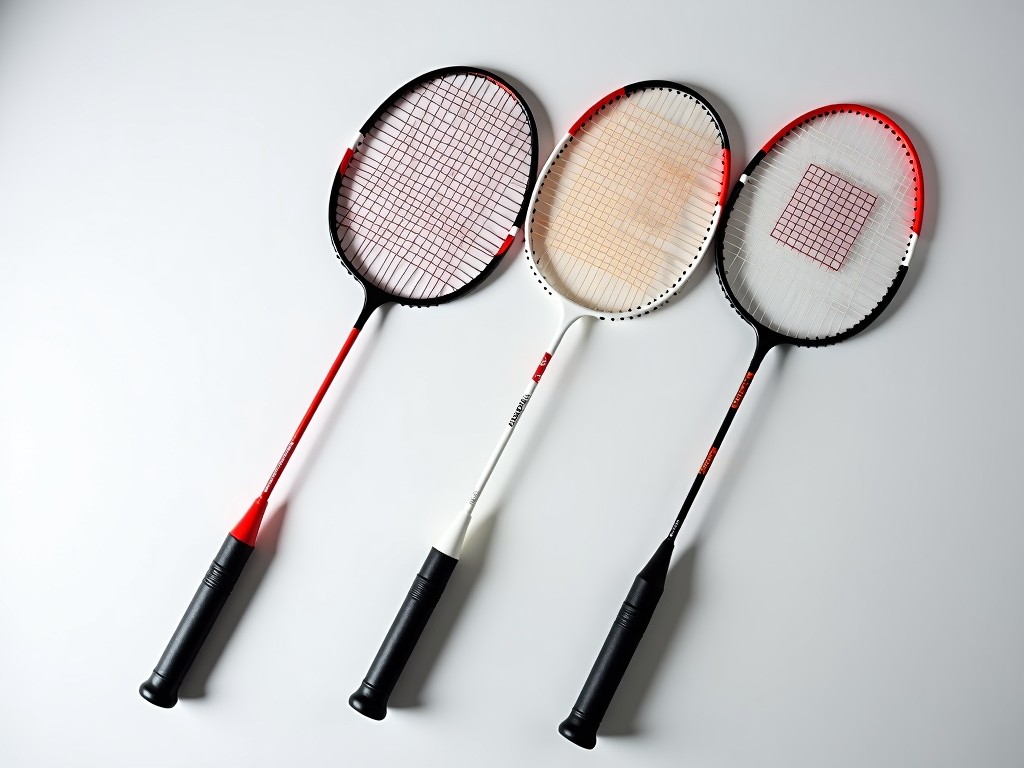
Wholesale High Quality Badminton Rackets Factory
Our facility produces badminton rackets in large volumes for distributors, sporting goods retailers, and institutional buyers. Each racket is built to meet strict dimensional and performance
Wholesale Badminton Rackets Factory
Overview
Our facility produces badminton rackets in large volumes for distributors, sporting goods retailers, and institutional buyers. Each racket is built to meet strict dimensional and performance tolerances so that every unit in a shipment behaves consistently on court. The design focuses on repeatable weight distribution, shaft stiffness, and frame durability to reduce variability that can affect player experience.
We operate a dedicated production line that can run multiple models simultaneously, allowing us to fulfill mixed‑size orders without retooling delays. Lead times are calibrated to the complexity of customization, with standard configurations typically ready within three weeks of order confirmation.
Key Technical Specifications
The following parameters define the baseline performance of our rackets. Values are given as typical ranges; exact numbers can be adjusted according to project requirements.
| Parameter | Typical Range | Adjustability |
|---|---|---|
| Unstrung Weight | 78‑86 g | ±2 g via layup tweaks |
| Balance Point (from handle) | 280‑295 mm | Shiftable by 5 mm increments |
| Overall Length | 665‑675 mm | Fixed per BWF standards |
| Shaft Flex Rating | Medium (flex index 5‑7) | Stiffer or softer layup available |
| Recommended String Tension | 20‑28 lb | Custom grommet patterns |
| Frame Material | High‑modulus carbon fiber (35 GPa) | Blend ratios adjustable |
| Grip Size | G2‑G4 (standard) | Custom overlays available |
Materials & Construction
The frame uses a unidirectional carbon fiber prepreg with a tensile modulus of approximately 35 GPa, providing high stiffness while keeping mass low. The shaft incorporates a biaxial weave to improve torsional resistance, which translates to less frame twist during off‑center impacts. A thermoset epoxy resin system cures at 180 °C, ensuring a glass transition temperature well above typical playing conditions.
Grip bases are made from polyurethane foam wrapped with a synthetic leather overlay, offering a consistent feel and moisture absorption. The butt cap is molded from the same carbon fiber layup as the frame, eliminating weight spikes at the handle end. All components are bonded using a film adhesive that meets ASTM D903 peel strength requirements.
Manufacturing Process
Production begins with laser‑cut prepreg plies laid onto a mandrel according to the stacking sequence defined for each model. The mandrel is then placed in a hydraulic compression mold where pressure of 150 bar and temperature of 180 °C are applied for 20 minutes to achieve full cure.
After demolding, the racket undergoes CNC drilling for string holes and vent ports, followed by a UV‑cured primer coat and a polyurethane topcoat for color and abrasion resistance. The grip is applied using a heat‑activated adhesive, and the butt cap is press‑fitted. Final steps include stringing (if requested), weight verification, and balance measurement.
Quality Assurance
Each batch is subjected to a systematic inspection plan. Weight is measured with a precision scale (±0.1 g) and must fall within the specified tolerance band. Balance point is checked using a calibrated pivot fixture; deviation beyond ±2 mm triggers re‑work.
Swing weight is determined via a pendulum method to confirm inertia matches design targets. Impact resistance is evaluated by dropping a 5 kg mass from 1 meter onto the frame at three points; no visible cracking or delamination is acceptable. Visual inspection under 500 lux lighting assesses coating uniformity, graphic alignment, and grip adhesion.
Statistical process control charts track key dimensions over time, allowing early detection of drift. All inspection data are retained for traceability and can be provided to customers upon request.
Customization Options
Customers can specify adjustments to weight distribution by altering the proportion of high‑modulus versus intermediate‑modulus carbon fiber in the shaft and frame. Balance can be shifted toward the head or handle by adding or removing material in the throat region.
Grip size and overlay texture are selectable, with options for perforated, tacky, or ribbed surfaces. Cosmetic choices include matte or gloss finishes, custom Pantone‑matched colors, and laser‑etched logos or sponsor graphics.
String pattern and grommet layout can be customized to suit particular playing styles, and we offer pre‑stressed stringing services at specified tensions. All customizations are reviewed for feasibility before tooling is committed.
Applications
Sports clubs and school programs benefit from bulk purchases because the consistent weight and balance allow coaches to run uniform drills without equipment‑induced variability. Retailers receive rackets that meet tournament‑spec standards, reducing the likelihood of returns due to performance mismatch.
Distributors serving regional markets appreciate the ability to mix models within a single pallet, simplifying inventory management. OEMs that private‑label rackets rely on our repeatable process to maintain brand reputation across large production runs.
Specification Comparison Table
The table below shows how our standard model compares with a typical high‑end consumer racket in key performance metrics. Values are illustrative; actual numbers depend on the exact configuration chosen.
| Metric | Our Standard Model | Typical Consumer Racket |
|---|---|---|
| Unstrung Weight (g) | 82 | 84‑88 |
| Balance Point (mm) | 287 | 290‑300 |
| Shaft Flex Index | 6 (medium) | 5‑8 (variable) |
| Frame Modulus (GPa) | 35 | 30‑33 |
| Recommended Tension (lb) | 24 | 22‑26 |
Frequently Asked Questions
Can dimensions be customized?
Yes. Length is fixed to BWF regulations, but weight, balance point, and grip size can be adjusted within the ranges outlined in the specifications table. Custom layups are evaluated for feasibility before quoting.
What information is required before quotation?
We need the desired quantity, target weight or balance specifications, any cosmetic requirements (color, logo, finish), and preferred packaging. If you have a reference sample, providing its measurements helps us match performance.
What materials are available?
Our primary frame material is high‑modulus carbon fiber (35 GPa). We also offer intermediate‑modulus blends for cost‑sensitive shafts. Grip overlays are available in polyurethane, synthetic leather, or cotton‑based composites.
How is quality inspected?
Each racket undergoes weight, balance, swing weight, impact, and visual checks as described in the Quality Assurance section. Statistical process control ensures batch‑to‑batch consistency.
What packaging options are available?
Standard packaging includes individual polypropylene bags placed in corrugated cartons with corner protectors. For bulk orders, we offer palletized stacking with heat‑shrink wrap and optional moisture‑barrier liners.
What is the typical production lead time?
Standard configurations ship within three weeks of purchase order confirmation. Customized builds may extend to four to six weeks depending on tooling and material availability.
How are samples arranged?
We can provide up to three sample rackets at no charge, with the customer covering freight. Samples reflect the requested specifications and are produced using the same processes as full production.
Get a Quote
If you are evaluating suppliers for bulk badminton racket procurement, please reach out with your project details. Our technical team will review your requirements, confirm feasibility, and deliver a detailed quotation including lead time and packaging options.


