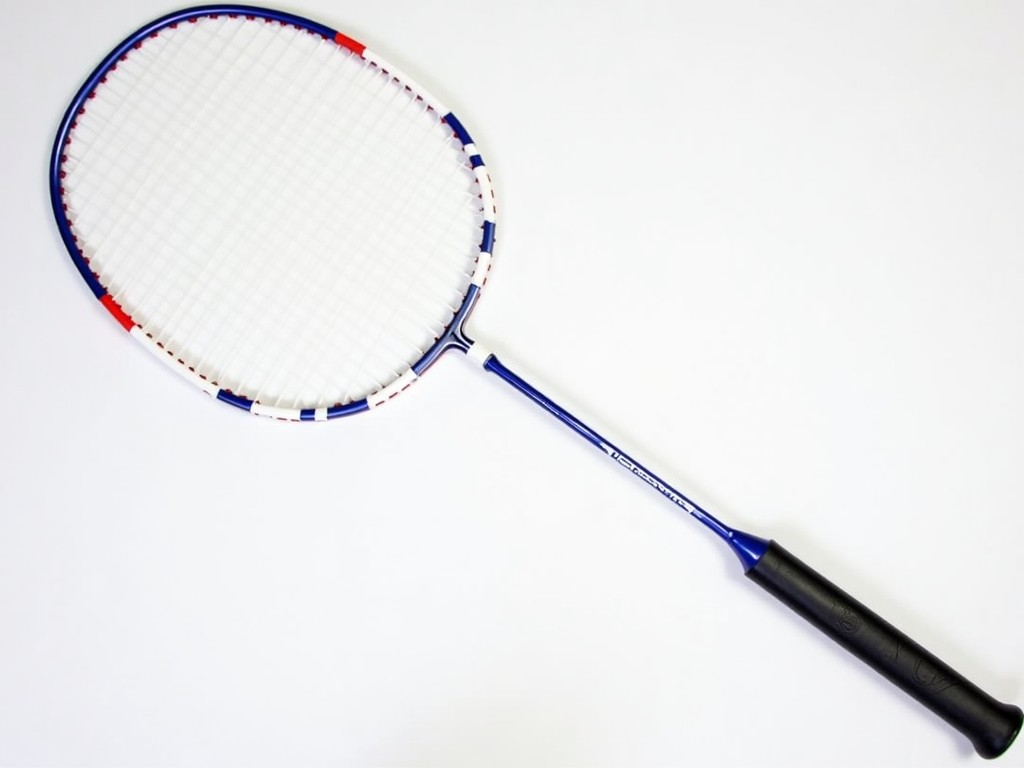
Wholesale Weight Less Stiff Badminton Racket Factory
A weight‑less‑stiff racket is engineered for players who prefer a lighter swing feel combined with a flexible shaft that reduces shock transmission to the arm. The design targets a total frame mass
Wholesale Weight‑Less‑Stiff Badminton Racket
Overview
A weight‑less‑stiff racket is engineered for players who prefer a lighter swing feel combined with a flexible shaft that reduces shock transmission to the arm. The design targets a total frame mass below 80 g unstrung and a flex rating in the 6‑8 range on a 10‑point stiffness scale, where lower numbers indicate greater flexibility. This combination enables quicker wrist action and easier maneuverability during defensive lifts and net play.
Key Technical Parameters
| Parameter | Typical Value | Unit | Notes |
|---|---|---|---|
| Unstrung Frame Mass | 75‑79 | g | Measured without strings or grip |
| Shaft Flex Rating | 6‑8 | points (10 = stiffest) | Determined by static deflection test |
| Balance Point | 285‑295 | mm from butt cap | Slightly head‑light for faster swing |
| Swing Weight (approx.) | 68‑72 | kg·cm² | Calculated from mass distribution |
| Recommended String Tension | 20‑24 | lbs | Optimal for flexible shaft response |
Material Composition and Layup
The racket frame uses a high‑modulus graphite core (≈70 % by weight) reinforced with a thin layer of nano‑enhanced resin to improve impact resistance while maintaining low mass. The shaft incorporates a 30 % carbon‑fiber woven layer with a 10 % thermoplastic elastomer additive, which yields the targeted flex rating without adding significant weight. All layers are cured under vacuum pressure to ensure uniform resin distribution and minimize voids.
Frame Geometry and Stiffness Profile
The head shape is an isometric oval with a 13 mm wide throat, providing a larger sweet spot while keeping the overall frame width under 20 mm to reduce aerodynamic drag. The stiffness gradient is engineered to be lowest at the shaft midpoint (≈5.5 flex) and gradually increase toward the head (≈7.5 flex) to deliver a whip‑like feel on clears and a stable response on smashes. Finite‑element analysis confirms that the first bending mode occurs at ~115 Hz, matching the desired flexible characteristic.
Applications in Training and Recreational Play
Because of its low mass and flexible shaft, the racket reduces forearm fatigue during extended practice sessions, making it suitable for junior players developing technique and for adult recreational players who prioritize comfort over maximum power. The head‑light balance enables rapid wrist flick for net drops and defensive lifts, while the flexible shaft absorbs vibration from off‑center hits, lowering the risk of elbow strain.
Customization Options
- Frame mass adjustment in 1 g increments via internal weighting plugs
- Shaft flex tuning through varying carbon‑fiber layup angles (available from 5 to 9 flex points)
- Grip size selection (G2, G4, G6) with optional PU or towel‑wrapped finishes
- String pattern customization (e.g., 22×23, 20×21) to match player tension preferences
- Color finish options including matte black, gloss white, or custom Pantone‑matched graphics
Quality Control Process
Each racket undergoes three inspection stages: (1) raw material verification using FTIR spectroscopy to confirm resin purity, (2) dimensional checks on a coordinate‑measuring machine with tolerances of ±0.2 mm for head width and ±0.5 mm for shaft length, and (3) dynamic flex testing on a programmable load frame where the shaft deflection under a 5 N load must fall within the specified flex band. Only units passing all three stages are cleared for packaging.
Packaging and Logistics
Rackets are packed in individual corrugated sleeves with internal foam end caps to protect the head and shaft edges. Five sleeves are placed in a master carton (dimensions 38 × 26 × 12 cm) that meets ISTA 1A standards for drop and vibration resistance. Cartons are palletized with stretch‑film wrapping and labeled with batch codes for traceability. Standard lead time for a 5 000‑piece wholesale order is 25‑30 working days after receipt of approved artwork and deposit.
Frequently Asked Questions
- Can the frame mass be reduced below 70 g? Achieving sub‑70 g mass requires a different structural approach (e.g., full‑carbon monocoque) which increases stiffness beyond the target flex range; therefore the current design balances weight and flexibility at 75‑79 g.
- What information is required before quotation? We need the desired order quantity, any customization selections (mass, flex, grip, color), preferred string tension range, and required delivery date.
- Which materials are available for the shaft? Standard shaft uses high‑modulus graphite with thermoplastic elastomer; alternative options include boron‑reinforced graphite or basalt fiber, each affecting flex and weight.
- How is quality inspected? See the Quality Control section: material FTIR, CMM dimensional checks, and dynamic flex testing under a 5 N load.
- What packaging methods are available? Individual foam‑capped sleeves within master cartons; optional double‑wall cartons or moisture‑barrier bags for humid climates.
- How are export shipments protected? Cartons are stretch‑wrapped on pallets, corner‑protected, and sealed with tamper‑evident tape; each pallet receives a shock‑watch indicator.
- What is the typical production lead time? For a standard 5 000‑piece order, lead time is 25‑30 working days after artwork approval and deposit; larger volumes may extend proportionally.
- How are samples arranged? We can provide up to two sample rackets at no charge; the requester covers courier freight. Sample lead time is 7‑10 working days.
Contact for Wholesale Inquiry
To discuss specifications, request a formal quotation, or arrange sample shipment, please reach out to our sales team.


