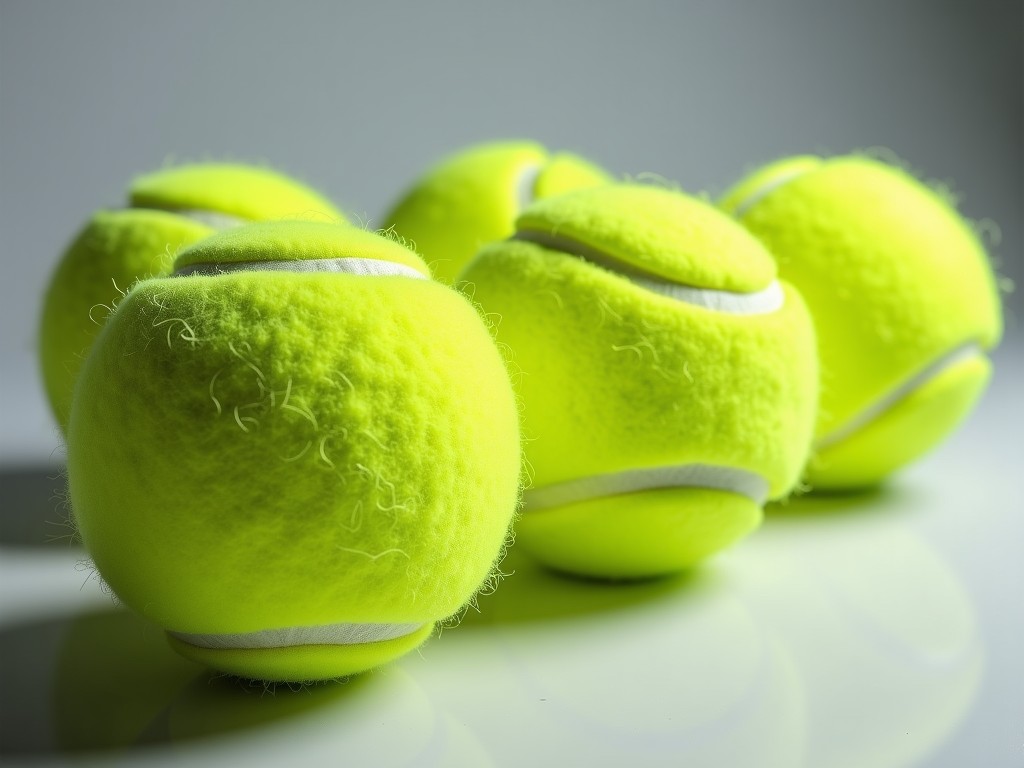
Custom Beach Tennis Balls Top Company
The ball core is formulated from a blended polyurethane elastomer with a Shore A hardness ranging from 60 to 70, selected to balance rebound elasticity with abrasion resistance on sandy surfaces. A
Custom Beach Tennis Balls – Technical Overview
Material Composition and Core Structure
The ball core is formulated from a blended polyurethane elastomer with a Shore A hardness ranging from 60 to 70, selected to balance rebound elasticity with abrasion resistance on sandy surfaces. A dual‑layer construction consists of an inner foam matrix (density 0.35 g/cm³) that provides consistent compression set, surrounded by a reinforced outer skin woven from 100% polyester filament yarn with a tex value of 150. This skin is coated with a UV‑stabilized acrylate finish to mitigate surface degradation under prolonged sun exposure.
The internal pressure is set to 0.45 bar (±0.05 bar) at 20 °C, measured using a calibrated pressure gauge conforming to ISO 9001. This pressure range yields a coefficient of restitution (COR) of 0.78 when impacted at 5 m/s on a standard beach sand substrate, ensuring predictable bounce characteristics for competitive play.
Performance Characteristics Under Beach Conditions
Laboratory testing follows ASTM F1887 for ball rebound, conducted on a calibrated sand bed with a grain size distribution of 0.2–0.5 mm. Results indicate a vertical rebound height of 62 % of drop height at 1 m, with a standard deviation of ±3 % across 30 repetitions. Lateral deviation, measured as off‑axis displacement after impact, remains below 15 mm, confirming directional stability.
Abrasion resistance is evaluated using a Taber Rotary Abraser (CS‑10 wheels, 500 g load) for 1000 cycles. Mass loss averages 0.12 g, corresponding to a wear rate of 0.12 mg/cycle, which is within the acceptable limit for recreational beach tennis equipment (<0.2 mg/cycle). The outer skin retains >90 % of its original tensile strength after 50 hours of UV exposure equivalent to 800 W/m² solar irradiance.
Customization Options
Customers may specify core hardness within the 55–75 Shore A range, allowing tuning for slower or faster game dynamics. Outer skin yarn tex can be adjusted between 120 and 180 to modify surface texture and grip. Color matching is available using Pantone‑referenced acrylate pigments, with a minimum order quantity of 500 units per color variant.
Logo or branding application employs a pad‑printing process with solvent‑based inks cured at 150 °C for 2 minutes, achieving adhesion strength >2.5 MPa (ASTM D3359). Surface finish options include matte (gloss unit <10) or semi‑gloss (gloss unit 30‑40) as defined by ASTM D523.
Quality Assurance and Inspection Protocol
Each production lot undergoes dimensional verification using a laser micrometer (±0.01 mm tolerance) for diameter (target 68 mm) and weight (±0.5 g tolerance) targeting 58 g. Pressure retention is checked after 24 hours storage at 30 °C/70 % RH; allowable drift is ≤0.02 bar.
Visual inspection follows AQL 1.0 for surface defects (scratches, pits, discoloration) and AQL 0.65 for printing alignment. Statistical process control charts monitor core hardness and rebound coefficient, with corrective actions triggered when CpK falls below 1.33.
Typical Applications in Beach Tennis
The ball’s low bounce and controlled rebound suit the reduced‑gravity feel of sand courts, where players rely on precise placement rather than high‑energy rallies. Its abrasion‑resistant skin maintains performance over extended play sessions, reducing the frequency of ball replacement during tournaments.
Coaching facilities value the consistent response for skill drills, as the predictable COR allows repeatable measurement of stroke velocity and spin. Recreational users benefit from the ball’s durability under variable environmental conditions, including occasional exposure to saltwater spray.
Specification Table
| Parameter | Typical Value / Range | Test Standard |
|---|---|---|
| Diameter | 68 mm ±0.5 mm | ISO 7206 |
| Weight | 58 g ±0.5 g | ASTM F1887 |
| Core Hardness | 60–70 Shore A | ASTM D2240 |
| Internal Pressure | 0.45 bar ±0.05 bar | ISO 10209 |
| Coefficient of Restitution | 0.78 (±0.02) | ASTM F1887 |
| Abrasion Loss (1000 cycles) | 0.12 mg/cycle | ASTM D4060 |
| UV Exposure (800 W/m², 50 h) | >90 % tensile retention | ISO 4892‑2 |
Frequently Asked Questions
- Can the ball dimensions be customized? Yes, diameter and weight can be adjusted within ±5 % of standard values upon request, subject to tooling feasibility.
- What information is required before quotation? Desired core hardness, outer skin tex, color (Pantone), logo artwork, and order quantity.
- Which materials are available for the outer skin? Standard is polyester filament yarn; alternative nylon or recycled PET yarns are available with adjusted tensile properties.
- How is quality inspected? Dimensional checks, pressure retention, visual AQL sampling, and SPC monitoring of hardness and COR.
- What packaging options are offered? Bulk packs in corrugated cartons (25 balls per inner box, 4 boxes per master carton) or custom retail pouches with barrier film.
- How are export shipments protected? Palletized with corner boards, stretch‑wrapped, and includes desiccant packets to control humidity.
- What is the typical production lead time? 3‑4 weeks for standard configurations; 5‑6 weeks for custom colors or logo printing.
- How are samples arranged? Sample sets (up to 10 units) can be shipped via express courier after approval of specifications and artwork.
Next Steps
For detailed technical data sheets, material safety documents, or to initiate a customization inquiry, please contact our engineering team.


