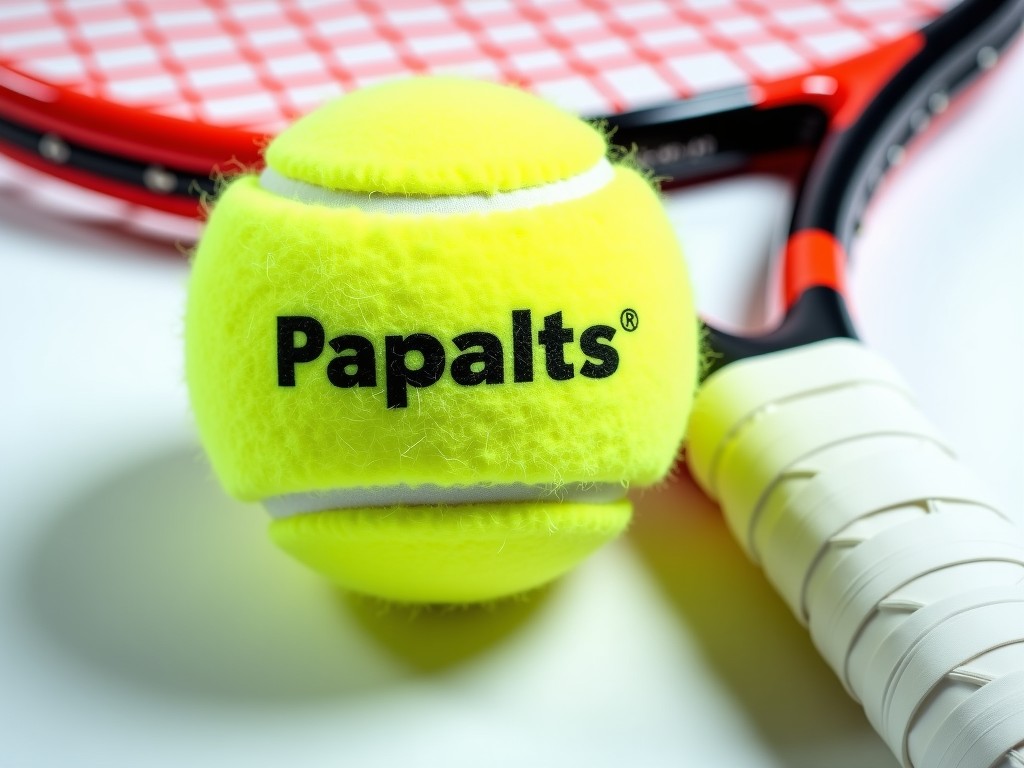
Custom Tennis Beach Racket And Ball Manufacturer
Producing rackets and balls for beach tennis requires attention to material stability under UV exposure, salt‑air corrosion, and abrasive sand contact. Engineers specify tolerances for frame weight,
Custom Tennis Beach Racket and Ball Manufacturing
Producing rackets and balls for beach tennis requires attention to material stability under UV exposure, salt‑air corrosion, and abrasive sand contact. Engineers specify tolerances for frame weight, balance point, and string tension to maintain playability while resisting deformation. The manufacturing approach integrates composite layup precision with molded rubber core consistency to meet performance expectations in variable outdoor conditions.
Material Selection
Racket frames commonly use carbon‑fiber reinforced polymer with a tensile strength of 4–5 GPa and a density of 1.5–1.6 g/cm³, providing high stiffness‑to‑weight ratio. Alternative aluminum alloys (e.g., 6061‑T6) offer yield strength around 275 MPa and excellent corrosion resistance after anodizing. Ball cores are typically natural rubber compounds with a Shore A hardness of 40–45, blended with additives to achieve a rebound resilience of 60–70 % at 20 °C.
Customization Capabilities
- Frame geometry: head size ranging from 85 to 105 in², beam width adjustable from 18 to 24 mm.
- Grip size: circumference options from 4.0 to 4.75 inches, with optional over‑wrap thickness.
- String pattern: 16×19, 18×20, or custom hybrid layouts; tension range adjustable 50–70 lb.
- Ball specifications: diameter 6.35–6.67 mm, internal pressure 1.8–2.2 bar, felt composition (nylon/wool blend) with varying abrasion resistance.
Manufacturing Process
Frame production begins with pre‑impregnated carbon‑fiber sheets cut to layup patterns, placed in a mold, and cured under 120 °C and 100 psi for 90 minutes to achieve optimal fiber‑matrix bonding. After demolding, CNC machining refines the throat and handle interfaces to tolerances of ±0.1 mm. Stringing is performed on computerized tensioners that log load‑elongation data for each string bed. Ball manufacturing involves injection molding of the rubber core, followed by a two‑step vulcanization at 160 °C, then application of the felt cover via adhesive bonding under controlled humidity.
Quality Assurance
Dimensional verification uses coordinate‑measuring machines to confirm frame length, width, and thickness within ±0.2 mm. Weight distribution is assessed with a balance pendulum, targeting a swing‑weight variance of less than 2 % across a batch. String tension is validated with a load cell after 24 h conditioning, ensuring a deviation of no more than ±3 lb from the set value. Ball rebound is measured per ASTM F1888, requiring a rebound height between 1.10 and 1.30 m when dropped from 2 m onto a concrete surface.
Applications in Beach Tennis
Beach tennis courts expose equipment to intense solar radiation, which can degrade polymer matrices; selected UV‑stabilizers extend service life by reducing yellowing and embrittlement. Salt‑laden air accelerates electrochemical corrosion on metallic parts; anodized aluminum or protective polymer coatings mitigate this effect. Sand abrasion wears surface finishes; hard‑coat epoxy overlays on frames and high‑abrasion‑resistant felt on balls maintain playability over extended tournaments.
Technical Specifications
| Parameter | Typical Value | Customizable Range |
|---|---|---|
| Frame Weight (unstrung) | 260 g | 240–300 g |
| Balance Point (from butt) | 320 mm | 300–340 mm |
| String Tension Range | 50–70 lb | 45–80 lb (upon request) |
| Ball Diameter | 6.50 mm | 6.35–6.67 mm |
| Ball Internal Pressure | 2.0 bar | 1.8–2.2 bar |
| Rebound Height (ASTM F1888) | 1.20 m | 1.10–1.30 m |
Frequently Asked Questions
Can dimensions be customized? Yes, frame length, head size, grip circumference, and ball diameter can be adjusted to meet specific player preferences or regulatory limits.
What information is required before quotation? We need the desired material system, target weight range, string tension, ball pressure, and any cosmetic requirements such as color or logo placement.
How is quality inspected? Each batch undergoes dimensional CMM checks, weight balance verification, string tension logging, and ball rebound testing per ASTM standards before release.
Get Started
To discuss your custom tennis beach racket and ball requirements, provide your specifications and we will return a detailed feasibility study and cost estimate.
Request a Quote


