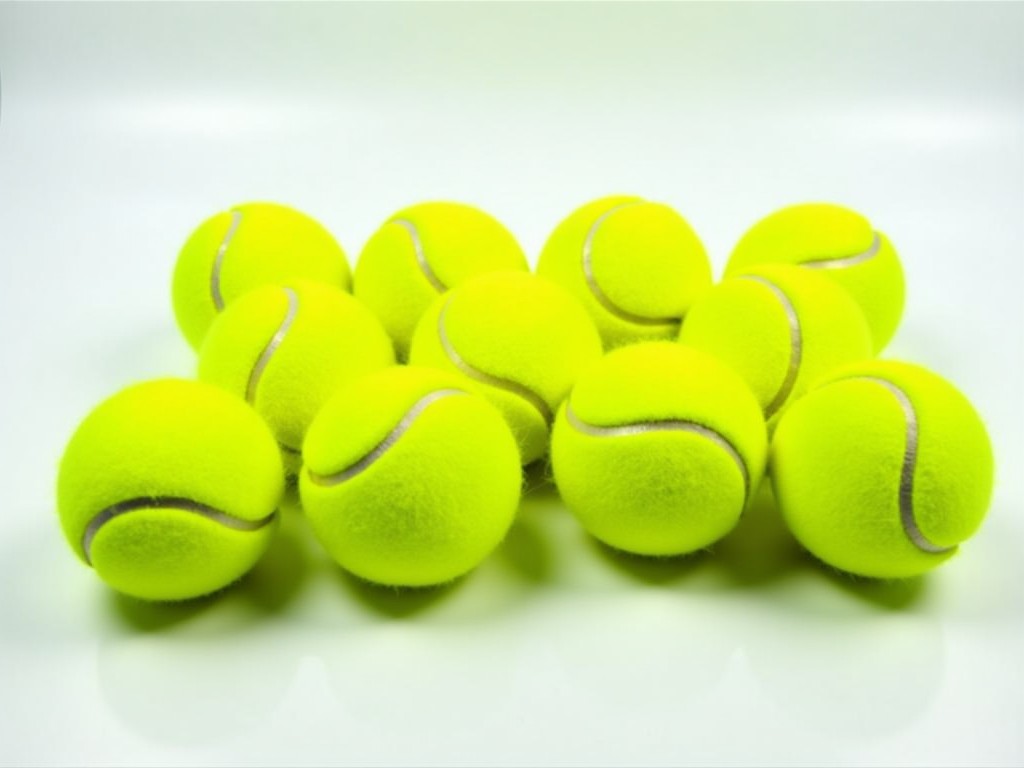
Low Price Beach Game Tennis Balls For Sale
These tennis balls are formulated for recreational beach play where cost efficiency and durability against sand, moisture and UV exposure are priorities. The construction balances a low‑cost rubber
Low Price Beach Game Tennis Balls
These tennis balls are formulated for recreational beach play where cost efficiency and durability against sand, moisture and UV exposure are priorities. The construction balances a low‑cost rubber core with a felt covering that meets basic performance thresholds for bounce and feel while keeping unit price low for bulk procurement.
Key Technical Characteristics
Typical values are based on internal testing of production lots; actual measurements may vary within accepted tolerances.
| Property | Typical Value | Test Method |
|---|---|---|
| Diameter | 6.55 – 6.86 mm | ISO 20957‑2 (caliper) |
| Weight | 56.0 – 59.4 g | ISO 20957‑2 (balance) |
| Rebound Height (100 in drop) | 135 – 147 cm | ISO 20957‑2 (rebound) |
| Internal Pressure | 1.8 – 2.2 bar | Pressure gauge (core puncture) |
| Felt Composition | 65 % nylon / 35 % wool blend | Fiber analysis (FTIR) |
Materials and Construction
The core is molded from a styrene‑butadiene rubber (SBR) compound selected for its low cost and adequate elasticity. After molding, the cores undergo a pressurization step to reach the target internal pressure, then are cooled to stabilize dimensions. The felt covering is applied using a latex‑based adhesive that bonds the nylon‑wool blend to the cured core, providing a uniform surface that resists delamination under repeated impact.
Applications in Beach Environments
Beach‑side play subjects balls to abrasive sand, occasional splashes, and prolonged sunlight. The selected SBR core exhibits low water absorption, limiting weight gain when wet. The felt blend is treated with a UV‑stabilizing additive during dyeing, reducing surface degradation after extended exposure. These attributes make the balls suitable for casual beach tennis, paddleball, and similar low‑impact racket games where official tournament specifications are not required.
- Recreational beach tennis matches
- Paddleball or beach‑side pickleball variants
- Training drills for junior players on sand courts
- Promotional giveaways at seaside events
Quality Control and Testing
Each production lot undergoes a sampling plan based on ISO 2859‑1. Inspectors measure diameter, weight, rebound height and internal pressure on a statistically significant sample. Balls that fall outside the defined tolerances are segregated and reworked. Visual inspection checks for felt adhesion, surface uniformity and absence of foreign particles before packaging.
Customization Options
Buyers can specify variations that affect cost and performance without altering the basic construction.
- Core hardness adjustment (shore A 40‑55) for softer or firmer feel
- Alternative felt ratios (e.g., 80 % nylon / 20 % wool) for increased abrasion resistance
- Custom colors achieved via dye‑lot selection
- Logo printing using water‑based inks on the felt surface
- Packaging in mesh bags, cardboard sleeves or bulk cartons
Packaging and Logistics
Standard packaging places 3 balls per polyethylene sleeve, 48 sleeves per corrugated carton (144 balls). Cartons are sealed with moisture‑resistant tape and stacked on pallets with a maximum height of 1.6 m to maintain stability during transit. For overseas shipments, a desiccant packet is included in each carton to mitigate humidity‑induced weight change.
Frequently Asked Questions
Can the diameter be adjusted for specific game rules?
Yes, the core molding process allows diameter tolerance adjustments within ±0.3 mm; please provide the target range when requesting a quotation.
What information is required before a quote is prepared?
Required details include order quantity, desired core hardness, felt composition, any branding specifications, and preferred packaging method.
How are export shipments protected against moisture?
Each carton contains a silica‑gel desiccant packet and is sealed with moisture‑resistant tape; pallets are wrapped in stretch film to limit ingress during handling.


