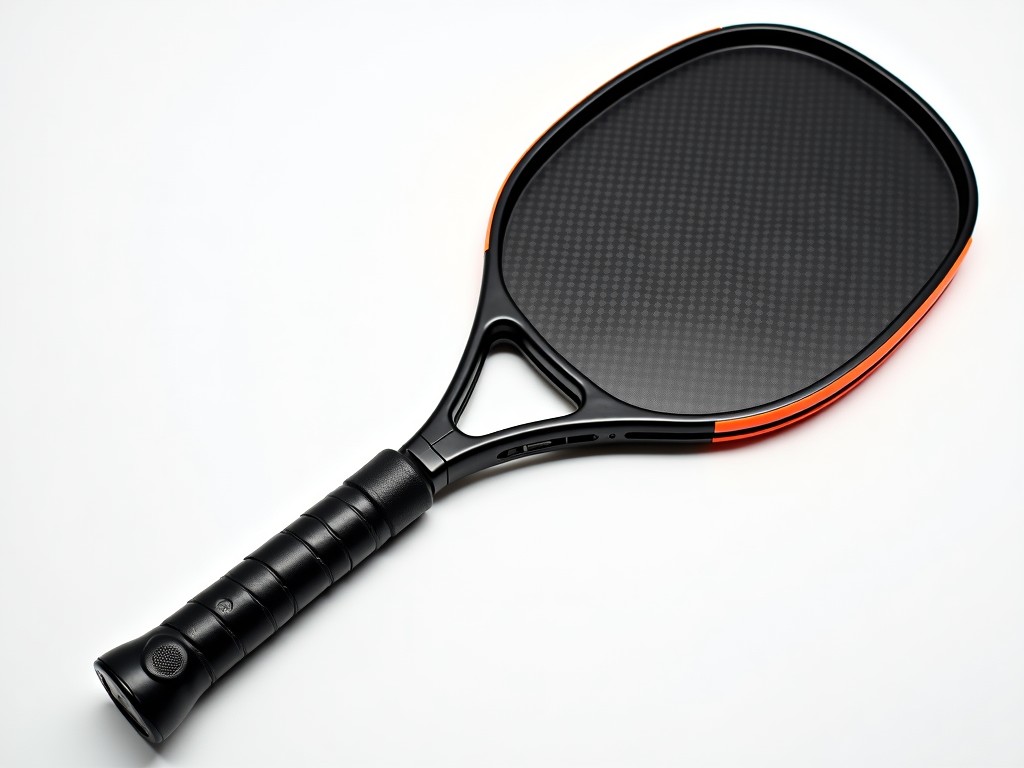
Oem Beach Tennis Racket Carbon Fiber Company
Beach tennis rackets must resist abrasive sand, retain stiffness after repeated wet‑dry cycles, and deliver a balanced swing weight for quick volleys. These requirements drive the choice of
OEM Beach Tennis Racket Carbon Fiber Solutions
Beach tennis rackets must resist abrasive sand, retain stiffness after repeated wet‑dry cycles, and deliver a balanced swing weight for quick volleys. These requirements drive the choice of high‑modulus carbon fiber prepreg and precise layup geometry.
The typical layup uses a 0°/±45°/90° quadriaxial schedule on a molded foam core, resulting in a laminate thickness of 3.2 mm at the throat and 2.8 mm at the tip. This configuration yields a tensile modulus of approximately 230 GPa in the longitudinal direction and a flexural rigidity (EI) of 1.9 N·m² measured at the midpoint.
Weight distribution is tuned to a balance point 320 mm from the butt cap (±5 mm tolerance) and a swing weight of 260 kg·cm² (±10 kg·cm²). These values are verified on a calibrated pendulum swing‑weight analyzer after final polishing.
Mechanical Properties – Typical Values
| Property | Typical Range | Test Method |
|---|---|---|
| Mass (unstrung) | 260–300 g | Precision scale (±0.1 g) |
| Balance point | 315–325 mm from butt | Balance beam |
| Stiffness (RA) | 65–70 | RA meter (flexural) |
| Swing weight | 250–270 kg·cm² | Pendulum method |
| Impact strength (Charpy) | ≥12 kJ/m² | ASTM D6110 |
Manufacturing begins with CNC‑cut foam cores that are vacuum‑bagged with carbon‑fiber prepreg. The layup is cured in an autoclave at 120 °C and 0.8 MPa for 90 minutes, ensuring low void content (<1 %). Post‑cure, the rackets undergo CNC contouring to achieve the final aerodynamic profile.
Quality control includes ultrasonic C‑scan inspection for delamination, weight verification on a analytical balance, and flexural testing on a three‑point bend fixture. Acceptance criteria are weight ±2 g, balance ±3 mm, and RA within ±2 points of target.
Customization Options
- Grip size: 4 in, 4 ¼ in, 4 ½ in (customizable upon request)
- String pattern: 16×19, 18×20, or open patterns for spin
- Paint finish: matte, gloss, or UV‑resistant clear coat
- Logo application: laser etching, silk screen, or sublimation
- Weight tuning: internal tungsten weights or foam density variation
Applications in Beach Tennis
The lightweight yet stiff construction enables rapid wrist action for topspin lobs while maintaining stability during powerful smashes. The sealed edge coating reduces sand ingress, extending service life in coastal environments where humidity and salt exposure accelerate material fatigue.
Clubs and tournament organizers benefit from consistent performance across batches, reducing the need for player‑specific adjustments. OEM partners can supply rackets branded for resale or as equipment for coaching programs.
Frequently Asked Questions
- Can dimensions be customized? Yes, head length, width, and throat geometry can be adjusted within ±3 mm to meet specific play styles.
- What information is required before quotation? Desired weight range, balance point, grip size, string pattern, logo artwork, and estimated annual volume.
- What materials are available? Standard high‑modulus carbon fiber prepreg, with optional graphene‑enhanced or Kevlar‑reinforced layers for impact resistance.
- How is quality inspected? Each lot undergoes ultrasonic C‑scan, weight, balance, and RA testing; statistical process control charts are maintained.
- What packaging methods are available? Individual rackets in recyclable foam sleeves, packed in corrugated cartons with corner protection; palletized for bulk shipments.
- What is the typical production lead time? 4–6 weeks after approval of final artwork and sample, depending on order size and current capacity.
To discuss your specific OEM requirements, request a sample, or obtain a detailed quotation, please reach out to our technical team.


