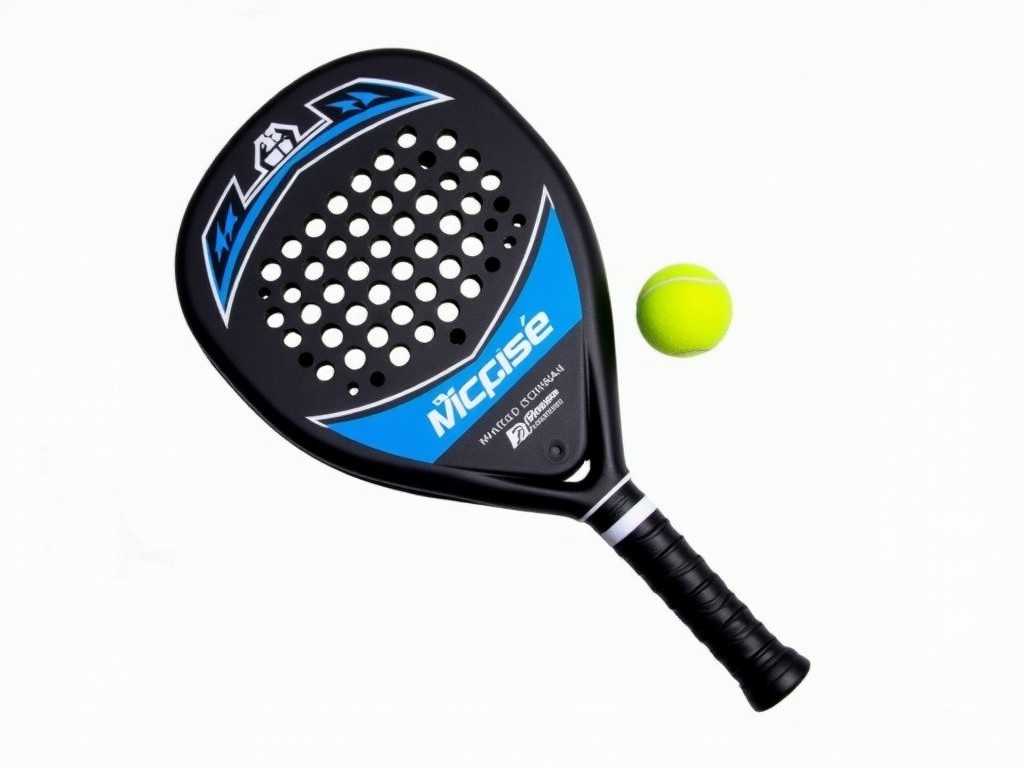
China High Quality Junior Padel Racket Top Supplier
Procurement teams evaluating junior padel rackets benefit from understanding the measurable design attributes that influence playability, durability, and manufacturing consistency. This overview
Junior Padel Racket – Technical Overview
Procurement teams evaluating junior padel rackets benefit from understanding the measurable design attributes that influence playability, durability, and manufacturing consistency. This overview details those attributes without reliance on subjective qualifiers.
Key Dimensional Parameters
The geometry of a junior racket determines swing dynamics and impact tolerance. Typical dimensions are presented as ranges to accommodate variations in player age and skill level.
- Overall length: 450 mm – 470 mm (measured from butt cap to tip).
- Head width: 230 mm – 250 mm; head height: 280 mm – 300 mm.
- Strung weight: 260 g – 290 g (including grip and strings).
- Balance point: 260 mm – 280 mm from butt cap (head‑light bias).
- Recommended string tension: 22 kg – 26 kg (dependent on string material).
Frame Construction and Materials
The frame’s stiffness and fatigue resistance stem from the layup schedule and constituent modulus. Most junior models employ a hybrid of intermediate‑modulus carbon fiber and reinforced graphite to achieve a target flexural modulus of ~45 GPa while keeping mass low.
A typical layup consists of 12‑16 plies oriented at 0°, ±45°, and 90° around the hoop, with an additional unidirectional layer along the throat to improve torsional stability. Resin systems are selected for a glass transition temperature above 80 °C to resist softening during prolonged play.
String Bed and Grip Specifications
String pattern influences ball launch angle and spin potential. Junior rackets commonly adopt a 16 × 19 pattern, providing a balance between control and power for developing technique.
Grip circumference is sized for smaller hands, typically 100 mm – 106 mm, with a tapered shape to enhance feel. The grip material is a polyurethane‑based overlay offering a Shore A hardness of ~70 and a moisture‑wicking finish.
Manufacturing Considerations
Consistent layer compaction during molding is critical to avoid voids that could compromise impact strength. Autoclave curing at 120 °C–130 °C under 0.5 MPa pressure yields a void content below 0.5 % as measured by ultrasonic inspection.
Post‑cure machining tolerances for the throat and butt cap are held to ±0.2 mm to ensure proper alignment of overgrip and vibration dampeners. Surface finish is specified as Ra ≤ 1.6 µm to facilitate paint adhesion and reduce aerodynamic drag.
Quality Control & Testing
Each production lot undergoes a three‑stage verification: dimensional inspection, static flex test, and impact resilience assessment. Flexural stiffness is measured via a three‑point bend fixture; acceptance criterion is 180 N·mm² ± 10 %.
Impact testing employs a 20 mm steel ball dropped from 1.0 m onto the string bed; acceptable rebound height is ≥ 0.55 m. Additionally, a 500‑cycle fatigue test simulates repeated high‑speed strikes, with a pass threshold of no delamination or crack propagation beyond 2 mm.
Typical Specification Table
| Parameter | Typical Value | Customizable Range |
|---|---|---|
| Length (mm) | 460 | 450 – 480 |
| Strung Weight (g) | 275 | 260 – 300 |
| Balance Point (mm from butt) | 270 | 250 – 290 |
| Head Area (cm²) | 620 | 580 – 660 |
| Flexural Stiffness (N·mm²) | 180 | 160 – 200 |
Applications in Junior Training
The reduced swing weight (approximately 150 kg·cm²) enables younger players to achieve higher racket head speed without excessive fatigue, facilitating rapid skill acquisition. The head‑light balance improves maneuverability for net play, while the moderate stiffness provides sufficient feedback for stroke development.
Durability is addressed through the carbon‑graphite hybrid layup, which retains > 90 % of its initial flexural modulus after 1000 simulated impact cycles, a critical factor for institutional programs where rackets undergo intensive daily use.
Customization Options
- Frame modulus adjustment via carbon fiber grade selection (standard, intermediate, high).
- Grip size and shape tailored to hand measurements.
- String pattern alternatives (e.g., 14 × 18 for increased spin).
- Paint finish options including matte, gloss, or UV‑resistant clear coat.
- Insertion of vibration dampening inserts in the throat.
Ordering and Sampling
Technical data sheets, including detailed layup diagrams and test reports, are available upon request. Sample production typically requires 10–12 working days after final specification approval, with shipping arranged via standard international freight.
Minimum order quantities for customized junior rackets start at 50 units, with price adjustments based on selected materials and finish. Inquiries should include desired dimensions, target weight range, and any required branding or logo placement.
Request Technical Data Sheet or Sample


