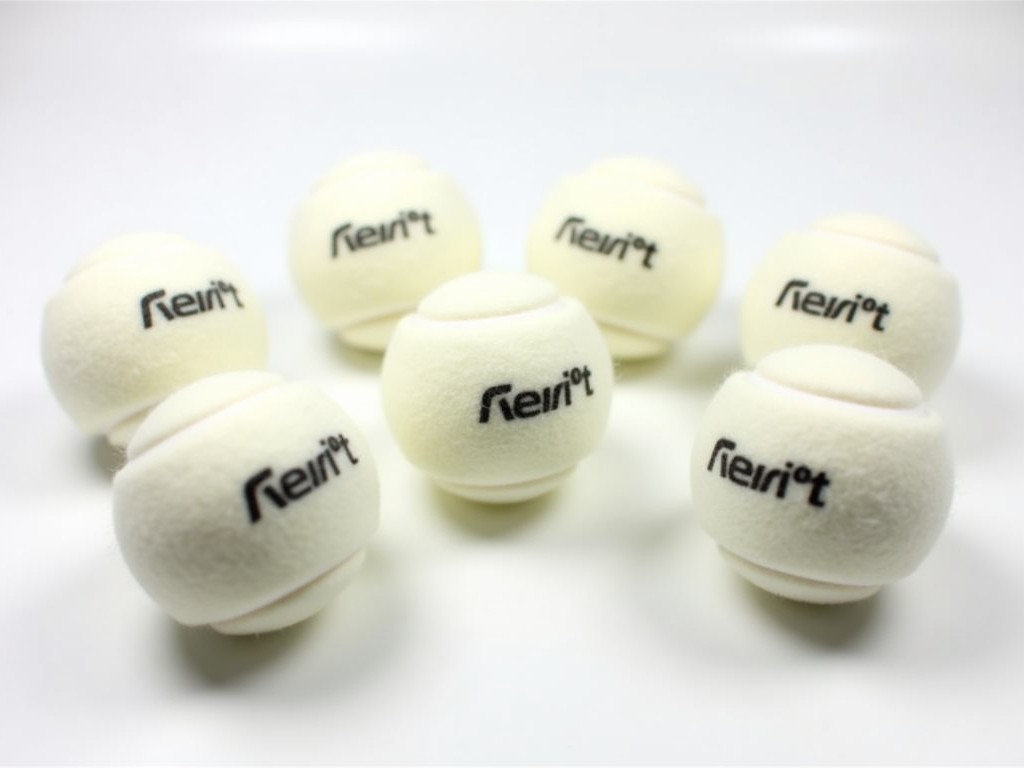
China White Padel Racket Balls Factory
This facility produces white‑colored padel balls that meet the dimensional and pressure specifications used in official padel matches. The balls are constructed with a pressurized rubber core covered
China White Padel Racket Balls Factory Overview
This facility produces white‑colored padel balls that meet the dimensional and pressure specifications used in official padel matches. The balls are constructed with a pressurized rubber core covered by a woven felt layer, providing consistent bounce and durability on court surfaces. Production follows standardized processes to ensure each ball delivers predictable performance for training and competition.
Product Specifications
A standard padel ball has a diameter of 6.5 ± 0.03 cm and a mass between 56 g and 59.4 g. When dropped from a height of 254 cm onto a rigid concrete surface, the rebound height ranges from 135 cm to 147 cm. Internal pressure is maintained at 1.5 – 1.7 bar, which influences the ball’s liveliness and feel during play.
Materials and Construction
The core consists of natural rubber compounded with sulfur and accelerators to achieve the target pressure after molding. The felt covering is a blend of 68 % wool and 32 % nylon, woven to a thickness of approximately 1.8 mm and dyed white using UV‑stable pigments. Adhesive layers between core and felt are formulated to resist delamination under repeated impact.
Manufacturing Process
Rubber pellets are injection‑molded into hemispherical shells, which are then joined and pressurized with nitrogen to the specified bar. After cooling, the shells are coated with a latex‑based adhesive and wrapped with the pre‑cut felt panels. The balls undergo a final steam‑pressing step to activate the adhesive and ensure uniform felt adherence.
Quality Control and Testing
Each batch is sampled for diameter, mass, rebound height, and internal pressure using calibrated gauges and a standardized drop‑test rig. Visual inspection checks for felt uniformity, seam integrity, and surface defects. Only balls that fall within the defined tolerance windows are approved for packaging.
Applications in Padel
Padel balls are used on enclosed courts where the lower pressure reduces ball speed compared to tennis, allowing longer rallies and greater control. The white felt improves visibility against both artificial turf and court walls, aiding player tracking during fast‑paced exchanges. Consistent bounce characteristics support accurate shot placement and reduce variability in match play.
Customization Options
- Logo or brand printing on the felt surface using water‑based inks
- Adjustment of internal pressure within the 1.3 – 1.9 bar range for specific training needs
- Alternative felt colors (yellow, orange) while maintaining the same material blend
- Custom packaging quantities, from 3‑ball tubes to 60‑ball bulk cartons
Packaging and Logistics
Balls are packed in pressurized tubes to preserve internal pressure during transit, with each tube holding three balls. Tubes are placed in corrugated cartons equipped with corner protectors and moisture‑barrier liners. Cartons are palletized and stretch‑wrapped for secure handling in containerized shipments.
Typical Values
| Parameter | Typical Range | Test Method |
|---|---|---|
| Diameter | 6.47 – 6.53 cm | Caliper measurement |
| Mass | 56.0 – 59.4 g | Analytical balance |
| Rebound Height | 135 – 147 cm | Drop test from 254 cm onto concrete |
| Internal Pressure | 1.5 – 1.7 bar | Pressure gauge |
| Felt Thickness | 1.7 – 1.9 mm | Micrometer |
Frequently Asked Questions
Q: Can the ball’s internal pressure be customized for specific training regimes?
A: Yes, pressure can be adjusted between 1.3 bar and 1.9 bar upon request, affecting bounce height and ball speed.
Q: What information is required to obtain a quotation?
A: Required details include desired quantity, pressure setting, any logo or color customization, packaging preference, and delivery destination.
Q: How is product quality verified before shipment?
A: Each lot undergoes dimensional, mass, pressure, and rebound testing, plus visual inspection for felt integrity and seam quality.
Contact for Inquiry
To discuss specifications, request samples, or submit a purchase inquiry, please contact our sales team via the inquiry form.
Request a quotation


