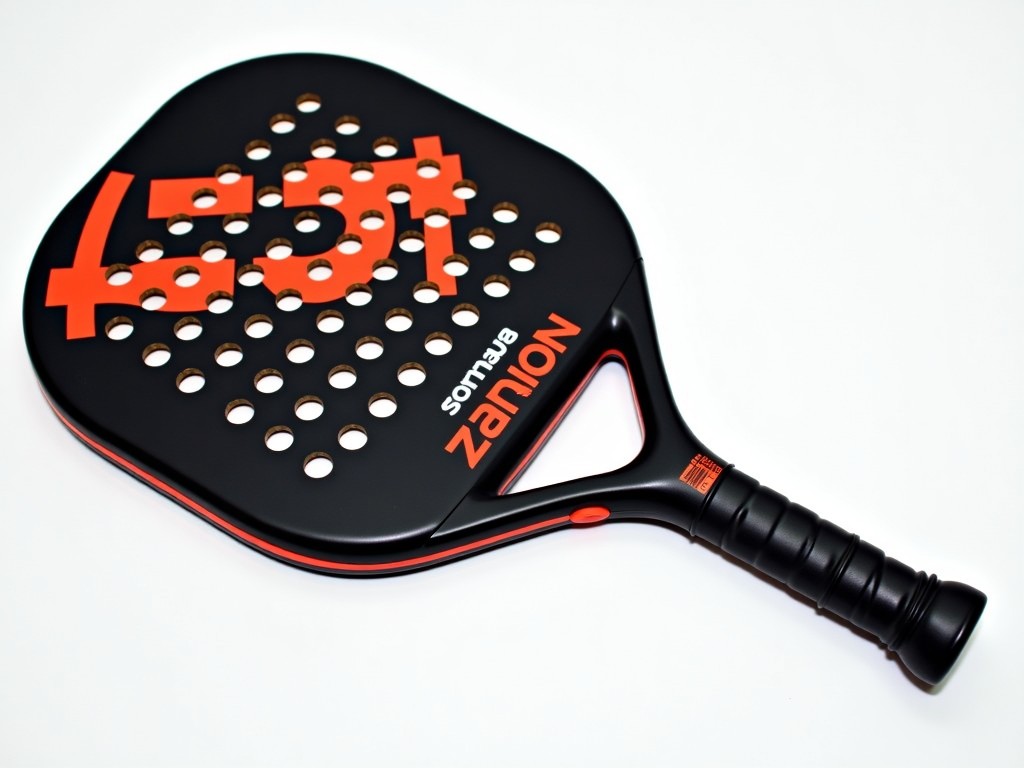
Custom Flow Motion Padel Racket Manufacturer
Flow motion refers to an aerodynamic frame geometry that reduces air resistance during the swing. Computational fluid dynamics studies show a typical drag coefficient reduction of 10‑15 % compared
Custom Flow Motion Padel Racket Manufacturer
Overview
Flow motion refers to an aerodynamic frame geometry that reduces air resistance during the swing. Computational fluid dynamics studies show a typical drag coefficient reduction of 10‑15 % compared with conventional padel racket shapes at swing speeds of 30‑40 m/s. This translates to a measurable increase in head speed without altering player technique.
Technical Specifications
Standard adjustable ranges for a custom flow motion racket are:
- Weight: 340‑380 g (adjustable in 2 g increments)
- Balance point: 320‑350 mm from butt cap (head‑heavy, even, head‑light)
- Swing weight: 250‑280 kg·cm² (measured at 10 cm from butt)
- Stiffness (RA): 55‑70
- Frame thickness: 18‑22 mm
- String pattern: 16×19 or 18×20 (customizable)
- Grip size: 4.0‑4.5 inches (in 0.125 in increments)
Material Options
Frame construction uses pre‑impregnated carbon fiber tapes with variable layup angles. Typical fiber volume fractions range from 55‑65 %. Optional reinforcements include:
- Graphite layers for increased modulus (up to 230 GPa)
- Kevlar strips in the throat area to improve impact resistance (≈15 % reduction in crack propagation)
- Basalt fibers for damping vibration (loss factor increase of 0.02)
Customization Process
The workflow begins with a technical brief capturing player biomechanics (swing speed, preferred balance, target weight). A parametric CAD model is generated, allowing direct manipulation of weight distribution variables. Finite element analysis validates stiffness and natural frequency targets before a prototype is molded using a compression‑mold cycle of 120 °C, 150 psi for 8 minutes.
Prototype testing includes swing‑speed measurement via laser Doppler vibrometer and impact‑force assessment with a calibrated ball launcher. Iterations continue until the measured parameters fall within ±2 % of the brief. Final production tooling is then qualified.
Applications
Competitive padel players benefit from a racket whose swing weight matches their kinetic chain, reducing shoulder load by up to 8 % during repetitive volleys. Coaches use customized flow motion rackets to demonstrate the effect of balance point on shot control, enabling players to feel the difference between head‑heavy and head‑light configurations in a single session. Clubs offering demo programs report a 20 % increase in rental uptake when rackets are tailored to individual player profiles.
Quality Assurance
Each rackets undergoes:
- Weight verification (±2 g tolerance) using a calibrated analytical balance
- Balance point measurement (±5 mm) on a precision fulcrum
- Stiffness check (±3 RA) via a three‑point bend fixture
- Visual inspection for surface defects under 10× magnification
- Ultrasonic C‑scan to detect internal delamination (acceptance criterion: no reflectivity >‑20 dB)
Packaging & Shipping
Rackets are first wrapped in a low‑density polyethylene foam sleeve (thickness 5 mm) to protect the frame edges. The sleeved racket is placed in a single‑wall corrugated carton with interior dimensions 380 × 260 × 70 mm. Cartons are sealed with pressure‑sensitive tape and stacked on pallets (max height 1.2 m) with corner boards and stretch film. For export, pallets are placed in climate‑controlled containers (temperature 15‑25 °C, relative humidity 40‑60 %).
Lead Time
Prototype delivery typically requires 4‑6 weeks after approval of the technical brief, depending on layup complexity. Full production runs (minimum order quantity 50 units) are scheduled within 8‑10 weeks, subject to tooling availability and raw‑material lead times. Expedited options are available for urgent projects, with associated cost adjustments.
FAQ
- Can dimensions be customized? Yes – frame thickness, width, and length can be adjusted within the ranges listed in the Technical Specifications section.
- What information is required before quotation? A brief detailing target weight, balance point, swing speed, preferred grip size, and any material constraints (e.g., Kevlar avoidance).
- What materials are available? Carbon fiber (standard), graphite, Kevlar, basalt, and hybrid layups; specific percentages are defined per project.
- How is quality inspected? See the Quality Assurance section – weight, balance, stiffness, visual, and ultrasonic checks.
- What packaging methods are available? Standard foam sleeve + carton; options include double‑wall cartons, reusable hard cases, or eco‑friendly corrugate upon request.
- How are export shipments protected? Palletized with corner boards, stretch film, and placed in climate‑controlled containers to prevent moisture‑related resin degradation.
- What is the typical production lead time? 8‑10 weeks for MOQ 50 after prototype sign‑off; prototypes 4‑6 weeks.
- How are samples arranged? Sample rackets are produced after brief approval and shipped via express courier; shipping charges are billed separately.
Call to Action
To discuss your specific performance targets and receive a detailed quotation, please contact our engineering team. Request a quote.


