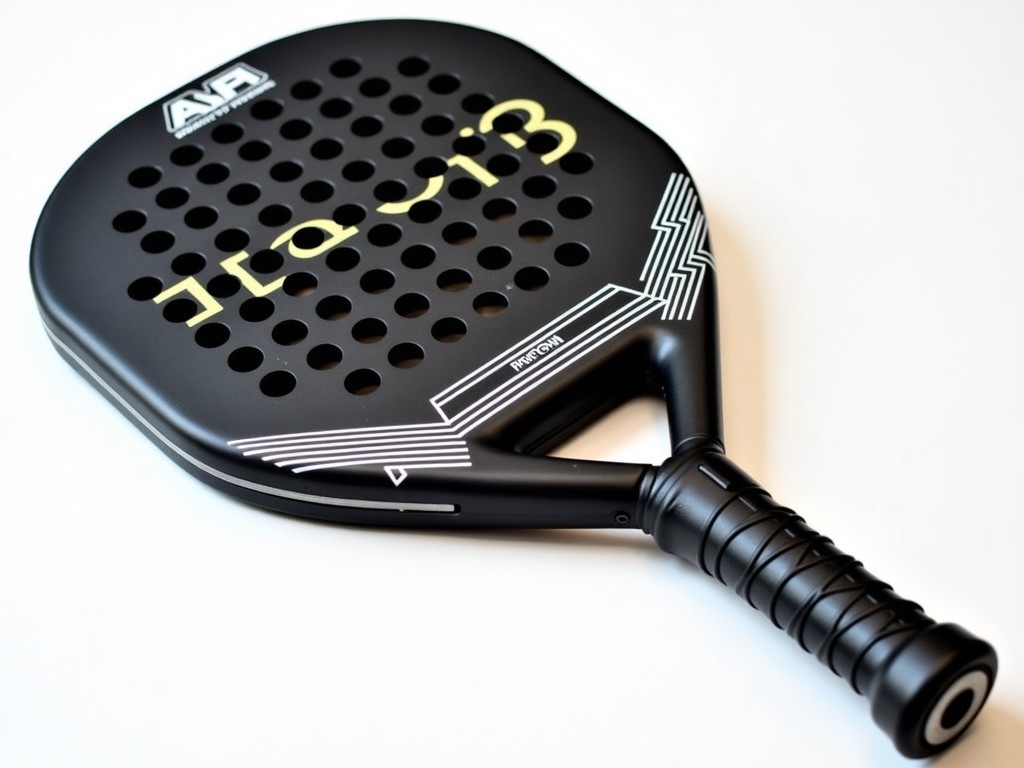
Custom Junior Padel Racket Pro Factory
Junior padel rackets are scaled‑down versions of adult models, designed to match the biomechanics and strength of players aged 8‑14. Customizing these rackets allows manufacturers to fine‑tune weight
Custom Junior Padel Racket Pro Factory
Junior padel rackets are scaled‑down versions of adult models, designed to match the biomechanics and strength of players aged 8‑14. Customizing these rackets allows manufacturers to fine‑tune weight distribution, stiffness, and grip dimensions to suit individual growth stages and playing styles, reducing the risk of injury and improving skill development.
Key Technical Specifications
| Parameter | Typical Range |
|---|---|
| Overall Length | 450 mm – 470 mm |
| Weight (unstrung) | 260 g – 300 g |
| Balance Point (from butt) | 260 mm – 285 mm |
| Frame Material | Carbon‑fiber reinforced polymer, Glass‑fiber composite, or Hybrid lay‑up |
| Grip Size (circumference) | 95 mm – 105 mm |
| Recommended String Tension | 22 kg – 26 kg |
Customization Options
- Frame material selection – carbon fiber for higher stiffness, glass fiber for increased comfort, or hybrid for balanced feel.
- Weight adjustment – via internal weighting or lay‑up thickness to hit target mass within the 260‑300 g window.
- Balance shift – head‑light, even, or head‑biased configurations achieved by altering resin distribution or adding tungsten tapes.
- Grip customization – length, circumference, and surface texture (perforated, tacky, or ribbed) tailored to hand size.
- Cosmetic finishes – matte, gloss, or UV‑printed graphics; color matching to club or team branding.
Manufacturing Considerations
The rackets are produced using a compression‑molding process where pre‑impregnated fiber sheets are laid into a heated mold, cured under controlled pressure, and then demolded. Precise temperature ramps (typically 130 °C–150 °C) and pressure profiles ensure consistent resin cure and minimize voids. After molding, the frames undergo CNC trimming to achieve exact length and beam width, followed by drilling for string holes using carbide bits to maintain hole integrity.
Weight and balance are verified on a precision scale and a balance beam apparatus; adjustments are made by adding or removing small amounts of damping material in the handle or head region. The grip is then applied using an adhesive‑backed overwrap or a molded silicone sleeve, depending on the selected finish.
Quality Control Philosophy
Each batch undergoes dimensional inspection (±0.5 mm tolerance on length, ±2 mm on width), weight measurement (±2 g), and flex testing (three‑point bend) to confirm stiffness matches the design target. Visual inspection checks for surface defects, delamination, or resin starvation. For custom orders, a first‑article report is generated and shared with the customer before full production release.
Applications in Junior Padel Development
Junior players benefit from rackets that match their developing strength and coordination; a lighter, more maneuverable frame reduces wrist strain while still providing sufficient power for learning strokes. Clubs and academies use customized rackets to standardize equipment across training groups, facilitating consistent technique progression and simplifying inventory management.
Frequently Asked Questions
- Can dimensions be customized? Yes – length, width, and throat shape can be adjusted within standard mold limits; bespoke molds are available for high‑volume projects.
- What information is required before quotation? Desired weight range, balance preference, frame material, grip size, quantity, and any branding or cosmetic specifications.
- How is quality inspected? Incoming material checks, in‑process dimensional checks, post‑mold weight and balance verification, and final visual and flex testing.
- What packaging methods are available? Individual rackets can be placed in protective foam sleeves, then packed in corrugated cartons with corner protectors; palletization for bulk shipments is standard.


