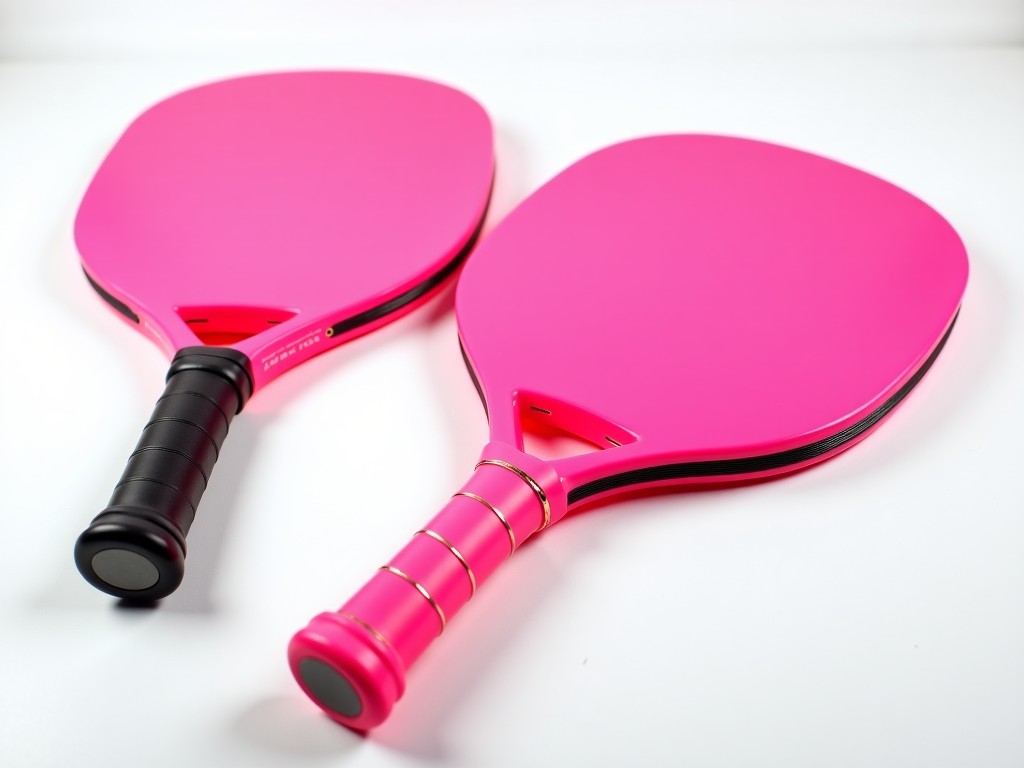
Custom Pink Padel Rackets Manufacturer
Padel rackets must withstand repeated high‑impact strikes while delivering consistent ball response. Key performance parameters include total weight, balance point, swing weight, torsional stiffness,
Custom Pink Padel Rackets Manufacturer
Padel rackets must withstand repeated high‑impact strikes while delivering consistent ball response. Key performance parameters include total weight, balance point, swing weight, torsional stiffness, and surface finish uniformity. Understanding these metrics allows engineers to tailor a racket to specific player styles and court conditions.
Customization Parameters
Customization begins with defining the target weight range, typically between 340 g and 380 g for adult play, and selecting a balance point that shifts the mass toward the head for power or toward the handle for control. Grip circumference can be adjusted from 100 mm to 110 mm in 2 mm increments to match hand geometry. The pink hue is achieved by integrating a certified pigment into the outer epoxy layer, ensuring colorfastness under UV exposure and abrasion.
- Weight: 340 g–380 g (±2 g tolerance)
- Balance point: 260 mm–290 mm from handle end (±3 mm)
- Swing weight: 260 – 300 kg·cm²
- Stiffness (RA): 55 – 70 %
- Grip size: 100 mm–110 mm circumference
Material Selection and Layup
Material selection influences stiffness, damping, and durability. A typical layup combines high‑modulus carbon fiber (tensile modulus ≈ 230 GPa) in the outer hoop for stiffness, with a middle layer of fiberglass (tensile modulus ≈ 70 GPa) to improve impact resistance. The core is usually an EVA foam with density ranging from 30 kg/m³ to 45 kg/m³, selected to achieve the desired feel and rebound. The pink pigment is dispersed in the final epoxy resin layer at a concentration of 0.5 %–1.0 % by weight, providing uniform color without significantly altering mechanical properties.
Manufacturing Process Overview
The manufacturing cycle starts with precision‑machined molds that define the racket’s external geometry and internal core cavity. Pre‑impregnated carbon/fiberglass sheets are laid up according to the engineered schedule, followed by placement of the EVA core. The assembly undergoes vacuum bagging and is cured in a heated press at 130 °C–150 °C under 1.2 bar–1.5 bar pressure for 90 minutes–120 minutes. Post‑cure, the rackets are demolded, excess material is trimmed, and the grip is applied via overwrap or heat‑shrink tubing. Final machining ensures the throat and hole pattern meet regulatory specifications.
Quality Assurance and Inspection
Quality assurance verifies that each racket meets the agreed tolerances before shipment. Inspection items include weight measurement, balance point verification, stiffness testing via flexural modulus, impact resistance assessment using a standardized ball drop, and visual inspection for pigment uniformity and surface defects. Statistical process control tracks deviations, with corrective actions triggered when any parameter exceeds ±2 g weight, ±3 mm balance, or ±5 % stiffness limits.
- Weight: ±2 g
- Balance point: ±3 mm
- Stiffness (RA): ±5 %
- Impact resistance: no cracking after 100 ball drops at 30 m/s
- Surface: uniform pink hue, ΔE < 2 vs. reference
Typical Specifications Table
| Parameter | Typical Range | Adjustable By |
|---|---|---|
| Weight (g) | 340 – 380 | Layup thickness, core density |
| Balance point (mm from handle) | 260 – 290 | Mass distribution in hoop vs. handle |
| Swing weight (kg·cm²) | 260 – 300 | Weight and balance settings |
| Stiffness (RA %) | 55 – 70 | Carbon fiber modulus, layup angle |
| Grip circumference (mm) | 100 – 110 | Overwrap layers, grip core size |
Values represent typical production outcomes; actual figures are confirmed during sample approval and can be shifted according to project requirements.
Applications and Performance Benefits
In competitive play, a well‑balanced racket reduces player fatigue by minimizing unwanted vibration transfer to the wrist and elbow. The pink finish improves visibility under varied lighting conditions, aiding quick identification during fast‑paced rallies and supporting team branding initiatives. Training academies benefit from consistent weight distribution across a batch, allowing athletes to develop repeatable swing mechanics without equipment‑induced variability.
Recreational clubs often request a slightly higher balance point (≈ 285 mm) to provide extra power for beginner to intermediate players, while advanced competitors may opt for a head‑light configuration (≈ 265 mm) to enhance maneuverability for net play. Custom core density adjustments enable fine‑tuning of the “feel” spectrum from soft (more damping) to firm (greater energy return).
Frequently Asked Questions
- Can dimensions be customized? Yes, length, width, and throat geometry can be adjusted within the limits of standard mold tooling; bespoke molds are available for volume projects.
- What information is required before quotation? Desired weight range, balance point, grip size, core material preference, order quantity, and any specific branding or color tolerances.
- What materials are available? Carbon fiber, fiberglass, basalt fiber, and various epoxy resins; core options include EVA, polyethylene, and hybrid foams.
- How is quality inspected? Through weight, balance, stiffness, impact, and visual checks as outlined in the QC section; reports are provided with each shipment.
- What packaging methods are available? Individual rackets in corrugated sleeves with corner protectors, packed in master cartons with palletization for sea or air freight; anti‑static lining optional.
- How are export shipments protected? Cartons are strapped, corner‑boarded, and wrapped in shrink‑film; humidity indicator cards monitor moisture exposure.
- What is the typical production lead time? Sample approval takes 10‑15 working days; mass production lead time ranges from 20‑30 working days after deposit, depending on order size and material availability.
- How are samples arranged? Up to two prototype samples can be shipped at customer expense; feedback drives final tooling validation.
To initiate a quotation or request technical data sheets, please contact our engineering team via the inquiry form.
Request Quote / Technical Inquiry


