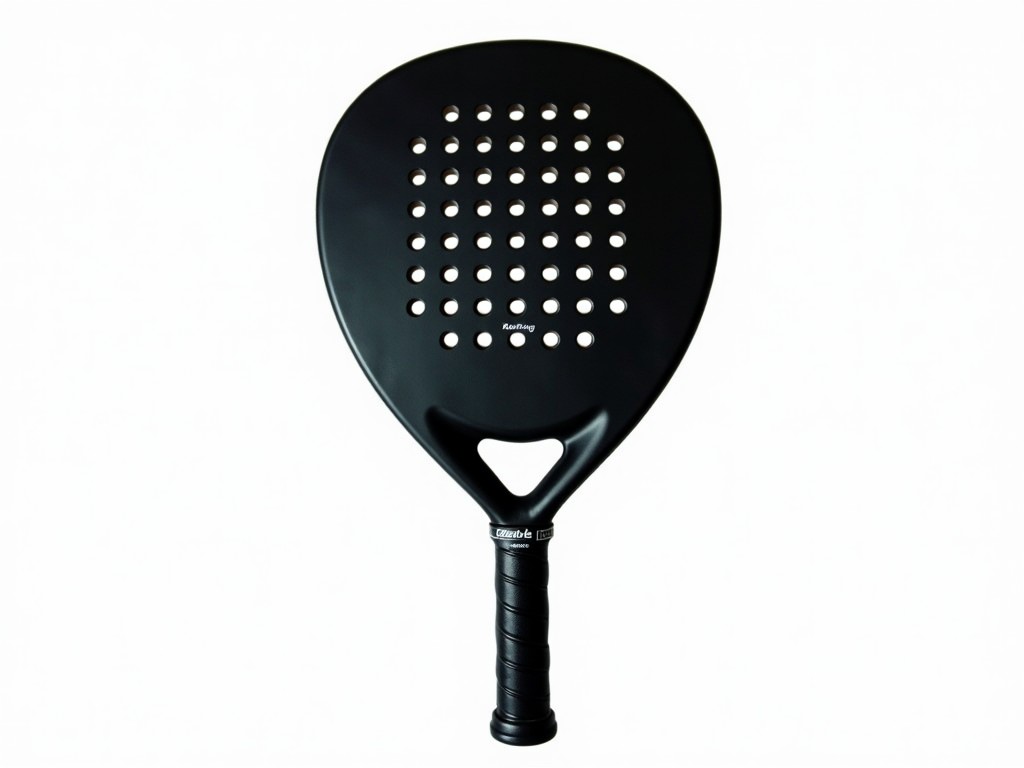
Direct Factory Carbon Fiber Padel Racket Supplier
Padel rackets require a balance of stiffness, weight distribution, and surface texture to generate spin and power while maintaining maneuverability. Carbon fiber composites allow precise tailoring of
Direct Factory Carbon Fiber Padel Racket Supplier
Padel rackets require a balance of stiffness, weight distribution, and surface texture to generate spin and power while maintaining maneuverability. Carbon fiber composites allow precise tailoring of layup angles and resin content to achieve target flex and damping characteristics. As a direct factory supplier, we control the entire layup, curing, and finishing process to deliver rackets that meet strict performance tolerances.
Material Composition and Layup
The racket frame uses unidirectional carbon fiber tapes oriented at 0°, ±45°, and 90° relative to the longitudinal axis to optimize tensile strength, torsional rigidity, and impact resistance. A typical layup consists of 12 plies with a resin system that provides a glass transition temperature above 150 °C, ensuring stability under repeated high‑impact loads. The proportion of 0° fibers governs axial stiffness, while the ±45° layers contribute to shear damping and vibration attenuation.
The striking surface incorporates a thin veil of woven carbon fiber combined with a textured polyurethane coating, creating a controlled roughness profile (average Ra ≈ 0.8 µm) that enhances ball bite without excessive wear. This surface treatment is applied after curing and inspected via profilometry to ensure uniformity across the hitting zone.
Mechanical Properties and Performance
Key performance indicators are measured on finished rackets using standardized procedures: mass is determined with a precision balance (±0.1 g), balance point is measured from the handle end using a steel ruler, and flex index is obtained by applying a known force at the throat and recording deflection. These values allow players to predict swing weight, power potential, and vibration transmission to the arm.
| Parameter | Typical Value | Customizable Range |
|---|---|---|
| Weight | 340‑360 g | ±10 g |
| Balance Point | 265 mm from handle | ±5 mm |
| Stiffness (Flex Index) | 65‑70 | ±5 |
| Surface Roughness (Ra) | 0.8 µm | ±0.2 µm |
Customization Options
- Fiber orientation schedule – adjust 0°/±45°/90° ply ratios to shift stiffness versus damping.
- Resin system selection – choose between epoxy, toughened epoxy, or thermoplastic matrices for varied impact resistance and temperature tolerance.
- Weight tuning – add or remove discrete weight inserts in the handle or throat to achieve desired balance point.
- Surface texture – modify polyurethane coating formulation or laser‑etched pattern to alter spin generation characteristics.
- Grip size and shape – offer standard, oversized, or ergonomic grips with varying circumference and taper.
Applications in Padel
In padel, the racket must generate sufficient topspin and slice while remaining maneuverable for quick volleys at the net. A higher flex index (≈ 68) provides a trampoline‑like effect that increases ball exit speed without sacrificing control, whereas a lower flex index (< 60) yields a stiffer feel preferred for defensive blocking. By adjusting the layup and surface roughness, our rackets can be tuned to match the playing style of baseline aggressors, net players, or all‑round competitors.
Quality Control and Testing
Each racket undergoes dimensional inspection (length, width, thickness) using calibrated calipers with a tolerance of ±0.2 mm. Mass and balance are verified on a static balance machine, and flex index is measured via a three‑point bend test at a span of 340 mm. Surface roughness is sampled at five locations across the hitting zone with a contact profilometer, ensuring the average Ra remains within the specified band. Visual inspection under 10× magnification detects resin voids, fiber misalignment, or coating defects before packaging.
Frequently Asked Questions
Can dimensions be customized?
Yes, overall length, width, and throat geometry can be adjusted within the limits of the mold tooling; new geometries require a prototype mold and associated lead time.
What information is required before quotation?
We need the target weight range, desired balance point, preferred flex index, surface roughness specification, and any cosmetic requirements such as color or logo placement.
How is quality inspected?
Inspection includes dimensional checks, mass and balance verification, flex testing, surface roughness profiling, and visual examination for defects, all documented in a test report supplied with each batch.
Get in Touch
Our engineering team is ready to discuss your performance targets, review technical drawings, and provide samples for validation. Contact us to start a project.


