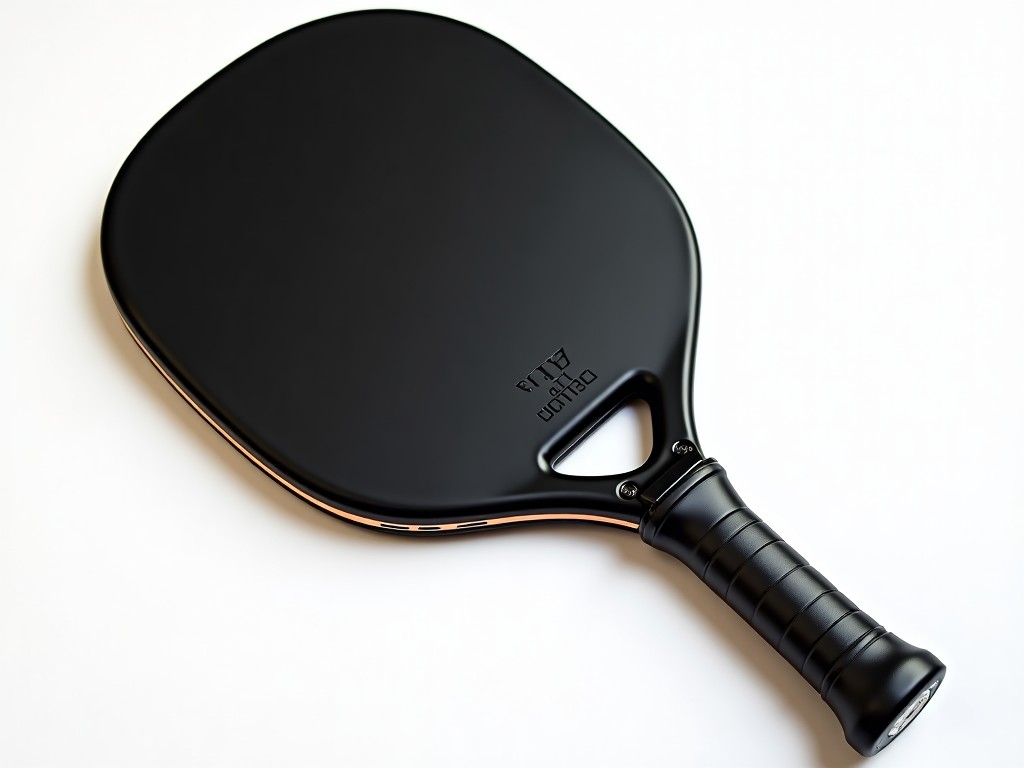
Oem All Black Padel Racket Top Factory
An all‑black padel racket begins with a carbon‑fiber laminate frame that provides a high modulus of elasticity while keeping mass low. The matte black finish is applied via a UV‑resistant pigmented
OEM All Black Padel Racket – Top Factory Solutions
Overview
An all‑black padel racket begins with a carbon‑fiber laminate frame that provides a high modulus of elasticity while keeping mass low. The matte black finish is applied via a UV‑resistant pigmented coating that adds less than 0.02 mm to the wall thickness and does not alter the flexural stiffness.
Material Composition
The frame typically uses a 60 % carbon‑fiber, 30 % glass‑fiber, and 10 % epoxy resin blend by weight. This ratio yields a tensile strength of approximately 4.2 GPa and a flexural modulus around 230 GPa, measured on 3 mm thick coupons.
The core is a low‑density EVA foam with a density of 30 kg/m³, selected for its consistent rebound characteristics across temperature ranges from 5 °C to 45 °C.
Surface texture is created by a laser‑etched pattern that raises the roughness average (Ra) to 12 µm, enhancing ball‑spin generation without increasing drag.
Manufacturing Process
Prepreg sheets are cut to the desired geometry using CNC laser cutting with a tolerance of ±0.1 mm. The layup is performed in a temperature‑controlled autoclave at 120 °C and 1.2 bar pressure for 45 minutes, ensuring uniform resin flow and minimal void content (<0.5 %).
After curing, the frame undergoes CNC milling to achieve the final throat width of 26 mm and a beam width that tapers from 24 mm at the tip to 28 mm at the handle.
The black pigment coating is sprayed in a booth with a controlled humidity of 45 % ± 5 % and cured under UV‑LED at 365 nm for 30 seconds, resulting in a coating hardness of 2H on the pencil scale.
Customization Options
- Weight adjustment: ±5 g by varying the number of carbon‑fiber plies in the hoop.
- Balance point: adjustable from 260 mm to 300 mm from the butt cap through core density changes.
- Grip size: available in L1 (4 in), L2 (4.25 in), L3 (4.5 in) with optional over‑wrap thickness.
- Surface finish: matte black, gloss black, or custom matte colors with matching UV‑stable pigments.
- Logo application: laser‑etched or sublimated printing on the throat area, depth ≤0.03 mm.
Quality Control Philosophy
Each rackets batch is subjected to a three‑stage inspection: dimensional verification (±0.2 mm on length, width, thickness), static flex test (load‑deflection curve within ±5 % of target stiffness), and impact resilience test (coefficient of restitution measured at 30 m/s).
Statistical process control charts monitor key parameters such as resin content (target 38 % ± 2 %) and void fraction (target <0.5 %). Any batch exceeding control limits triggers a root‑cause analysis before release.
Applications
The all‑black aesthetic is favored in professional circuits where visual uniformity reduces distraction during fast‑paced rallies, and the matte surface minimizes glare under indoor lighting.
Clubs and academies benefit from the consistent performance characteristics across temperature variations, allowing players to transition between outdoor and indoor courts without adjusting swing mechanics.
Distributors value the rackets’ high fatigue resistance, demonstrated by over 10 000 impact cycles with less than 2 % loss in stiffness, which translates to longer shelf life and reduced warranty claims.
Technical Specifications
| Parameter | Typical Value | Customizable? |
|---|---|---|
| Weight (unstrung) | 340 g ± 5 g | Yes, via ply count |
| Balance point | 280 mm from butt | Yes, core density |
| Swingweight | 260 kg·cm² | Limited, via weight distribution |
| Frame thickness (mid‑section) | 22 mm | No, structural limit |
| Carbon‑fiber content | 60 % ± 2 % by weight | Yes, within 55‑65 % range |
| Surface roughness (Ra) | 12 µm | Yes, laser pattern depth |
| Finish thickness | 0.02 mm | No, coating spec |
Frequently Asked Questions
Can the racket dimensions be tailored to a specific player profile?
Yes, length, width, and throat geometry can be adjusted within ±3 mm of the standard mold by modifying the CNC cutting program, subject to tooling availability.
What information is required before a quotation is issued?
We need the target weight range, desired balance point, grip size, any logo or artwork files, and the estimated annual volume to calculate tooling amortization.
Which material options are available for the frame?
Standard offering is a carbon‑glass‑epoxy hybrid; alternative high‑modulus carbon‑fiber or basalt‑fiber reinforcements can be quoted upon request.
How is quality inspected during production?
In‑process checks include ply thickness via ultrasonic scanning, resin content via burn‑off test, and final dimensional verification with a coordinate measuring machine.
What packaging methods are available for export shipments?
Rackets are packed in individual corrugated sleeves with corner protectors, then placed in double‑wall cartons rated for 25 kg burst strength, sealed with pressure‑sensitive tape.
What is the typical production lead time?
For tooling‑ready orders, lead time is 4‑6 weeks; new tooling adds 2‑3 weeks for design and trial runs.


