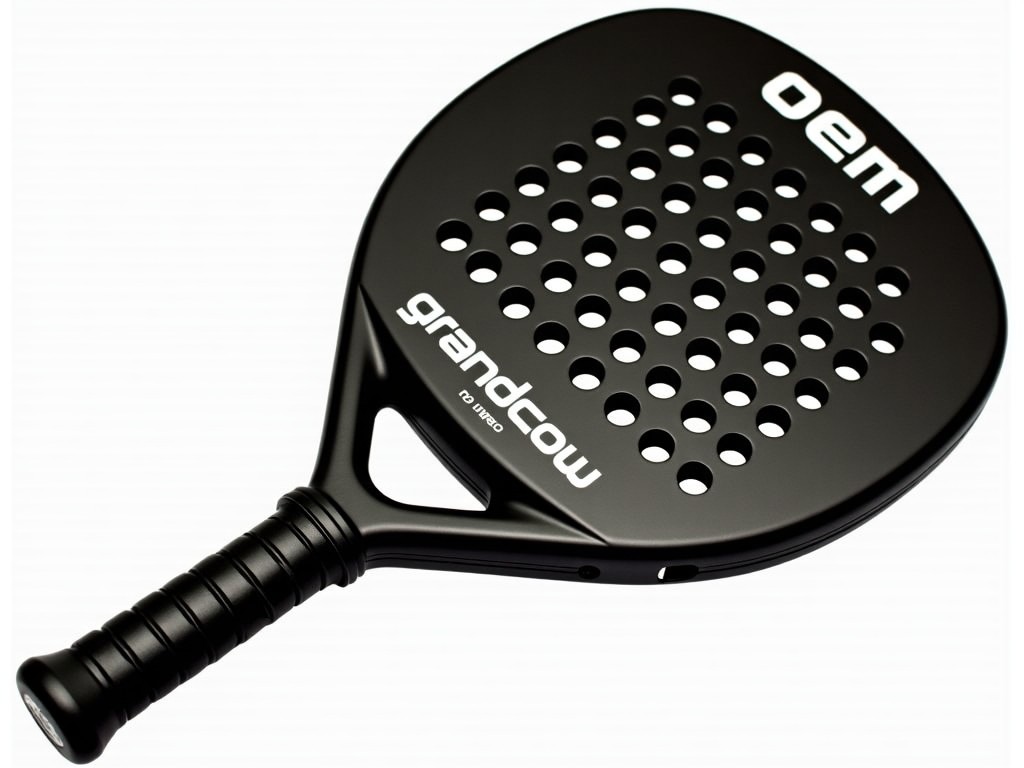
Oem Grandcow Padel Racket Top Factory
The factory specializes in original equipment manufacturing of padel rackets under the Grandcow brand, focusing on repeatable production of rackets that meet defined performance tolerances.
OEM Grandcow Padel Racket – Factory Overview
The factory specializes in original equipment manufacturing of padel rackets under the Grandcow brand, focusing on repeatable production of rackets that meet defined performance tolerances. Production lines are configured for both short‑run prototyping and high‑volume orders, with tooling designed for quick change‑over between models. This setup enables OEM partners to receive consistent product specifications while maintaining flexibility for custom specifications.
Key Technical Parameters
Typical racket weight ranges from 340 g to 360 g, measured with a precision balance (±0.5 g). Balance point is adjustable between 260 mm and 280 mm from the handle end, influencing swing feel. Swing weight, measured on a RDC‑type machine, usually falls between 260 kg·cm² and 280 kg·cm². Frame thickness varies from 18 mm to 22 mm along the beam, and torsional stiffness is quantified via a three‑point bend test, typically showing a deflection of less than 2 mm under a 10 N load.
Material Composition and Construction
The frame uses a lay‑up of 70 % high‑modulus carbon fiber and 30 % glass fiber, impregnated with an epoxy resin system rated for a glass transition temperature of 130 °C. The core consists of a low‑density EVA foam (density ≈ 45 kg/m³) shaped to provide a uniform thickness of 16 mm across the hitting surface. Surface finish layers include a polyurethane topcoat for abrasion resistance and a optional textured grip overlay.
Manufacturing Process
Pre‑preg carbon/glass sheets are cut to pattern and placed in a heated compression mold set at 150 °C and 200 bar pressure for 8 minutes. After curing, the mold opens and the frame undergoes CNC trimming to achieve final dimensions within ±0.2 mm. The foam core is then injected via a low‑pressure transfer molding step, followed by a post‑cure at 100 °C for 30 minutes to relieve internal stresses. Final steps include grinding, painting, laser etching of logos, and grip installation.
Quality Control and Testing
Each racket is weighed on a calibrated scale; acceptance criterion is ±2 g from target weight. Balance is verified using a pivot‑type balance board with a tolerance of ±3 mm. Swing weight is measured on a calibrated RDC device, accepting ±5 kg·cm². Visual inspection checks for surface defects, coating thickness (≥ 30 µm), and adhesive bond strength (≥ 1.5 MPa). Statistical process control charts monitor critical dimensions across each production lot.
Customization Options
- Weight adjustment via core density or lay‑up thickness (range 320 g‑380 g)
- Balance point shift through asymmetric core placement (range 250 mm‑290 mm)
- Grip size options: L0, L1, L2, L3 (circumference 100 mm‑115 mm)
- Surface finish: matte, gloss, or textured polyurethane
- Branding: laser engraving, sublimation printing, or embossed logos
- Color matching: Pantone‑specified frame and accent hues
Typical Applications
Clubs and academies select these rackets for training programs because the adjustable weight and balance allow coaches to tailor equipment to player development stages. Promotional events benefit from rapid turnaround times and the ability to embed event logos directly into the frame finish. Distributors value the consistent tolerance stack‑up, which reduces warranty claims and simplifies inventory forecasting.
Comparison Table
| Parameter | Standard Offering | Customizable Range |
|---|---|---|
| Weight (g) | 350 | 320‑380 |
| Balance Point (mm from handle) | 270 | 250‑290 |
| Swing Weight (kg·cm²) | 270 | 260‑280 |
| Frame Thickness (mm) | 20 | 18‑22 |
| Core Density (kg/m³) | 45 | 35‑55 |
Frequently Asked Questions
Can the racket dimensions be customized beyond the listed ranges?
Yes. The factory can adjust mold geometry and lay‑up schedules to meet specific length, width, or throat dimensions, subject to tooling feasibility review.
What information is required before quotation?
Target weight, balance point, preferred material percentages, grip size, surface finish, logo artwork, and order volume are needed to generate a detailed cost estimate.
How is quality inspected for each batch?
Each batch undergoes 100 % weight and balance checks, 10 % swing‑weight sampling, and visual inspection per AQL 1.0 standards. Test reports are available upon request.
What packaging methods are available for export?
Rackets are packed in individual corrugated sleeves, then placed in master cartons with corner protectors and moisture‑barrier lining. Palletization follows ISPM‑15 standards for international shipment.
What is the typical production lead time?
Lead time ranges from 3 weeks for sample approval to 5‑7 weeks for production lots of 500 units, depending on customization complexity and current plant load.
Contact for OEM Inquiry
To discuss specifications, request a sample, or obtain a formal quotation, please contact our sales team.


