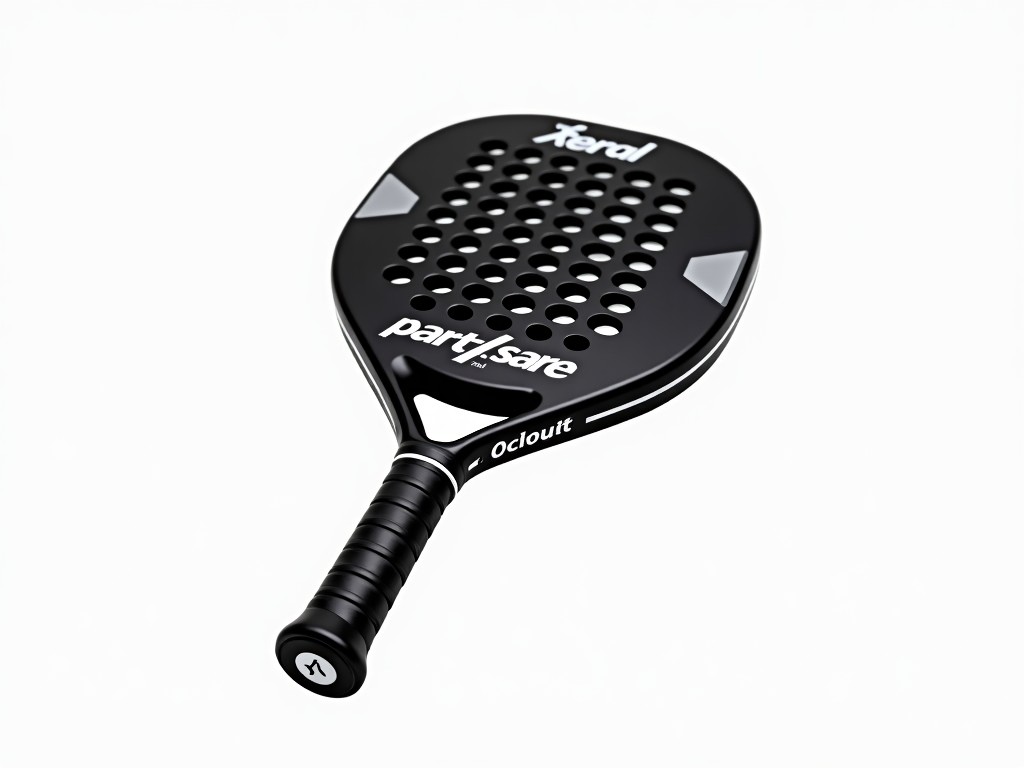
Oem Latest Design Carbon Fiber Padel Racket Manufacturer
Padel rackets must combine low mass with high torsional stiffness to enable rapid swing acceleration while maintaining shot consistency. Carbon fiber reinforced polymer meets these demands when the
OEM Latest Design Carbon Fiber Padel Racket
Padel rackets must combine low mass with high torsional stiffness to enable rapid swing acceleration while maintaining shot consistency. Carbon fiber reinforced polymer meets these demands when the fiber architecture, resin system, and layup are tailored to the sport’s impact loads.
Material Composition and Layup
The racket uses high‑modulus (≈230 GPa) carbon fiber prepreg impregnated with a toughened epoxy matrix. A quasi‑isymmetric layup alternates 0°, ±45°, and 90° plies to distribute tensile, compressive, and shear stresses generated during ball impact. Typical laminate thickness ranges from 3.2 mm to 3.8 mm depending on the targeted weight class.
Frame Geometry and Aerodynamics
The frame features a uniform beam width of 24 mm with a slightly tapered throat to reduce drag during the forehand swing. Edge radii are kept below 0.5 mm to minimize turbulence while preserving structural integrity. Computational fluid dynamics simulations show a 3‑5 % reduction in aerodynamic drag compared with a conventional square‑beam design of identical mass.
Customization Options
- Overall length adjustable between 455 mm and 470 mm in 5 mm increments
- Weight (unstrung) selectable from 340 g to 380 g
- Balance point variable from 260 mm to 290 mm from the butt cap
- Grip circumference offered in 100 mm, 102 mm, and 104 mm
- Surface finish options: matte UV‑clear, gloss UV‑clear, or custom pigmented coating
- Logo placement available on the throat, shaft, or head via laser etching or pad printing
Manufacturing Process Overview
Prepreg sheets are cut to shape and placed in a female mold that defines the racket profile. The mold undergoes vacuum bagging followed by autoclave curing at 120 °C and 2 bar pressure for 90 minutes, ensuring low void content (<1 %). After demolding, CNC machining trims excess material and creates the grip tunnel. Finally, a protective clear coat is applied and cured under UV lamps.
Quality Control and Testing
Each rack undergoes ultrasonic C‑scan to detect internal delamination or voids. Static flex tests measure deflection under a 10 N load at the throat, with acceptance limits of ±0.2 mm from the target curve. Weight and balance are verified on a precision scale (±0.5 g) and a balance beam (±1 mm). Impact resistance is evaluated by dropping a 0.5 kg steel sphere from 1 m onto the racket face; no visible cracking is permitted.
Technical Specifications
| Parameter | Typical Value | Unit | Notes |
|---|---|---|---|
| Overall Length | 460 | mm | Customizable per request |
| Weight (unstrung) | 360 | g | Tolerance ±5 g |
| Balance Point | 275 | mm from butt cap | Adjustable |
| Swing Weight | 260 | kg·cm² | Measured at 10 cm from tip |
| Stiffness (RA) | 55 | RA | Racket flex index |
| Frame Thickness | 3.5 | mm | Average over throat |
| Grip Size Options | 100‑104 | mm circumference | Three standard sizes |
| Surface Finish | Matte UV‑clear | – | Gloss or pigmented available |
Applications in Padel Equipment
OEMs integrate this racket into premium performance lines where consistent feel and durability are critical for competitive players. The tailored layup delivers a predictable power‑control ratio, reducing the variability that can arise from material inconsistencies. Because the carbon fiber structure resists fatigue, the racket maintains its playing characteristics over extensive use, lowering warranty claims and enhancing brand reputation.
Frequently Asked Questions
- Can dimensions be customized? Yes, length, weight, balance, and grip size can be adjusted according to project requirements.
- What information is needed for a quotation? Detailed specifications including target weight, balance point, preferred grip size, finish, and any branding requirements.
- What material options are available? Standard offering uses high‑modulus carbon fiber/epoxy prepreg; alternative fibers such as glass‑carbon hybrids are available upon request.
- How is quality inspected? Each rack undergoes ultrasonic C‑scan, flex testing, weight/balance verification, and impact resistance checks before shipping.
Contact for OEM Inquiry
To discuss custom specifications, request a sample, or obtain a detailed quote, please reach out using the link below.


