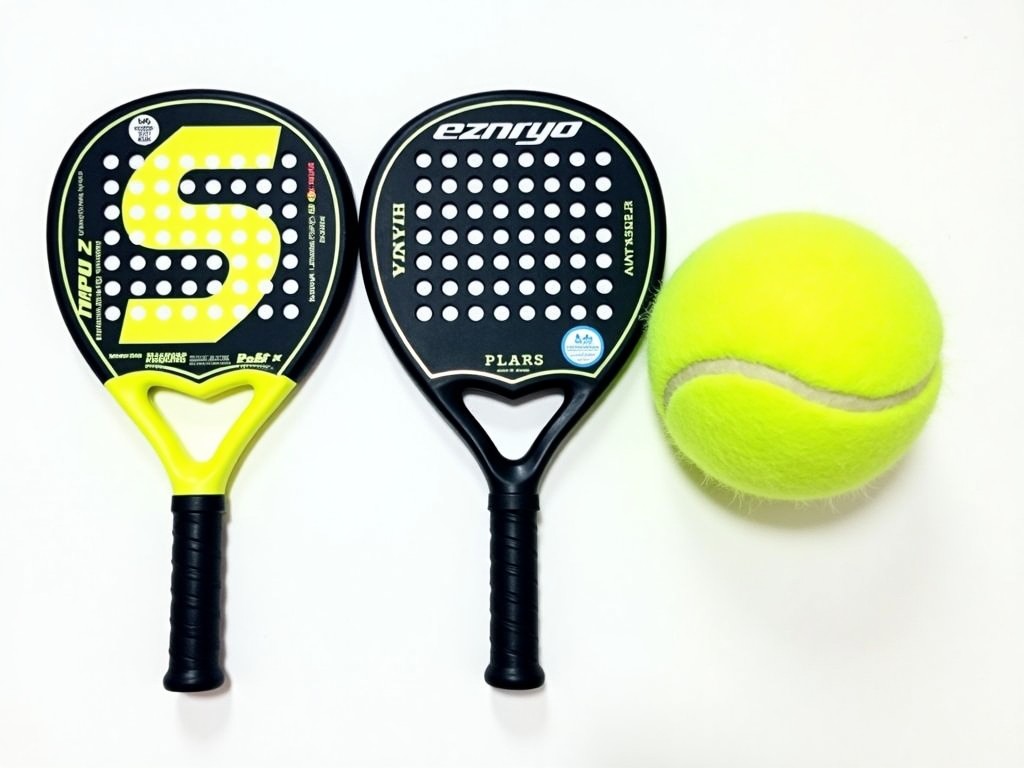
Oem Padel Rackets For Intermediate Players Manufacturer
Intermediate players benefit from a racket that balances maneuverability with sufficient power transfer. The design targets a head‑light balance point around 320 mm from the butt cap, which reduces
OEM Padel Rackets for Intermediate Players – Manufacturer Overview
Design Philosophy for Intermediate Play
Intermediate players benefit from a racket that balances maneuverability with sufficient power transfer. The design targets a head‑light balance point around 320 mm from the butt cap, which reduces swing weight while maintaining stability on off‑center hits.
Stiffness is tuned to approximately 70 GPa modulus in the longitudinal direction, providing a responsive feel without excessive vibration. The frame geometry incorporates a widened throat to increase the sweet spot area by roughly 15 % compared with beginner models.
Material Selection and Performance Characteristics
The primary structure uses a unidirectional carbon fiber prepreg with a fiber volume fraction of about 60 %. This yields a tensile strength near 4.5 GPa and a density of 1.55 g/cm³, contributing to a total racket mass between 340 g and 360 g.
A hybrid layup adds a 30 % fiberglass layer in the impact zone to improve damage tolerance and modulate the flex pattern. The epoxy resin system is formulated for a glass transition temperature above 120 °C, ensuring dimensional stability during prolonged play.
Manufacturing Process Controls
Prepreg sheets are cut to precise templates and placed in a heated compression mold at 180 °C under 150 bar pressure for 8 minutes. This cycle achieves a void content below 1 % and ensures consistent fiber alignment.
After demolding, the frame undergoes CNC trimming to tolerance ±0.2 mm on critical dimensions. The grip is then over‑molded with a polyurethane blend rated for a Shore A hardness of 85, providing a durable, non‑slip surface.
Customization Options for OEM Partners
- Frame geometry adjustments: head size, beam width, and throat angle
- Weight tuning via internal carbon tape or foam inserts (±10 g)
- Grip size variations: 4 in, 4.25 in, 4.5 in circumference
- Surface finish choices: matte, gloss, or textured UV coating
- Branding integration: laser‑etched logos, custom color pigments
Quality Assurance and Testing Protocols
Each racket undergoes an impact test using a 0.5 kg steel ball at 30 m/s to verify that peak frame deflection stays under 4 mm. Fatigue evaluation consists of 10 000 swing cycles at a 2 Hz frequency, with stiffness loss monitored to remain below 5 %.
Torsional rigidity is measured by applying a 5 Nm twist and recording angular displacement; acceptable values are ≤0.8°. Visual inspection includes a 10× magnification check for delamination, resin voids, and fiber misalignment.
Typical Technical Specifications
| Parameter | Typical Value | Unit | Notes |
|---|---|---|---|
| Mass | 340–360 | g | Dependent on custom weight tuning |
| Balance Point | 320 | mm from butt cap | Head‑light configuration |
| Longitudinal Modulus | 70 | GPa | Measured via three‑point bend |
| Swing Weight | 260–280 | kg·cm² | Calculated from mass distribution |
| Grip Circumference | 4.0 / 4.25 / 4.5 | in | Optional sizes |
Applications and Market Fit
Intermediate players typically transition from developing consistent strokes to generating more aggressive shots. A racket with a head‑light balance and moderate stiffness enables quicker wrist action for volleys while still delivering sufficient rebound power for baseline drives.
The enlarged sweet spot reduces the penalty of off‑center hits, which is common as players refine shot placement. This combination supports longer practice sessions with less arm fatigue, aligning with the performance goals of this skill tier.
Ordering and Lead Time Information
Minimum order quantity for OEM projects starts at 200 units, with sample units available upon request after tooling approval. Standard production lead time ranges from 4 to 6 weeks, depending on the extent of geometric customization and finish selection.
Shipping is arranged in sealed, moisture‑barrier cartons designed to prevent resin degradation during transit. Each pallet includes a packing list and a copy of the inspection report for traceability.
Frequently Asked Questions
Can dimensions be customized?
Yes, frame length, beam width, and head size can be adjusted within ±5 mm of the baseline geometry to meet specific player preferences or brand requirements.
What information is required before quotation?
We need the desired weight range, balance point, grip size, surface finish, and any branding details. Optional data such as target swing speed or preferred stiffness can further refine the proposal.
How is quality inspected?
Every batch undergoes dimensional verification, impact deflection testing, fatigue cycling, and torsional stiffness measurement. AQL 1.0 standards are applied for visual defects.
What packaging methods are available?
Standard packaging includes individual foam sleeves inside corrugated cartons. For export, we offer heat‑sealed moisture barrier bags and palletized configurations with corner protectors.
Contact for Technical Inquiry
To discuss your OEM specifications, request a sample, or obtain a detailed quotation, please reach out via our technical inquiry form.
Submit Technical Inquiry


