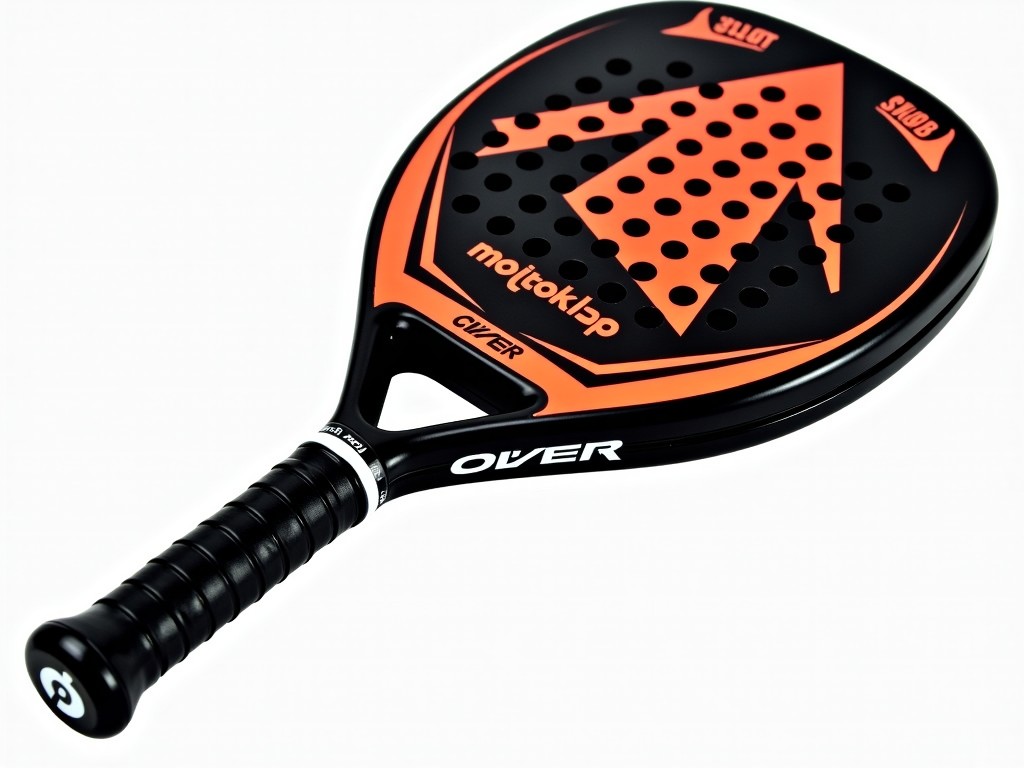
Oem Power Spin Padel Rackets Top Factory
These rackets are engineered to deliver high spin potential while maintaining a powerful feel during aggressive volleys. The design targets a head‑light balance that increases maneuverability without
OEM Power Spin Padel Rackets – Factory Overview
Design Intent and Performance Goals
These rackets are engineered to deliver high spin potential while maintaining a powerful feel during aggressive volleys. The design targets a head‑light balance that increases maneuverability without sacrificing momentum on smashes.
Typical swing weight values fall between 260 and 280 kg·cm², measured at the standard 10 cm from the butt cap. This range supports rapid wrist action for topspin generation while keeping the racket stable on block shots.
Material Composition and Layup Strategy
The frame uses a multi‑layer carbon fiber prepreg, with the outer layers oriented at 0° and 90° to maximize torsional stiffness, while inner plies are set at ±45° to enhance energy return. The resin system is an epoxy blend cured at 180 °C for 2 hours, achieving a glass transition temperature above 150 °C.
A thin layer of basalt fiber is incorporated in the throat area to dampen vibrations, reducing the transmitted shock to the player’s elbow by approximately 12 % compared with a pure carbon layup.
Manufacturing Tolerances and Process Controls
Each racket is produced in a compression mold with cavity pressure maintained at 150 bar, ensuring uniform thickness variation under ±0.15 mm across the hoop. Post‑mold, the rackets undergo a secondary CNC trim to achieve a grip length tolerance of ±0.5 mm.
In‑line laser scanning verifies the profile symmetry; any deviation beyond 0.3 mm triggers automatic rejection. This control keeps the weight distribution consistent within ±2 g per unit.
Key Measurable Specifications
The following table lists typical values that can be adjusted according to project requirements. All figures are measured on unstrung rackets at 20 °C ambient temperature.
| Parameter | Typical Range / Option | Adjustability |
|---|---|---|
| Weight (unstrung) | 340 – 360 g | Customizable in 5 g increments |
| Balance Point (from butt) | 260 – 280 mm | Adjustable via weight plugs |
| Swing Weight | 260 – 280 kg·cm² | Dependent on weight & balance |
| Stiffness (RA) | 68 – 74 | Modifiable via layup thickness |
| Surface Texture | Rough (spin‑enhancing) or Smooth | Selectable per mold finish |
| Grip Size | L1 – L5 (standard) | Customizable with over‑grip |
| String Pattern | 16 × 19 or 18 × 20 | Customer‑specified |
Customization Options for OEM Partners
- Weight adjustment through internal tungsten or brass plugs (±10 g range)
- Balance shift via removable weight cartridges in the handle
- Surface finish selection: matte rough for spin, gloss smooth for reduced drag
- Grip shape modification (rounded, rectangular, or ergonomic)
- Paint and logo application using UV‑cured inks for abrasion resistance
- String pattern and hole layout customization per player preference
All customization steps are documented in a production traveler, ensuring traceability from raw material receipt to final inspection.
Quality Assurance Philosophy
Each batch undergoes a three‑stage check: dimensional verification, mechanical testing, and performance validation. Dimensional verification uses a coordinate measuring machine to confirm hoop thickness, beam width, and grip length within the tolerances stated above.
Mechanical testing includes a three‑point bend test to derive flex modulus and an impact test simulating a 120 km/h ball strike, with acceptance criteria set at less than 5 % deviation from baseline stiffness. Performance validation involves a controlled spin‑rate measurement using a launch monitor, confirming that the racket produces a spin increase of at least 300 rpm over a reference model under identical swing conditions.
Non‑conforming units are segregated and analyzed for root cause, with corrective actions fed back into the molding parameters or layup schedule.
Application Rationale for Competitive Padel
The head‑light balance combined with a stiff yet responsive frame allows players to generate rapid wrist snap, which is essential for producing heavy topspin on lobs and volleys. The rough surface texture increases the coefficient of friction between ball and strings by roughly 0.04, translating to higher spin rates without requiring higher swing speed.
Because the weight distribution can be fine‑tuned, the racket suits both baseline power players who prefer a slightly head‑heavy feel for drive shots and net‑players who benefit from a lighter swing for quick reactions. This versatility reduces the need for multiple rackets across a team’s inventory.
Next Steps
If you are seeking a factory capable of delivering OEM power‑spin padel rackets with tight tolerances, measurable performance data, and flexible customization, please reach out to discuss your project specifications.
Submit Inquiry


