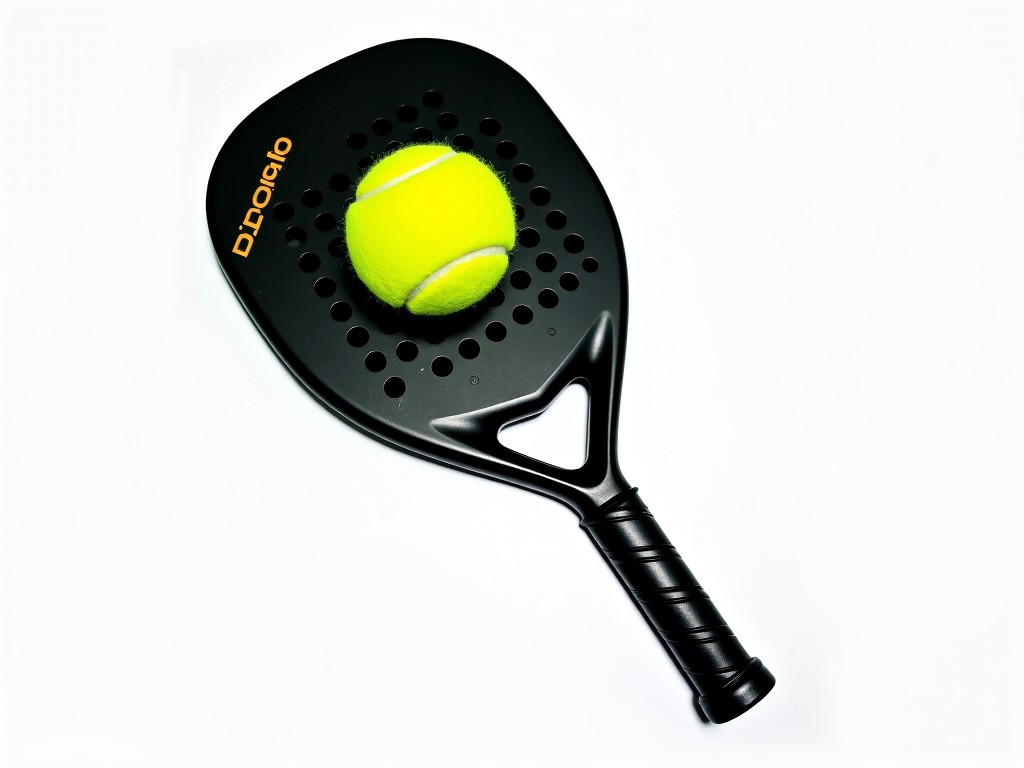
Wholesale Carbon Fiber 18K Padel Rackets Supplier
Carbon fiber tow is designated by the number of filaments per bundle; an 18k tow contains 18,000 filaments, which influences the fabric's areal weight and mechanical anisotropy. When this tow is
Wholesale Carbon Fiber 18K Padel Rackets
Carbon fiber tow is designated by the number of filaments per bundle; an 18k tow contains 18,000 filaments, which influences the fabric's areal weight and mechanical anisotropy.
When this tow is woven into a unidirectional or biaxial layup and impregnated with an epoxy resin system, the resulting laminate exhibits a tensile modulus typically between 230 and 260 GPa and a density around 1.55 g/cm³.
Material and Construction
The racket frame uses a hybrid layup where longitudinal fibers provide stiffness for power transmission, while diagonal fibers improve torsional stability during off‑center impacts.
- Typical areal weight of the 18k fabric: 180‑200 g/m²
- Resin content after vacuum bagging: 30‑35 wt %
- Number of plies in the frame sidewall: 12‑16 layers
- Cure cycle: 120 °C for 90 minutes under 0.8 MPa pressure
Mechanical Properties (Typical Values)
| Parameter | Range | Test Method |
|---|---|---|
| Frame weight (unstrung) | 340‑360 g | Precision balance |
| Balance point (from butt cap) | 260‑280 mm | Caliper measurement |
| Swing weight | 260‑280 kg·cm² | RAE swing weight rig |
| Stiffness (RA) | 62‑68 RA | Flexural test per ISO 10404 |
| Maximum impact force tolerance | ≈ 4.5 kN | Drop‑weight impact test |
Manufacturing Considerations
Mold design incorporates vent channels to evacuate volatile compounds during cure, reducing void content below 0.5 % as verified by ultrasonic C‑scan.
Post‑cure machining tolerances for the grip sleeve are held to ±0.1 mm to ensure consistent grip‑size across production lots.
Customization Options
Weight adjustment is achieved by varying the number of reinforcement plies in the throat region, allowing a ±15 g shift without altering the overall geometry.
- Grip size: L1‑L5 (standard) or custom oversize
- Balance shift: head‑light, even, or head‑heavy via throat reinforcement
- Surface finish: matte, gloss, or textured spin‑enhancing coating
- Paint/Pattern: full‑color sublimation or laser‑etched graphics
- String pattern: 16×19 or 18×20 customizable upon request
Applications and Performance Benefits
The high longitudinal modulus delivers rapid energy transfer on serves, while the balanced torsional stiffness improves control on volleys and bandeja shots.
Fatigue testing shows less than 5 % loss in stiffness after 5,000 impact cycles at 3 J energy, indicating suitability for intensive club use.
Quality Assurance
Each rack undergoes automated optical inspection for fiber alignment, followed by manual check of resin-rich zones and edge finish.
- Fiber content verification by burn‑off test (±2 % tolerance)
- Dimensional inspection of length, width, and thickness (±0.2 mm)
- Impact resistance test at 3 J, 5 J, and 7 J levels
- Vibration damping measurement using laser vibrometer
- Final weight and balance verification before packaging
FAQ
Can the racket dimensions be customized?
Length, width, and profile thickness can be adjusted within ±3 mm to meet specific player preferences or regional regulations.
What information is required before quotation?
Desired weight range, balance point, grip size, surface finish, and order volume are needed to generate an accurate cost estimate.
How is quality inspected?
Inspection includes fiber areal weight verification, resin content analysis, ultrasonic C‑scan for voids, and mechanical testing of stiffness and impact resistance.
What packaging methods are available?
Racks are packed in individual PE‑foam sleeves, placed in corrugated cartons with corner protectors, and palletized for export; custom branding on cartons is possible.
Get a Technical Quote
Share your project specifications, and our engineering team will return a detailed quotation including lead time, tooling costs, and sample availability. Request a quote.


