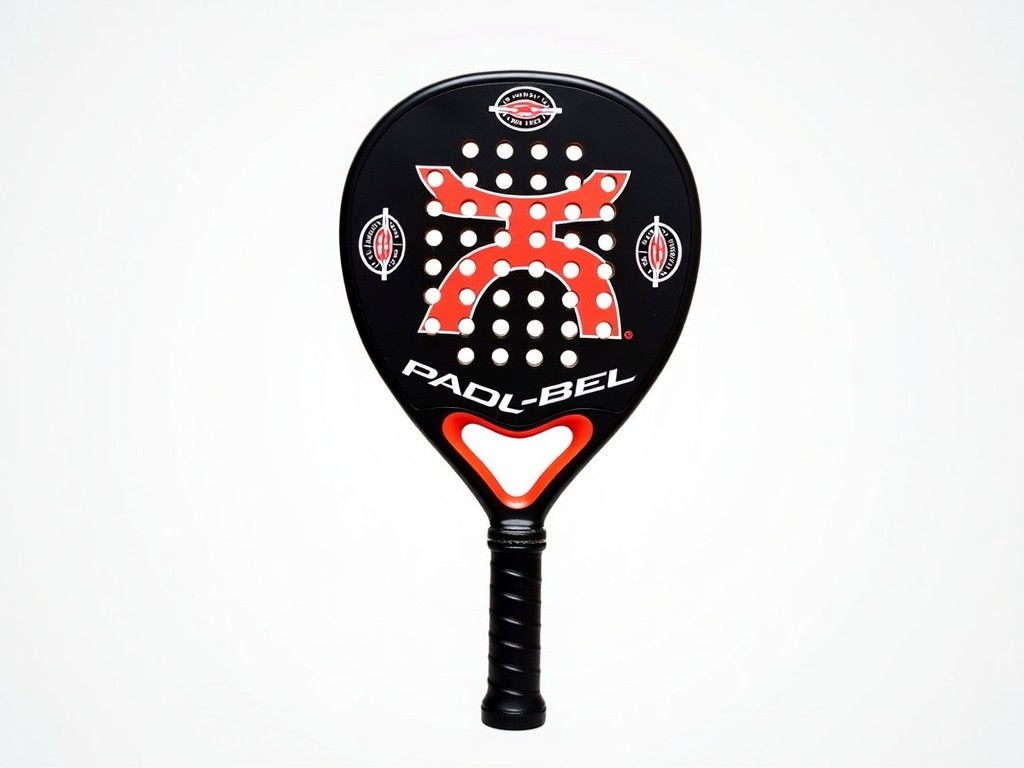
Wholesale Durable Carbon Fiber Padel Racket Supplier
Carbon fiber rackets used in padel combine high specific stiffness with low mass, allowing players to generate rapid swing speeds while maintaining control over ball placement. The structural
Wholesale Durable Carbon Fiber Padel Racket Supplier
Carbon fiber rackets used in padel combine high specific stiffness with low mass, allowing players to generate rapid swing speeds while maintaining control over ball placement. The structural performance depends on fiber orientation, resin system, and laminate thickness, which are tailored to meet the repetitive impact loads typical in padel play.
Material Composition
The racket frame typically employs a unidirectional carbon fiber prepreg with a tensile modulus ranging from 230 to 260 GPa and an areal weight of 115 to 130 gsm per layer. A toughened epoxy resin system provides a glass transition temperature above 120 °C, ensuring dimensional stability under prolonged outdoor exposure.
Core materials vary between low‑density polyethylene foam (density 30–45 kg/m³) for power‑oriented models and honeycomb polypropylene (density 40–55 kg/m³) for control‑focused designs. Each core type influences the racket’s sweet spot size and vibration damping characteristics.
Manufacturing Process
Production starts with computer‑numerical‑control (CNC) cutting of carbon fiber prepreg sheets to the designed ply shapes. The plies are then laid up in a mold using a specific angle sequence—commonly 0°/±45°/90°—to achieve targeted bending and torsional stiffness.
After layup, the mold undergoes vacuum bagging and autoclave curing at 120–130 °C under 0.8 MPa pressure for 60–90 minutes. Post‑cure, the frame is demolded, trimmed, and the core is inserted via adhesive bonding or co‑molding, depending on the selected core technology.
Mechanical Properties
| Property | Typical Range | Test Method |
|---|---|---|
| Weight (unstrung) | 340–380 g | ISO 10534‑1 |
| Balance Point | 260–290 mm from butt | Static balance measurement |
| Flexural Stiffness | 180–220 Nm/deg | Three‑point bend (ASTM D790) |
| Impact Resistance | ≥ 15 J (drop‑weight test) | ISO 6603‑2 |
Values are indicative and can be adjusted by altering ply count, core thickness, or resin formulation to match specific performance targets requested by wholesale buyers.
Customization Options
- Frame geometry: head‑size, throat width, and beam depth adjustable in 2 mm increments.
- Weight distribution: addition of tungsten or brass inserts in the handle or head to shift balance.
- Surface finish: matte UV‑cured coating, glossy polyurethane, or textured grip‑enhancing film.
- Grip size: circumference options from 100 mm to 115 mm with optional over‑wrap layers.
- Branding: laser‑etched logos, sublimated graphics, or in‑mold decals with Pantone‑matched colors.
Applications in Padel
Padel rackets experience repetitive low‑angle impacts from the ball and occasional clashes with the court walls or net. A frame with high torsional rigidity reduces twist during off‑center hits, improving shot consistency. Simultaneously, a low overall mass enables rapid wrist acceleration, which is critical for volley and smash execution.
The dampening characteristics of the core material influence vibration transmission to the player’s arm; selecting a core with appropriate loss factor helps mitigate fatigue during extended matches. These factors are directly linked to the laminate design and core selection described above.
Quality Assurance
Each production lot undergoes incoming inspection of prepreg resin content and fiber areal weight using burn‑off and microscopy techniques. Post‑cure, non‑destructive ultrasonic C‑scan identifies delamination or voids larger than 0.5 mm².
Dimensional verification is performed with coordinate measuring machines (CMM) on critical features such as head thickness and handle diameter, maintaining tolerances within ±0.2 mm. Finished rackets are subjected to a dynamic impact test simulating 5000 ball strikes at 30 m/s to verify fatigue resistance.
Packaging & Logistics
- Individual rackets placed in low‑density polyethylene (LDPE) bags with silica gel desiccant to control moisture.
- Secondary packaging: double‑wall corrugated cartons (300 gsm) with corner protectors and edge straps.
- Palletization: standard Euro‑pallet (800×1200 mm) with stretch film and top‑load capacity of 800 kg.
- Shipping options: FOB Shanghai, CIF destination ports, with optional temperature‑controlled containers for long‑haul transit.
Frequently Asked Questions
- Can dimensions be customized? Yes, head size, length, and beam depth can be adjusted in 2 mm increments based on tooling availability.
- What information is required before quotation? Required details include target weight range, preferred balance point, core type, desired finish, order quantity, and delivery timeline.
- What materials are available? Standard unidirectional carbon fiber prepreg (T700, T800 grades), optional graphene‑enhanced resins, and a selection of foam or honeycomb cores.
- How is quality inspected? Incoming material checks, ultrasonic C‑scan, C‑scan, CMM dimensional verification, and fatigue impact testing as described.
- What packaging methods are available? LDPE bagging, corrugated cartons with corner protection, palletizing with stretch film, and optional custom inserts.
- How are export shipments protected? Desiccant packs, moisture‑barrier liners, and compliance with ISPM‑15 wood‑free packaging standards.
- What is the typical production lead time? Lead times range from 20 to 35 days after receipt of final technical specifications, depending on order size and tooling readiness.
- How are samples arranged? Sample rackets can be produced upon approval of a sample specification sheet and receipt of tooling fees, which are creditable against the first production order.
Contact for Inquiry
To request a formal quotation or discuss specific performance targets, please provide your technical requirements via the contact form. Our engineering team will respond with a detailed feasibility report, including lead time, tooling considerations, and unit pricing.
Submit Inquiry


