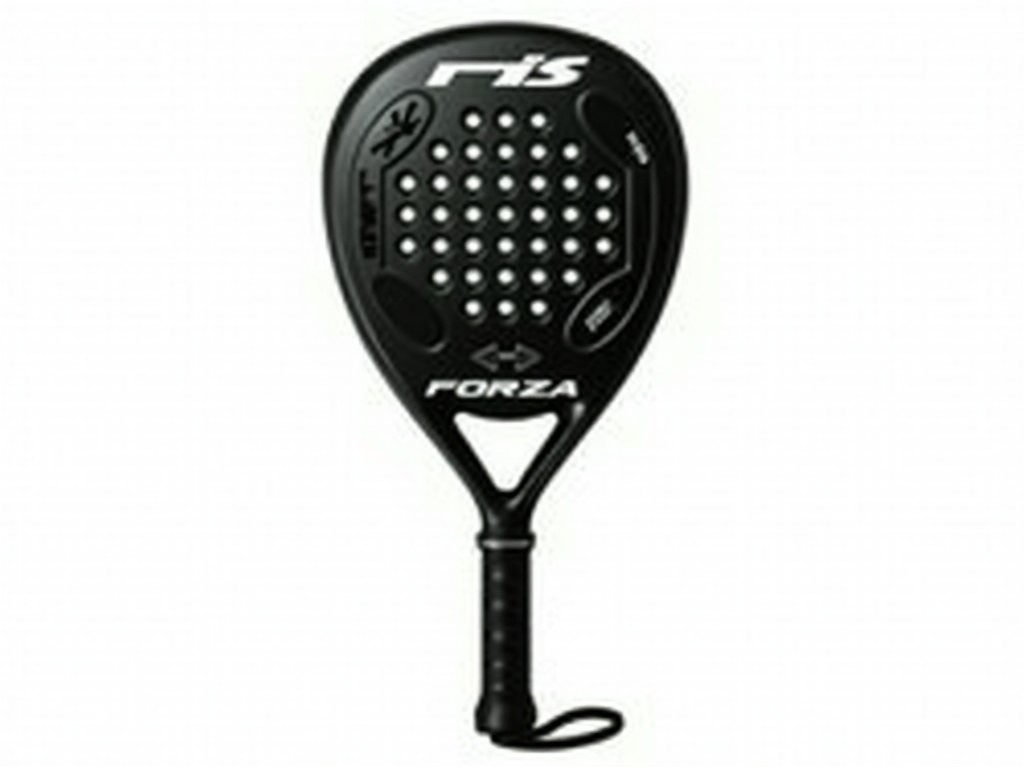
Wholesale Forza Padel Racket Supplier
Forza padel rackets are engineered for consistent performance across a range of playing styles. When supplied in wholesale quantities, each racket meets tight tolerances on weight, balance, and
Wholesale Forza Padel Racket Supplier
Forza padel rackets are engineered for consistent performance across a range of playing styles. When supplied in wholesale quantities, each racket meets tight tolerances on weight, balance, and stiffness, allowing distributors to offer a uniform product line to clubs and retailers.
| Parameter | Typical Value |
|---|---|
| Weight (unstrung) | 340‑360 g |
| Length | 455 mm |
| Balance Point | 260‑280 mm from butt cap |
| Stiffness (RA) | 68‑72 |
| Frame Material | High‑modulus carbon fiber prepreg (≈ 240 GPa) |
| Core Material | EVA foam (density 30‑35 kg/m³) |
| Grip Size | Standard 4 ¼ in (customizable) |
The frame uses a unidirectional carbon fiber layup oriented at 0° and ±45° to maximize tensile strength while controlling torsional flex. The epoxy resin system is formulated for a glass transition temperature above 120 °C, ensuring dimensional stability after repeated impact cycles.
- Weight tuning via internal tungsten inserts (± 5 g)
- Balance adjustment through removable butt‑cap weights
- Grip size options: 4 ¼ in, 4 ⅜ in, 4 ½ in (custom molds available)
- Paint finish: matte, gloss, or UV‑protected solid colors
- Logo placement: silk‑screen, heat transfer, or embossed on shaft
Manufacturing begins with prepreg sheets cut to precise patterns, followed by automated layup on a mandrel. The assembled frame undergoes vacuum bagging and autoclave curing at 180 °C for 90 minutes, achieving a void content below 0.5 %. After curing, the frame is demolded, trimmed, and the EVA core is injection‑molded into the throat and handle zones.
Wholesale buyers benefit from the racket’s predictable response: the stiffness range yields a consistent power‑to‑control ratio, while the balanced weight distribution reduces player fatigue during extended matches. These characteristics simplify inventory planning and reduce the likelihood of returns due to performance variance.
Quality control includes three checkpoints: (1) weight verification using a calibrated scale (± 2 g tolerance), (2) balance point measurement with a digital pivot jig (± 1 mm), and (3) impact resilience testing where a 30 mm steel ball is dropped from 1 meter onto the racket face; the rebound height must remain within 85‑90 % of the initial drop height. Any unit deviating from these limits is segregated for rework.
Each racket is placed in a low‑density polyethylene sleeve to protect the finish, then packed into a corrugated carton measuring 460 × 260 × 70 mm (L×W×H). Cartons are stacked on pallets with a maximum load of 800 kg, and corner boards are added to prevent edge deformation during transit.
Standard production lead time for a wholesale order of 500 units is 4‑6 weeks after receipt of approved artwork and deposit. Rush options are available, shortening lead time to 2‑3 weeks with corresponding capacity surcharges.
Frequently Asked Questions
Can the weight and balance be customized per order?
Yes. Weight adjustments are made with tungsten inserts placed in the handle cavity, and balance can be shifted using interchangeable butt‑cap weights. Both options are discussed during the quotation phase.
What information is required before a quotation is issued?
Required details include target quantity, desired weight range, balance preference, grip size, paint color, logo files (vector format), and any special packaging instructions.
How is quality inspected before shipment?
Every batch undergoes random sampling for weight, balance, and impact resilience. A full inspection report is provided with the shipment documentation upon request.
To discuss your wholesale requirements or to request a formal quotation, please contact our sales team.


