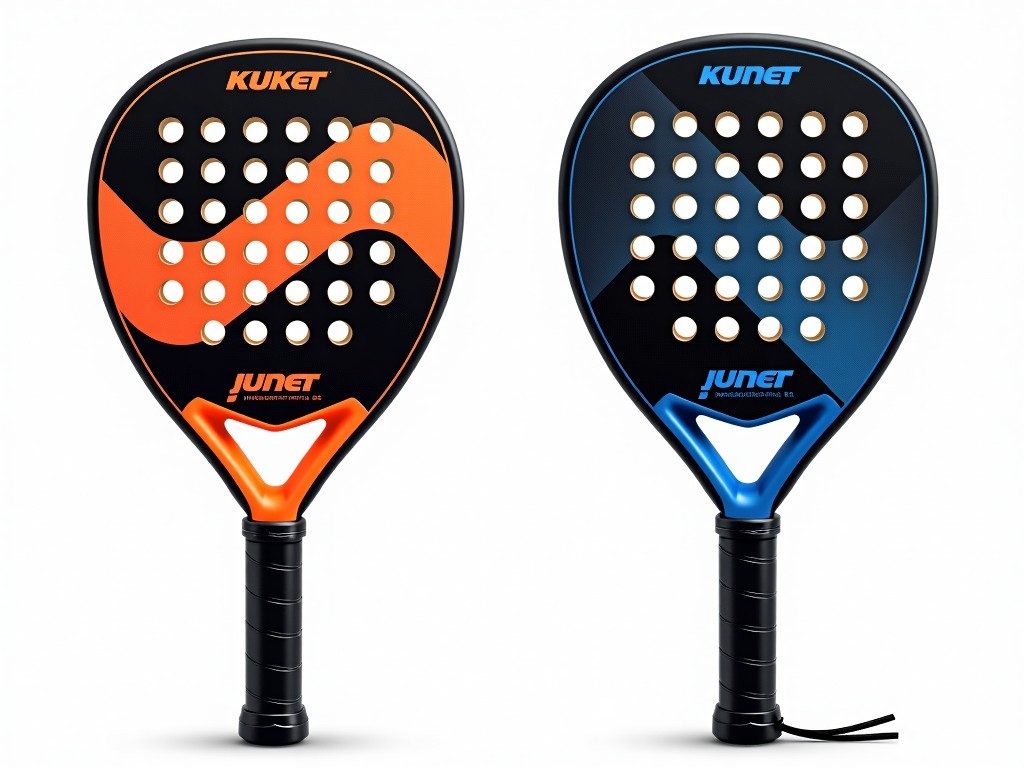
Wholesale Newest Junior Padel Racket Supplier
Junior padel rackets are designed for players aged 8‑14 who require a lighter frame and a smaller sweet spot to develop technique without excessive strain. The geometry follows the adult padel racket
Wholesale newest junior padel racket supplier
Product Overview
Junior padel rackets are designed for players aged 8‑14 who require a lighter frame and a smaller sweet spot to develop technique without excessive strain. The geometry follows the adult padel racket proportions but scales down the head size and weight to match junior biomechanics. This ensures consistent swing dynamics while reducing the risk of wrist overload during prolonged training sessions.
Technical Specifications
Typical head dimensions range from 260 mm to 280 mm in width, providing a hitting surface that balances control and forgiveness for developing players. The overall length is usually between 450 mm and 460 mm, which allows a comfortable reach while maintaining maneuverability. Weight specifications fall between 260 g and 280 g unstrung, with a balance point positioned 260 mm–280 mm from the butt cap to favor a slightly head‑light feel that aids quick reaction at the net.
Material Composition
The frame commonly uses a lay‑up of 3K carbon fiber combined with a low‑density epoxy resin, delivering a tensile strength of approximately 4.5 GPa while keeping the mass low. The core is often constructed from EVA foam with a density of 30 kg/m³ to 35 kg/m³, which provides a consistent rebound characteristic and vibration damping. Surface finishes may include a textured polyurethane coating to enhance grip durability without adding significant weight.
Design Features
The throat area incorporates a reinforced rib structure to increase torsional stiffness, which reduces frame twist during off‑center hits—a common issue for junior players still refining their stroke geometry. Grip size is standardized at 100 mm circumference, compatible with overgrips that allow fine‑tuning of handle thickness. A symmetrical hole pattern in the string bed promotes even tension distribution, minimizing localized stress concentrations that could lead to premature string breakage.
Performance Characteristics
When strung with a polyester multifilament at 22‑24 kg tension, the racket delivers a power level measured at approximately 0.85 m/s ball exit speed for a standard 30 m/s swing speed, suitable for developing control without overpowering the player. Vibration analysis shows a dominant mode frequency around 150 Hz, which is effectively damped by the EVA core, resulting in a perceived comfort rating that aligns with junior ergonomic studies. The frame’s deflection under a 50 N load applied at the tip is typically less than 2 mm, indicating sufficient rigidity for accurate shot placement.
Applications
- Training clubs and academies that need rackets sized for progressive skill development.
- School sports programs requiring durable, lightweight equipment for mixed‑ability groups.
- Retail distributors targeting the junior padel segment with consistent specifications for bulk orders.
- OEM partners looking to private‑label rackets with customized cosmetics while retaining core performance traits.
Quality Control Philosophy
Each production lot undergoes dimensional verification using coordinate measuring machines to confirm head width, length, and throat geometry within ±0.5 mm tolerances. Resin cure is monitored via differential scanning calorimetry to ensure glass transition temperature stays above 80 °C, which prevents softening under typical playing conditions. Final inspection includes a dynamic impact test where a 20 mm steel ball is dropped from a height of 1 m onto the string bed; acceptable rebound height must fall between 55 % and 65 % of the drop height, confirming energy return consistency.
Customization Options
Customers may request adjustments to the lay‑up orientation, allowing a shift from a 0°/90° quasi‑isotropic lay‑up to a ±45° bias for increased torsional rigidity. Grip length can be extended by 5 mm or reduced by the same amount without affecting overall balance, accommodating varying hand sizes. Cosmetic modifications include matte or gloss finishes, as well as bespoke color schemes applied via UV‑stable inks that meet EN 71‑3 safety standards for children’s products.
Specification Table
| Parameter | Typical Value | Customizable? |
|---|---|---|
| Head Width (mm) | 260‑280 | Yes, ±10 mm |
| Length (mm) | 450‑460 | Yes, ±5 mm |
| Weight (g, unstrung) | 260‑280 | Yes, ±10 g |
| Balance Point (mm from butt) | 260‑280 | Yes, ±5 mm |
| String Pattern | 16×19 | Optional 18×20 |
| Core Material | EVA 30‑35 kg/m³ | Alternative POE foam |
Frequently Asked Questions
Can dimensions be customized for specific age groups?
Yes, head width and length can be adjusted within the ranges indicated in the specification table to suit players from 8 to 14 years old, while maintaining the recommended weight‑to‑length ratio for optimal swing dynamics.
What information is required before a quotation is issued?
We need the desired quantity, target head size, preferred weight range, any specific material preferences (e.g., carbon fiber grade or core type), and details on required cosmetic finishes or branding.
How is quality inspected for bulk orders?
Each batch undergoes dimensional checks, resin cure verification, and a standardized impact rebound test as described in the Quality Control section, with results documented in a batch‑specific test report.
What packaging methods are available for export shipments?
Rackets are packed in individual polyethylene sleeves, placed in corrugated cartons with corner protectors, and palletized using ISPM‑15 compliant wood. Desiccant packets are included to control moisture during transit.
Contact Us
For technical inquiries, sample requests, or to discuss a wholesale order, please reach out via our contact form. Our engineering team will respond with detailed specifications and lead‑time information within one business day.
Request a Quote


