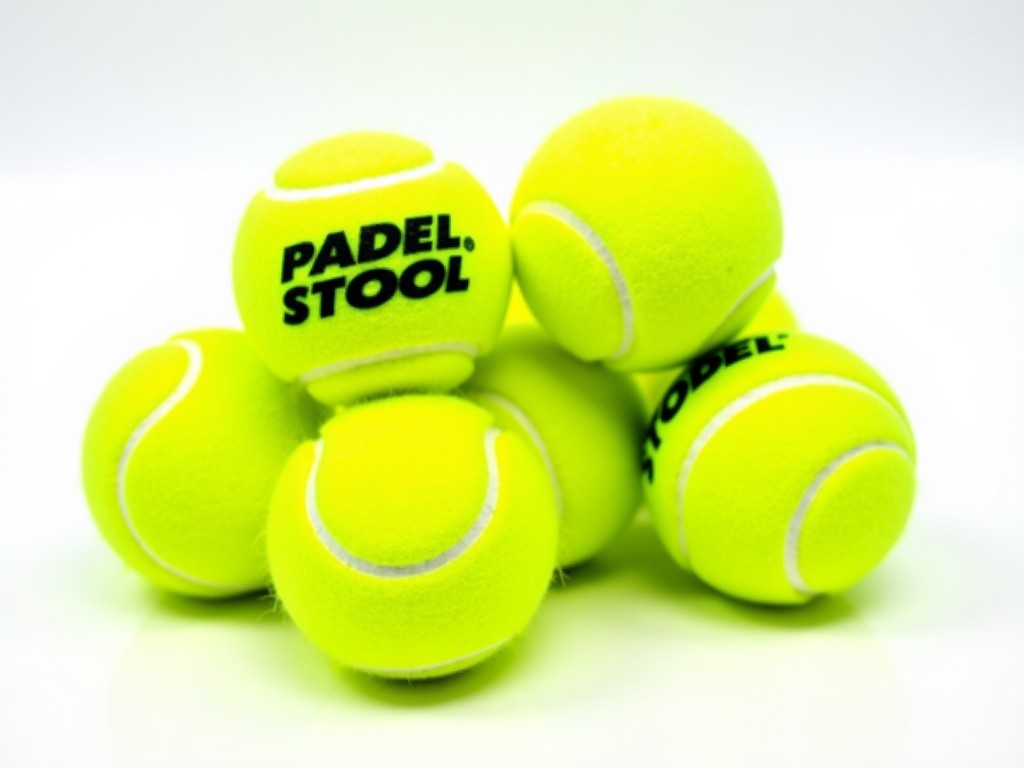
Wholesale Padel Balls Manufacturer
Padel balls are engineered to meet the specific demands of the sport, combining a pressurized rubber core with a felt covering that influences bounce, speed, and durability. Understanding these
Wholesale Padel Balls Manufacturer
Padel balls are engineered to meet the specific demands of the sport, combining a pressurized rubber core with a felt covering that influences bounce, speed, and durability. Understanding these technical attributes helps buyers select a product that performs consistently across court surfaces and playing conditions.
Product Overview
Each ball consists of a hollow core filled with pressurized gas, typically nitrogen or air, to achieve an internal pressure of approximately 0.6–0.8 bar. The core is surrounded by a layer of natural or synthetic felt that is adhered using a heat‑activated adhesive. This construction provides the characteristic rebound and feel required for competitive play.
Technical Specifications
| Parameter | Typical Value | Notes |
|---|---|---|
| Diameter | 6.35 mm | Measured per ITF padel standard |
| Weight | 56.0–59.4 g | Includes core and felt |
| Rebound Height | 135–145 cm | Drop test from 254 cm onto concrete |
| Internal Pressure | 0.6–0.8 bar | Measured at 20 °C ambient |
| Core Material | Natural rubber compound | Provides elasticity and gas retention |
| Felt Cover | Wool/nylon blend, 60 % wool | Abrasion resistance > 1500 cycles |
Materials and Construction
The rubber core is formulated with a specific shore hardness (approximately 40–45 A) to balance deformation under impact with rapid recovery. This hardness influences the energy return rate, which directly affects ball speed. The felt is cut to a precise weight per square meter (around 45 g/m²) and undergoes a steaming process to activate the adhesive bond with the core.
Quality of the felt is critical; a higher wool content improves durability and reduces fuzz loss, while synthetic fibers add tensile strength. Manufacturers often test felt pilling resistance using a Martindale abrasion tester to ensure compliance with sport regulations.
Manufacturing Process
Production begins with injection molding of the rubber preform, which is then cured at 160 °C for 12 minutes to achieve the target hardness. After curing, the cores are placed in a pressurization chamber where they are filled with nitrogen to the specified pressure and sealed with a metal valve.
The felt is wrapped around the pressurized core using a helical winding machine that maintains consistent tension. The assembly passes through a heat tunnel at 130 °C for 30 seconds, activating the adhesive and forming a seamless bond. Final inspection includes dimensional checks, pressure verification, and visual assessment of felt uniformity.
Quality Control Philosophy
Each batch undergoes statistical process control (SPC) on core diameter and weight, with control limits set at ±0.02 mm and ±0.2 g respectively. Pressure retention is measured after 24 hours; acceptable loss is less than 0.05 bar. These metrics reduce variability and ensure that every ball meets performance expectations over its shelf life.
In addition to inline testing, a random sample from each production run is subjected to a playability test on a standardized padel court, evaluating bounce consistency and sound characteristics. Results are logged and compared against baseline data to detect any drift in material properties.
Applications
- Club and tournament play where consistent bounce reduces player adjustment time.
- Training environments that require high‑volume usage; durable felt extends ball life.
- Recreational facilities seeking low‑maintenance inventory with minimal pressure loss.
- Promotional events where customized branding on the felt enhances visibility.
Customization Options
Buyers can specify felt color, logo placement, and core pressure to align with branding or altitude conditions. For high‑altitude locations, a reduced internal pressure (0.4–0.5 bar) compensates for lower atmospheric pressure, maintaining bounce characteristics similar to sea‑level play.
Minimum order quantities for custom runs typically start at 5 000 balls, with lead times adjusted based on tooling and felt dye availability. Standard stock items are available in increments of 1 000 balls.
Packaging and Logistics
Balls are packed in pressure‑maintaining cans (three‑ball or four‑ball configurations) sealed with a metal lid. Each can is placed in a corrugated carton with internal dividers to prevent movement during transit. For bulk shipments, palletized cartons are stretch‑wrapped and equipped with humidity indicators to monitor exposure.
Export packaging complies with ISPM‑15 standards for wood pallets, and all labeling includes batch codes, pressure specifications, and shelf‑life dates (typically 12 months from production).
Lead Time and Sampling
Standard products ship within 7–10 business days after order confirmation. Customized orders require an additional 2–3 weeks for tooling approval and felt dyeing. Samples of both standard and custom configurations can be dispatched via express courier upon request, with sample costs credited against the first production order.
Frequently Asked Questions
Can the internal pressure be adjusted for specific climates?
Yes, pressure is set during the filling stage and can be tailored to compensate for temperature or altitude variations. Customers provide target conditions, and the manufacturing team calculates the appropriate gas volume.
What information is needed to receive a quotation?
Required details include desired quantity, felt color or branding specifications, any pressure adjustments, preferred packaging (can size), and delivery destination. Providing this upfront enables an accurate cost and lead‑time estimate.
How is batch traceability managed?
Each production lot receives a unique batch number that is laser‑etched onto the can base and recorded in the ERP system. This number links to core material certificates, pressure test logs, and inspection reports.
Request a Quote


