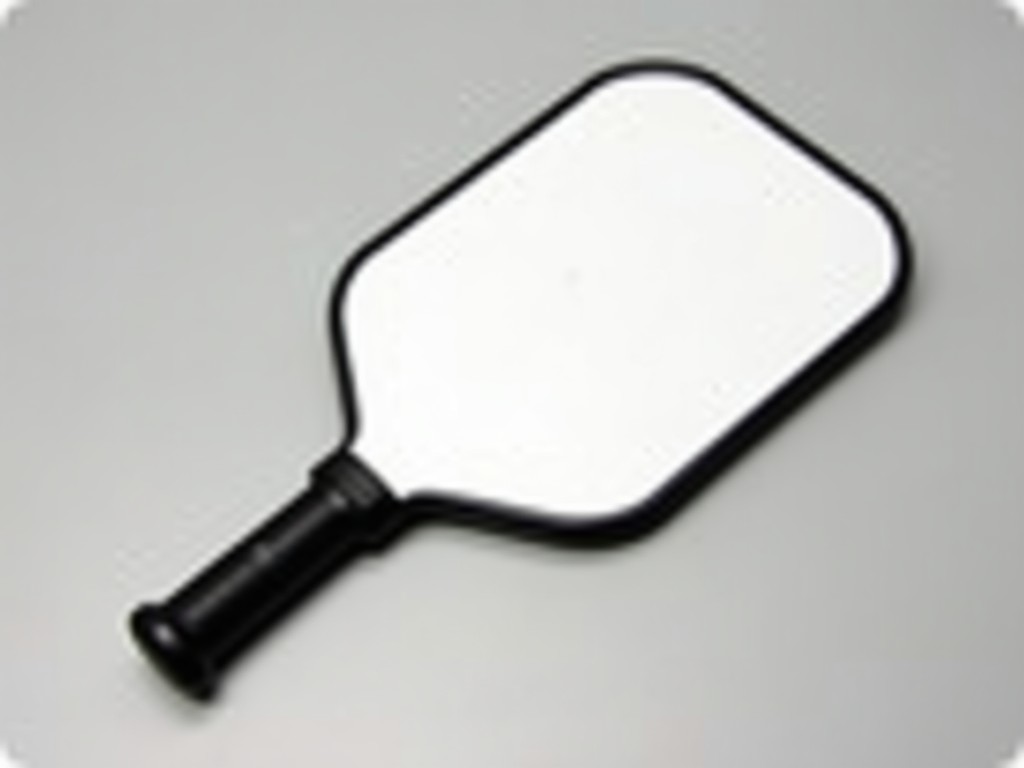
B2B All White Pickleball Paddle Exporter
This product is designed for bulk shipment to international distributors and sports‑facility contractors who require a uniform appearance and consistent performance across large orders. The paddle
All White Pickleball Paddle – B2B Export Specification
This product is designed for bulk shipment to international distributors and sports‑facility contractors who require a uniform appearance and consistent performance across large orders.
The paddle face is a solid‑color, high‑density polymer composite that delivers a rebound coefficient between 0.42 and 0.46 under standard ASTM F2256 testing.
Material Composition
The core consists of a polypropylene honeycomb with cell diameter 6 mm and wall thickness 0.3 mm, providing a flexural rigidity of approximately 1.8 kN·mm².
Surface layers are made from a UV‑stabilized acrylic‑based resin filled with 15 % titanium dioxide pigment, ensuring a true white reflectance of at least 92 % across the visible spectrum.
Edge guards are extruded from a Shore A 85 thermoplastic elastomer, offering impact resistance up to 4 J without permanent deformation.
Manufacturing Process
Lamination occurs in a vacuum press at 0.8 bar for 90 seconds, achieving a bond strength exceeding 2.5 MPa between core and face layers.
CNC routing defines the paddle outline with a tolerance of ±0.15 mm, while the face surface is milled to a roughness average (Ra) of 0.8 µm to optimize ball spin.
Each unit undergoes a post‑cure cycle at 70 °C for 30 minutes to relieve internal stresses and stabilize dimensional tolerances.
Dimensional Specifications
Overall length: 400 mm ± 2 mm; width: 200 mm ± 2 mm; thickness: 19 mm ± 0.5 mm.
Weight range: 210 g to 235 g, depending on core density selection (standard 0.55 g/cm³ or high‑density 0.62 g/cm³).
Grip circumference is 102 mm with a tolerance of ±1 mm, compatible with over‑grip thicknesses up to 2 mm.
Customization Options
- Core density: 0.55 g/cm³ (standard) or 0.62 g/cm³ (high‑power)
- Edge guard color: black, navy, or custom Pantone match (minimum order 500 pcs)
- Handle length: standard 100 mm or extended 115 mm
- Surface finish: matte (gloss unit < 10) or low‑sheen (gloss unit 10‑30)
All modifications are quoted per project and require a signed specification sheet before tooling.
Quality Assurance
Every batch receives a 100 % visual inspection for surface uniformity under D65 lighting, with a defect acceptance level of ≤0.5 %.
Dimensional verification is performed on a statistical sample of 5 % using a coordinate‑measuring machine; results must fall within the tolerances listed above.
Rebound testing is conducted on three random paddles per lot; the average must be within the specified range and the standard deviation not exceed 0.02.
Documentation includes a material safety data sheet (MSDS), ISO 9001 compliance declaration, and a packing list with lot numbers.
Typical Applications
Facility operators choose the all‑white finish for visual consistency across courts, reducing player distraction during fast‑paced doubles play.
The paddle’s weight distribution (balance point 185 mm from the handle end) provides a neutral swing feel suitable for both beginner instruction and competitive league matches.
Because the core is chemically resistant to moisture, the paddles retain performance specifications in indoor environments with relative humidity up to 80 %.
Specification Comparison
| Parameter | Standard Configuration | High‑Power Option |
|---|---|---|
| Core density (g/cm³) | 0.55 | 0.62 |
| Weight (g) | 210‑225 | 225‑240 |
| Flexural rigidity (kN·mm²) | 1.8 | 2.2 |
| Rebound coefficient | 0.42‑0.44 | 0.45‑0.46 |
Values represent typical ranges; final acceptance criteria are defined in the purchase agreement.
Frequently Asked Questions
Can dimensions be customized?
Length, width, and handle length can be adjusted within ±5 mm of the nominal sizes; changes require new tooling and affect lead time.
What information is required before quotation?
Order quantity, desired core density, edge‑guard color, grip length, and delivery destination are needed to produce a detailed cost sheet.
How is quality inspected?
Each lot undergoes visual, dimensional, and rebound testing as outlined in the Quality Assurance section; inspection reports are available upon request.
What packaging methods are available?
Standard export packing uses corrugated cartons with internal foam dividers; palletization and heat‑shrink wrapping are offered for larger volumes.
What is the typical production lead time?
For stock‑standard configurations, lead time is 18‑22 working days; customized orders add 7‑10 days for tooling and approval.
To discuss specific requirements, request a formal quotation, or obtain sample units, please reach out to our export team.
Contact Export Team


