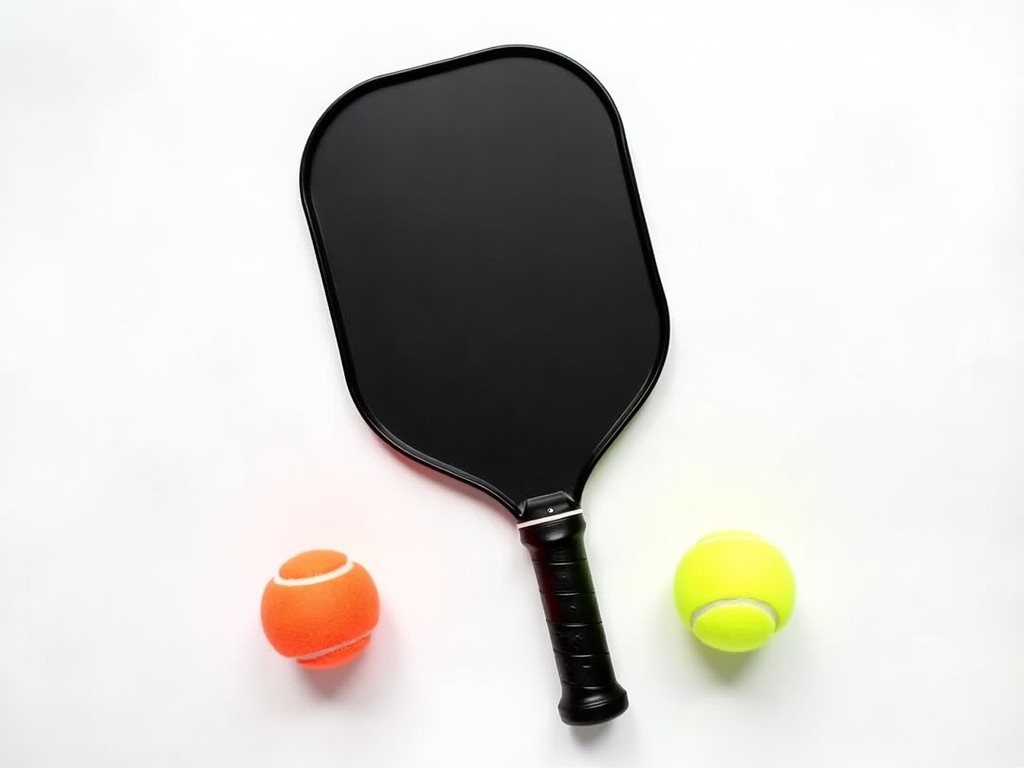
B2B Carbon Face Pickleball Paddle Exporter
A carbon‑fiber faced pickleball paddle combines a stiff, low‑density striking surface with a lightweight core to deliver consistent ball response and reduced vibration. The design targets B2B buyers
B2B Carbon Face Pickleball Paddle Exporter
Product Overview
A carbon‑fiber faced pickleball paddle combines a stiff, low‑density striking surface with a lightweight core to deliver consistent ball response and reduced vibration. The design targets B2B buyers who require paddles that meet tournament specifications while offering cost‑effective scalability for bulk orders.
Typical paddle dimensions fall within the USAPA limits of 15.5 to 17 inches in length and 7 to 8.25 inches in width, with a thickness ranging from 0.5 to 0.6 inches. Weight is usually distributed between 7.0 and 8.5 ounces, allowing buyers to select a balance that matches player preferences for control or power.
Key Technical Characteristics
| Parameter | Typical Range / Option |
|---|---|
| Face Material | Carbon fiber woven fabric (3K or 6K) with epoxy resin |
| Core Material | Polymer honeycomb (polypropylene), Nomex, or aluminum |
| Weight (unstrung) | 7.0 – 8.5 oz (adjustable via core density) |
| Length | 15.5 – 17.0 in |
| Width | 7.0 – 8.25 in |
| Thickness | 0.50 – 0.60 in |
| Balance Point (from butt cap) | 10.0 – 12.0 in (adjustable) |
| Swing Weight | 90 – 110 (depends on weight distribution) |
| Surface Roughness (Ra) | 10 – 20 µm (finished face) |
| Edge Guard Material | TPU or rubber composite |
| Grip Size (circumference) | 4.0 – 4.5 in (customizable) |
Material Selection and Engineering Rationale
Carbon fiber offers a high modulus of elasticity (typically 33–40 MSI) combined with low density (≈1.6 g/cm³), resulting in a face that resists deformation under impact while keeping overall paddle mass low. The epoxy matrix is selected for its UV stability and adhesion to the fiber, ensuring consistent performance over outdoor exposure.
Core choice influences both weight distribution and feel. Polymer honeycomb cores provide a uniform cell structure that dampens vibration and yields a softer feel, whereas Nomex cores increase stiffness and produce a livelier response. Aluminum cores add mass near the handle, shifting the balance toward the butt for players seeking extra stability.
Surface finish is controlled through a calibrated sanding process to achieve a roughness value that balances spin generation with durability. Too smooth a face reduces ball bite; too rough accelerates wear on the ball and paddle edge.
Manufacturing Process
The paddle begins with lay‑up of pre‑impregnated carbon fiber sheets onto a molded core shape, followed by vacuum bagging to remove voids and ensure uniform resin distribution. Curing occurs in a convection oven at approximately 250 °F for a prescribed cycle, after which the blank is demolded.
Post‑cure machining defines the final perimeter, edge guard channel, and grip taper. CNC routing guarantees tolerances within ±0.01 in for length and width. The edge guard is then inserted and bonded with a structural adhesive, and the grip is applied using a heat‑shrink or overwrap technique.
Final inspection includes weight measurement, balance point verification, and surface roughness profiling. Paddles that fall outside the specified tolerance windows are diverted for rework or scrap.
Applications in B2B Settings
Distributors and sporting goods retailers require paddles that conform to official regulations while offering a range of weight and balance options to serve diverse player segments. The modular core system allows a single SKU platform to be configured for control‑oriented, power‑oriented, or all‑court models, reducing inventory complexity.
Club operators and coaching academies benefit from consistent paddle performance across batches, which simplifies equipment standardization for training programs. The carbon face’s resistance to chipping prolongs service life, lowering replacement frequency and total cost of ownership.
OEMs that private‑label paddles can leverage the standardized molding tooling and adjust cosmetic elements such as graphics, grip color, and edge guard hue without altering the underlying structural design.
Customization Options
- Core type: polymer honeycomb, Nomex, aluminum (density selectable)
- Face weave: 3K plain, 6K twill, or hybrid carbon‑glass
- Weight tuning via core thickness or internal weighting inserts
- Balance point adjustment through core geometry or end‑cap mass
- Grip circumference: 4.0, 4.25, 4.5 in (with optional overwrap thickness)
- Edge guard color: black, white, team colors (custom Pantone)
- Surface finish: matte, satin, or gloss (affects spin and wear)
- Graphics: sublimated logo, full‑color artwork, or blank for OEM branding
Quality Control and Testing Philosophy
Each production lot undergoes dimensional verification using calibrated CMM probes to confirm length, width, and thickness within the declared tolerances. Weight is measured with a precision scale (±0.01 oz) and balance point is determined by a pivot‑based fixture.
Surface roughness is assessed with a portable profilometer; values outside the 10‑20 µm band trigger a re‑finish step. Impact resistance is evaluated via a standardized ball‑drop test that measures peak force and deflection, ensuring the face does not exceed a preset deformation threshold.
A random sample from each batch is subjected to an accelerated weathering cycle (UV exposure and humidity) to validate that adhesion and color stability meet the agreed‑upon service life.
All inspection results are recorded in a traceable database linked to the lot number, enabling rapid response to any field feedback.
Packaging and Export Logistics
Paddles are packed in individual corrugated sleeves with edge protectors to prevent damage during handling. For bulk shipments, sleeves are placed in master cartons configured to a standard pallet footprint (48 × 40 in) with a maximum height of 48 in to optimize container utilization.
Each carton includes a humidity indicator card and a desiccant packet to mitigate moisture ingress during transit. Pallets are stretch‑wrapped and corner‑reinforced before loading.
Export documentation includes a commercial invoice, packing list, and a certificate of conformity that declares compliance with USAPA equipment standards. Lead times are quoted per order volume and are adjustable based on tooling availability and customization complexity.
Frequently Asked Questions
| Question | Answer |
|---|---|
| Can the paddle dimensions be customized beyond the standard range? | Length and width can be adjusted within USAPA limits (±0.25 in) upon request; deviations require a new tooling quote. |
| What information is needed to receive a quotation? | Desired core type, target weight range, grip size, edge guard color, graphics specifications, and order quantity. |
| Which core materials are available for bulk orders? | Polymer honeycomb (various densities), Nomex (Aramid paper), and aluminum alloy cores are stocked; alternative cores can be sourced. |
| How is paddle quality verified before shipment? | Each lot undergoes dimensional, weight, balance, surface roughness, and impact testing; results are attached to the shipment documentation. |
| What packaging options protect the paddles during ocean freight? | Individual sleeves with edge protectors, master cartons, palletization, stretch wrapping, and corner boards are standard; additional vacuum‑sealed bags can be added. |
| What is the typical production lead time for a 5,000‑piece order? | Lead time ranges from 4 to 6 weeks after final artwork approval, depending on core selection and customization complexity. |
| How are samples arranged for evaluation? | Up to three sample paddles can be shipped at the buyer’s expense; sample lead time is typically one week. |
Contact for Inquiry
For technical details, pricing, or to request a sample, please reach out to our export team.


