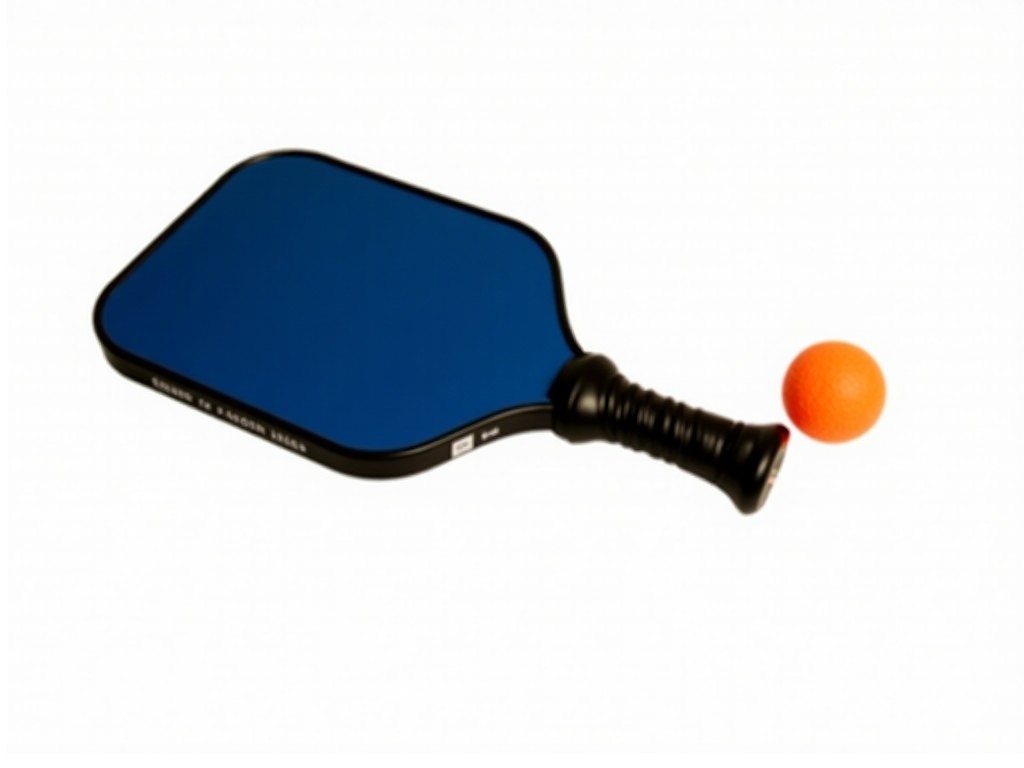
B2B Mens Left Handed Pickleball Paddle Supplier
Left‑handed paddles differ from standard right‑handed models primarily in grip orientation and weight distribution, which affect swing mechanics and control for players who hold the paddle with their
B2B Men's Left-Handed Pickleball Paddle Supplier
Left‑handed paddles differ from standard right‑handed models primarily in grip orientation and weight distribution, which affect swing mechanics and control for players who hold the paddle with their left hand dominant. Understanding these differences helps engineers specify equipment that reduces fatigue and improves shot accuracy for left‑handed athletes.
As a B2B supplier, we focus on providing paddles that meet the dimensional, material, and performance tolerances required by sports‑equipment distributors, team purchasers, and OEMs assembling left‑handed paddle lines.
Design Overview
The paddle face is typically symmetrical, but the handle is angled to accommodate a left‑handed grip, shifting the balance point slightly toward the forehand side. This adjustment influences swing weight and maneuverability during volleys and dinks.
Key design variables include overall length (usually 395‑405 mm), width (190‑200 mm), and handle circumference (100‑106 mm). These dimensions are selected to stay within USA Pickleball Association equipment limits while providing a comfortable grip for left‑hand users.
Edge guards are reinforced to protect the paddle’s perimeter during aggressive play, and the throat area is often contoured to improve wrist stability for left‑handed strokes.
Material Options
- Face materials: carbon fiber weave, fiberglass laminate, or graphite composite, each offering different stiffness‑to‑weight ratios.
- Core materials: polypropylene honeycomb (density 0.03‑0.04 g/cm³), Nomex aramid honeycomb, or aluminum honeycomb, affecting power transfer and vibration dampening.
- Handle core: typically polyurethane foam or rubberized inserts for shock absorption.
- Grip surface: perforated synthetic leather or silicone‑treated tape for moisture management.
Material selection is based on the target performance profile—e.g., a higher modulus carbon‑fiber face increases ball speed, while a thicker polypropylene core improves control and reduces vibration.
Typical Dimensions and Weight
| Parameter | Typical Range | Notes |
|---|---|---|
| Overall Length | 395‑405 mm | Measured from butt to tip |
| Width | 190‑200 mm | Maximum width across face |
| Weight | 210‑240 g | Includes grip and edge guard |
| Balance Point | 190‑210 mm from butt | Shifted toward forehand for left‑hand grip |
| Swing Weight | 90‑110 kg·cm² | Influences maneuverability |
| Handle Circumference | 100‑106 mm | Standard grip sizes |
Performance Characteristics
Stiffness of the face material, measured in GPa, correlates with ball exit velocity; typical carbon‑fiber faces exhibit 70‑90 GPa, while fiberglass ranges 30‑45 GPa. Core compressive strength influences energy return; polypropylene honeycomb cores provide 0.15‑0.25 MPa compressive strength, offering a softer feel.
Vibration damping is quantified by the loss factor; a well‑designed paddle exhibits a loss factor of 0.02‑0.04, reducing shock transmitted to the wrist during impact. The left‑handed orientation does not inherently change these values, but the shifted balance can alter perceived vibration distribution.
Consistent performance across temperature ranges (‑10 °C to 40 °C) is validated by conditioning tests; material selections are made to avoid significant modulus drift within this interval.
Customization Options
- Face material selection (carbon fiber, fiberglass, graphite) with optional surface textures for spin enhancement.
- Core type and thickness (polypropylene 12‑16 mm, Nomex 10‑14 mm, aluminum 8‑12 mm).
- Handle length adjustment (standard 100 mm, extended up to 120 mm) to accommodate different grip preferences.
- Grip circumference and surface treatment (perforated leather, silicone, over‑wrap).
- Edge guard profile (standard rubber, reinforced TPU, or lightweight carbon‑fiber edge).
- Color coding and logo printing (screen‑print or sublimation) for brand identification.
Customization is driven by the end‑user’s performance targets—e.g., a competitive player may prioritize a stiffer face and lighter weight, while a recreational buyer may prefer a softer core for comfort.
Manufacturing Process
Paddles are fabricated using a vacuum‑bag molding process for the face‑core‑face sandwich, ensuring uniform resin distribution and minimal void content. The handle is inserted post‑cure and bonded with a structural adhesive rated for >5 MPa shear strength.
After curing, the paddle undergoes CNC trimming to achieve final dimensions within ±0.5 mm tolerance. Edge guards are molded separately and assembled via ultrasonic welding or adhesive bonding, depending on material compatibility.
Quality checks are performed at each stage: resin mix viscosity, pre‑preg lay‑up weight, cure temperature profile, and final dimensional inspection.
Quality Control Philosophy
- Visual inspection for surface defects, delamination, and edge guard integrity.
- Weight measurement (±1 g) and balance point verification (±2 mm).
- Stiffness testing via three‑point bend fixture to confirm face modulus within specified range.
- Impact resilience test: repeated ball strikes at 30 m/s to assess fatigue resistance.
- Optional acoustic emission monitoring for internal defect detection during cyclic loading.
Statistical process control (SPC) charts track critical parameters; any batch exceeding control limits triggers a root‑cause investigation before release.
Applications in the Sports‑Equipment Supply Chain
Distributors source left‑handed paddles to complete mixed‑handedness team kits, ensuring compliance with league equipment regulations that require equal access for left‑handed players. The paddle’s balanced weight distribution reduces the learning curve for athletes transitioning from right‑handed models, thereby lowering return rates due to discomfort.
OEMs integrating these paddles into branded product lines benefit from standardized interface dimensions (handle diameter, throat width) that allow easy co‑branding and accessory compatibility, such as grip over‑wraps and vibration dampeners.
By providing detailed material data sheets and test reports, we enable procurement engineers to perform comparative risk assessments against competing left‑handed designs, supporting informed sourcing decisions.
Comparison: Left‑Handed vs. Standard Right‑Handed Paddle (Typical Values)
| Attribute | Left‑Handed Paddle | Standard Right‑Handed Paddle |
|---|---|---|
| Grip Angle (relative to face) | 5°‑10° offset toward forehand | Symmetric (0° offset) |
| Balance Point from Butt | 190‑210 mm | 180‑200 mm |
| Swing Weight | 90‑110 kg·cm² | 85‑105 kg·cm² |
| Weight Range | 210‑240 g | 200‑230 g |
| Face Material Options | Carbon fiber, Fiberglass, Graphite | Carbon fiber, Fiberglass, Graphite |
| Core Options | Polypropylene, Nomex, Aluminum honeycomb | Polypropylene, Nomex, Aluminum honeycomb |
Frequently Asked Questions
- Can the paddle length be customized? Yes, length can be adjusted within the USA Pickleball limits (typically 395‑405 mm) based on tooling availability.
- What information is needed for a quotation? Required details include desired face material, core type, target weight range, grip circumference, order quantity, and any branding or color specifications.
- Which core materials are available? Polypropylene honeycomb (standard), Nomex aramid honeycomb, and aluminum honeycomb are offered; other cores can be evaluated upon request.
- How is paddle quality verified before shipment? Each batch undergoes weight, balance, stiffness, and impact resilience testing; results are documented in a test report supplied with the delivery.
- What packaging options exist for bulk orders? Standard packaging is a corrugated carton with internal foam dividers; custom palletizing or protective sleeves can be arranged.
- How are export shipments protected against moisture? Paddles are wrapped in polyethylene barrier film and packed with desiccant packets; cartons are sealed with water‑resistant tape.
- What is the typical lead time? Lead time ranges from 4‑6 weeks for standard configurations; custom material or branding may extend this period.
- Are samples available for evaluation? Yes, sample paddles can be produced upon receipt of a signed sample request and payment of sample fees.
Ready to Discuss Your Requirements?
Our engineering team is prepared to review your specifications, provide material data sheets, and outline the validation steps needed to ensure the left‑handed paddle meets your performance and compliance targets.


