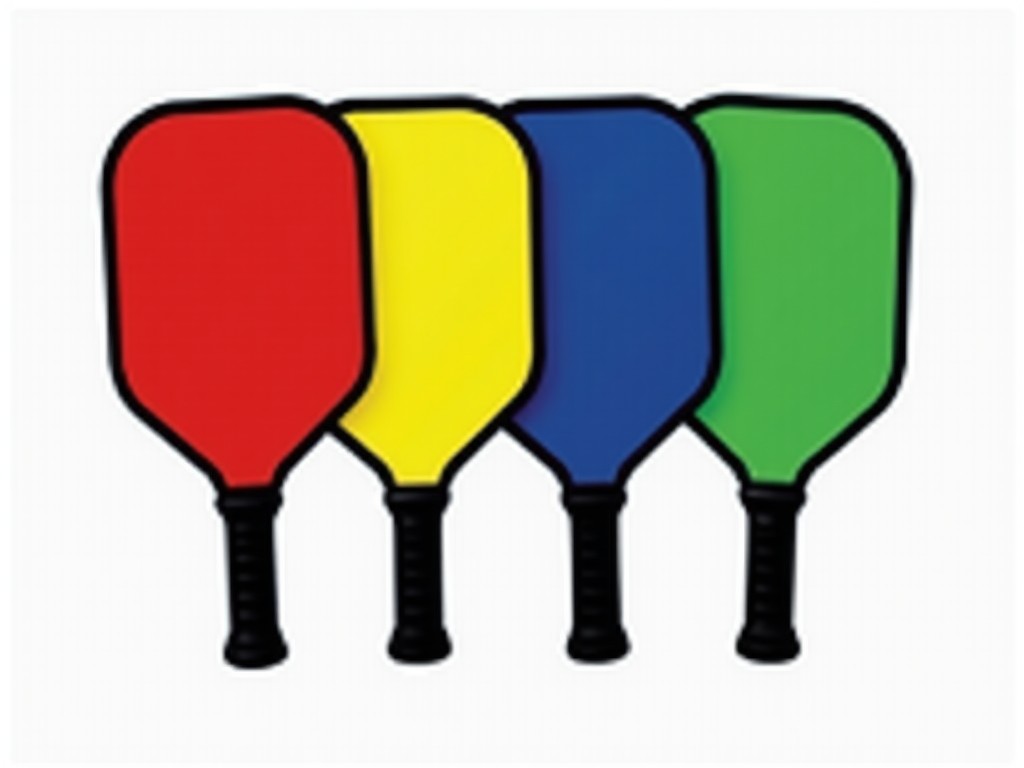
B2B Personalized Focus Training Pickleball Paddles Supplier
Personalized focus training paddles are engineered to help athletes develop specific stroke mechanics through targeted weight distribution and surface texture. Unlike standard recreational paddles,
B2B Personalized Focus Training Pickleball Paddles Supplier
Personalized focus training paddles are engineered to help athletes develop specific stroke mechanics through targeted weight distribution and surface texture. Unlike standard recreational paddles, these tools incorporate adjustable balance points and calibrated face roughness to reinforce muscle memory during repetitive drills.
Suppliers that serve the B2B market must provide consistent dimensional tolerances and material traceability so that training facilities can rely on uniform performance across large batches. This reliability reduces variability in coaching outcomes and simplifies inventory management for distributors.
Material & Construction
The paddle core typically uses a polypropylene honeycomb structure with cell sizes ranging from 6 mm to 8 mm, delivering a specific compressive strength of approximately 0.4 MPa. This geometry balances impact absorption with responsiveness, allowing players to feel subtle changes in ball contact.
Face layers are fabricated from either carbon‑fiber reinforced polymer or fiberglass‑filled epoxy, each offering distinct modulus values. Carbon‑fiber faces exhibit a tensile modulus near 70 GPa, while fiberglass variants sit around 20 GPa, enabling fine‑tuning of power versus control characteristics.
- Polypropylene honeycomb core – density 0.02 g/cm³, cell wall thickness 0.15 mm
- Carbon‑fiber face – areal weight 180 g/m², thickness 0.6 mm
- Fiberglass face – areal weight 220 g/m², thickness 0.8 mm
- Edge guard – TPU compound, Shore A 85, width 12 mm
Customization Options
Customization begins with selecting a target swing weight range, typically expressed in ounces, which influences the paddle’s moment of inertia about the handle. Adjustments are achieved by varying core thickness or inserting localized weight inserts made of tungsten or brass.
Surface texture is defined by a roughness average (Ra) measured in micrometres; values between 2 µm and 6 µm are common for focus training, allowing coaches to prescribe specific grip‑slip conditions for spin development.
- Swing weight: 7.5 oz – 9.0 oz (adjustable in 0.25 oz increments)
- Balance point: 180 mm – 210 mm from handle tip
- Face roughness (Ra): 2 µm, 4 µm, 6 µm
- Grip circumference: 4.0 in – 4.5 in (customizable via overwrap thickness)
- Length: 15.5 in – 16.5 in (standard tolerance ±2 mm)
Performance Characteristics
| Parameter | Typical Range | Adjustment Method |
|---|---|---|
| Weight (unstrung) | 7.0 oz – 8.5 oz | Core thickness or insert mass |
| Swing weight | 7.5 oz – 9.0 oz | Weight distribution along length |
| Balance point | 180 mm – 210 mm from handle | Insert placement |
| Face roughness (Ra) | 2 µm – 6 µm | Surface finish process |
| Impact noise level | 68 dB – 73 dB (measured at 1 m) | Core cell size & face material |
Applications in Training Environments
Coaching academies use these paddles to isolate specific stroke phases, such as the transition from backswing to forward swing, by altering the paddle’s moment of inertia. A higher swing weight encourages slower, more deliberate motion, reinforcing proper kinetic chain sequencing.
Corporate wellness programs benefit from the ability to standardize equipment across large groups, ensuring that each participant receives identical feedback during skill‑building sessions. This consistency supports measurable progress tracking over weeks of training.
Rehabilitation centers incorporate low‑swing‑weight variants to reduce joint load while still providing proprioceptive feedback, allowing patients to rebuild wrist and elbow stability under controlled conditions.
Quality Control & Inspection
- Dimensional verification – length, width, thickness measured with calibrated micrometers (±0.02 mm tolerance)
- Weight assessment – each paddle weighed on a precision scale (±0.01 oz)
- Swing weight testing – pendulum method to confirm target inertia within ±0.05 oz·in²
- Surface roughness profiling – laser scanner to verify Ra values across the face
- Impact durability – 500‑shot ball strike test at 60 km/h, inspection for delamination or core deformation
Frequently Asked Questions
Can dimensions be customized beyond the standard ranges? Yes, length, width, and grip circumference can be adjusted per project requirements; please provide detailed specifications for a feasibility review.
What information is required before quotation? We need target swing weight, balance point, face roughness preference, core material choice, and estimated order volume.
What materials are available for the core and face? Core options include polypropylene honeycomb and Nomex® honeycomb; face options are carbon‑fiber reinforced polymer, fiberglass‑filled epoxy, and hybrid blends.
How is quality inspected? Each batch undergoes dimensional, weight, swing weight, surface roughness, and impact durability checks as outlined in our QC protocol.
What packaging methods are available for export? Paddles are packed in corrugated cartons with internal foam dividers, heat‑sealed polyethylene bags, and palletized for container loading; custom labeling is available upon request.
What is the typical production lead time? Lead times range from 15 to 30 business days depending on customization complexity and order size; exact schedules are confirmed after quote acceptance.
How are samples arranged? Sample paddles can be produced within 7‑10 business days after receipt of technical specifications; shipping costs are borne by the requester.


