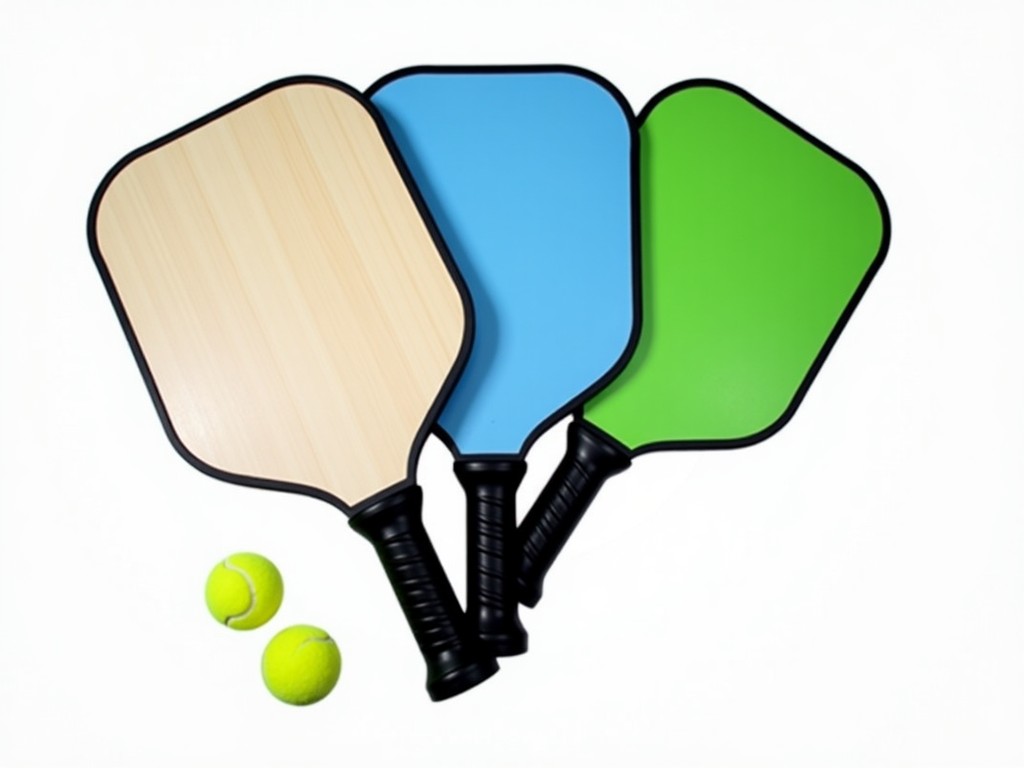
B2B Usapa Training Pickleball Paddle Manufacturer
The core of a USAPA‑approved training paddle directly influences ball rebound and player feel during repetitive drills. Manufacturers select a polypropylene honeycomb structure with cell diameters
B2B USAPA Training Pickleball Paddle Manufacturer
The core of a USAPA‑approved training paddle directly influences ball rebound and player feel during repetitive drills.
Manufacturers select a polypropylene honeycomb structure with cell diameters ranging from 6 mm to 8 mm to achieve a consistent stiffness‑to‑weight ratio.
Face layers are typically woven carbon‑fiber or fiberglass impregnated with epoxy resin, providing a surface hardness that resists delamination after thousands of impacts.
Construction Details
Edge guards are extruded TPU with a Shore A hardness of 85, bonded to the paddle perimeter to protect the core from chip‑out during aggressive serves.
The grip circumference is calibrated to 4.25 inches (±0.02 in) with a silicone‑based overwrap that maintains a coefficient of friction above 0.45 under dry conditions.
Dimensional and Weight Specifications
USAPA training paddles must satisfy specific length, width, and weight tolerances to be eligible for sanctioned practice sessions.
| Parameter | Typical Value | Customizable? |
|---|---|---|
| Overall Length | 400 mm | ±5 mm |
| Width (Face) | 200 mm | ±3 mm |
| Weight | 220 g | ±10 g |
| Grip Circumference | 108 mm (4.25 in) | ±0.5 mm |
| Edge Guard Thickness | 3 mm | 2‑4 mm |
Weight distribution is measured at the balance point, typically located 185 mm from the handle end, ensuring a neutral swing feel for players transitioning from recreational to competitive play.
Customization Options for B2B Clients
Industrial buyers often require visual branding that survives UV exposure and repeated cleaning cycles.
- Logo printing method: screen print, UV pad print, or laser etching
- Grip color options: black, navy, red, custom Pantone matches
- Face texture: smooth, sand‑spun, perforated for reduced drag
- Core density: low (0.025 g/cm³), medium (0.030 g/cm³), high (0.035 g/cm³)
- Edge guard thickness: 2 mm, 3 mm, 4 mm TPU
Each option is engineered to maintain the paddle’s certified performance characteristics, with tolerances verified through batch testing.
Applications in Training and Skill Development
Training programs benefit from a paddle that delivers uniform response across the hitting surface, reducing variability that can mask technique flaws.
Coaches report that a consistent sweet‑spot size of approximately 150 cm² allows athletes to develop repeatable swing mechanics without adjusting for dead zones.
Quality Assurance and Testing
Every production lot undergoes a dimensional check using a coordinate measuring machine, confirming length within ±1 mm and width within ±0.5 mm.
Impact resistance is evaluated by dropping a 0.5 kg steel ball from a height of 1 m onto the paddle face; acceptable units show no cracks larger than 0.2 mm after 50 cycles.
Bounce consistency is measured with a standardized ball drop test, requiring a rebound height variance of less than 3 % across ten impact points.
Ordering and Lead Times
Minimum order quantities start at 50 units for standard configurations, with sample paddles available upon receipt of a signed NDA and technical drawing.
Lead times average 3 weeks for stocked cores and 5‑6 weeks when custom face laminates or specialty grip materials are specified.
Shipping is conducted in double‑wall corrugated cartons with internal foam inserts, each carton marked with handling instructions to prevent edge‑guard deformation.
To request a formal quotation or arrange a technical consultation, contact our engineering team.
Request Quote


