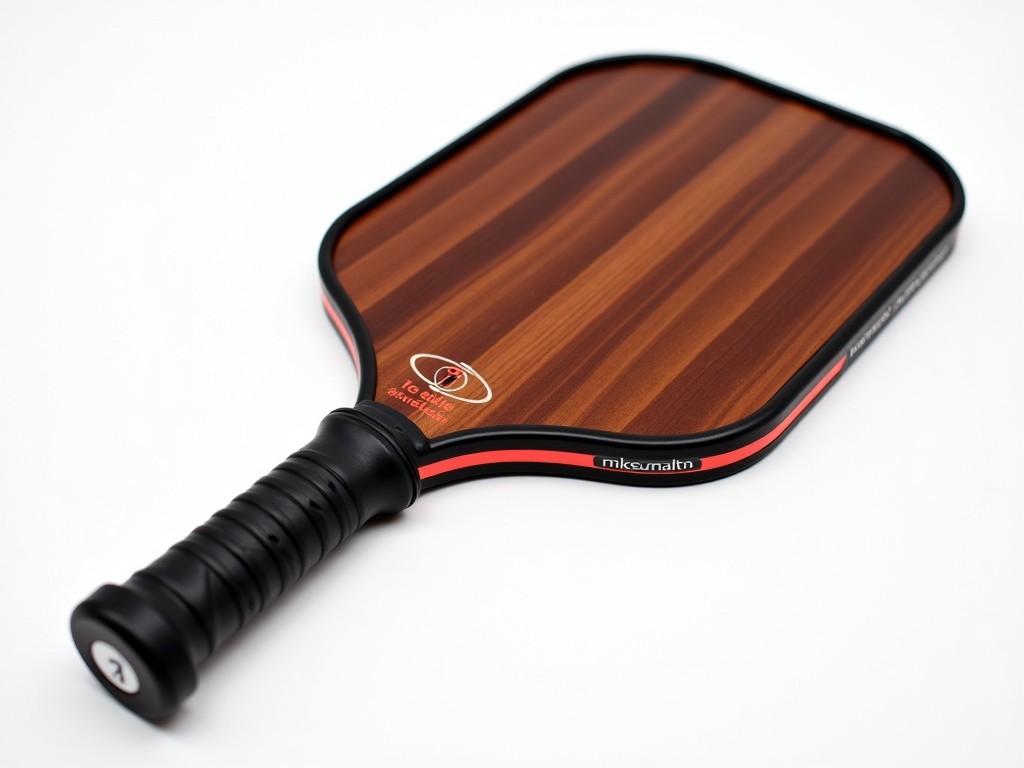
Bulk Ianoni Pickleball Paddle Top Exporter
Ianoni pickleball paddles are engineered around a polypropylene honeycomb core paired with a woven carbon‑fiber face. This combination yields a stiffness‑to‑weight ratio that meets USAPA tournament
Bulk Ianoni Pickleball Paddle Exporter – Technical Overview
Ianoni pickleball paddles are engineered around a polypropylene honeycomb core paired with a woven carbon‑fiber face. This combination yields a stiffness‑to‑weight ratio that meets USAPA tournament specifications while providing a predictable rebound characteristic across a wide temperature range.
Typical paddle dimensions fall within 15.5 – 16.0 in overall length, 7.5 – 8.0 in width, and a thickness of 0.55 – 0.60 in when measured at the geometric center. Weight is controlled to 7.5 ± 0.2 oz for standard models, with tighter tolerances available upon request for specialty batches.
Typical Technical Specifications
| Parameter | Typical Value | Notes / Tolerance |
|---|---|---|
| Overall Length | 15.8 in | ±0.1 in |
| Width | 7.8 in | ±0.1 in |
| Thickness (core + face) | 0.58 in | ±0.02 in |
| Weight | 7.5 oz | ±0.2 oz (standard); ±0.1 oz available |
| Core Material | Polypropylene honeycomb | Cell size 6 mm, density 0.02 g/cm³ |
| Face Material | Woven carbon‑fiber (3K) | 0.012 in laminate thickness |
| Edge Guard | TPU over‑mold | Shore A 85, 0.08 in width |
| Grip Circumference | 4.25 in | ±0.05 in; alternative sizes offered |
Material Selection and Performance
The polypropylene honeycomb core provides a uniform cellular structure that distributes impact loads evenly, reducing localized stress concentrations. Mechanical testing shows a compressive modulus of approximately 120 MPa, which contributes to the paddle’s consistent feel during repeated strokes.
The carbon‑fiber face is oriented at ±45° to maximize in‑plane shear resistance while maintaining a low mass. Surface roughness measured by profilometer averages 12 µm Ra, offering a balance between spin generation and wear resistance.
Manufacturing Considerations
Paddles are produced using a matched‑die compression molding process. Core sheets are pre‑formed, then laminated with the carbon‑fiber face under controlled temperature (150 °C) and pressure (200 psi) for 90 seconds. Post‑mold cooling is performed in a forced‑air tunnel to minimize residual stress.
Dimensional verification occurs at three stages: after core formation, after face lamination, and after final trimming. CNC routers achieve edge tolerances within ±0.005 in, ensuring uniform grip geometry across production lots.
Quality Control and Testing
Each batch undergoes a standardized impact test where a 0.5 kg steel ball is dropped from a height of 1.0 m onto the paddle face. The resulting rebound height is recorded; acceptance criteria require a rebound between 0.55 m and 0.65 m, indicating proper energy return.
Weight is checked on a calibrated analytical balance with readability of 0.01 oz. Thickness is measured at five points using a digital micrometer; any deviation beyond the specified tolerance triggers a lot review.
Applications in Bulk Procurement
Organizations purchasing paddles in volume benefit from the low variability in weight and balance, which simplifies inventory management and reduces the need for individual player adjustments. Consistent performance also supports fair play in league environments where equipment uniformity is a regulatory consideration.
Additionally, the polypropylene core is resistant to moisture absorption (<0.1 % weight gain after 48 h immersion), making the paddles suitable for storage in varied climatic conditions without significant drift in playing characteristics.
Customization Options
- Core thickness adjustable from 0.45 in to 0.70 in in 0.05 in increments
- Face texture options: smooth, light sand‑grip, or raised pattern for enhanced spin
- Grip circumference available in 4.0 in, 4.25 in, 4.5 in, and custom sizes
- Color choices for the edge guard and face overlay (standard black, white, navy, or custom Pantone)
- Logo or branding applied via UV‑printing or laser etching on the face or guard
Packaging and Export Protection
- Individual paddle placed in a low‑static polyethylene sleeve (50 µm thickness)
- Sleeved paddles stacked in double‑wall corrugated cartons (ECT 32) with interior dividers
- Cartons secured on heat‑treated pallets (ISPM‑15 compliant) with corner boards and stretch film
- Moisture‑barrier desiccant packets (5 g) included per carton to control humidity
- Shock‑absorbent corner inserts (expanded polystyrene) to mitigate impact during handling
Frequently Asked Questions
Can dimensions be customized for specific league requirements?
Yes. Length, width, and thickness can be adjusted within the ranges noted above, subject to tooling lead times. Provide target measurements and tolerances when requesting a quote.
What information is required before a quotation can be issued?
Desired quantity, target weight range, core thickness preference, grip size, any surface finish or color specifications, and required delivery destination. Optional details include logo artwork files and packaging preferences.
How is quality inspected for bulk orders?
Each lot receives dimensional sampling (5 % of pieces), weight verification (100 % of pieces), and impact rebound testing on three randomly selected paddles. Results are documented in a lot‑specific QC report available upon request.
Next Steps
To discuss your bulk requirements or to obtain a formal quotation, please use the contact link below. Our technical team will respond with a detailed proposal including lead times, pricing tiers, and any applicable tooling charges.
Request a Quote


