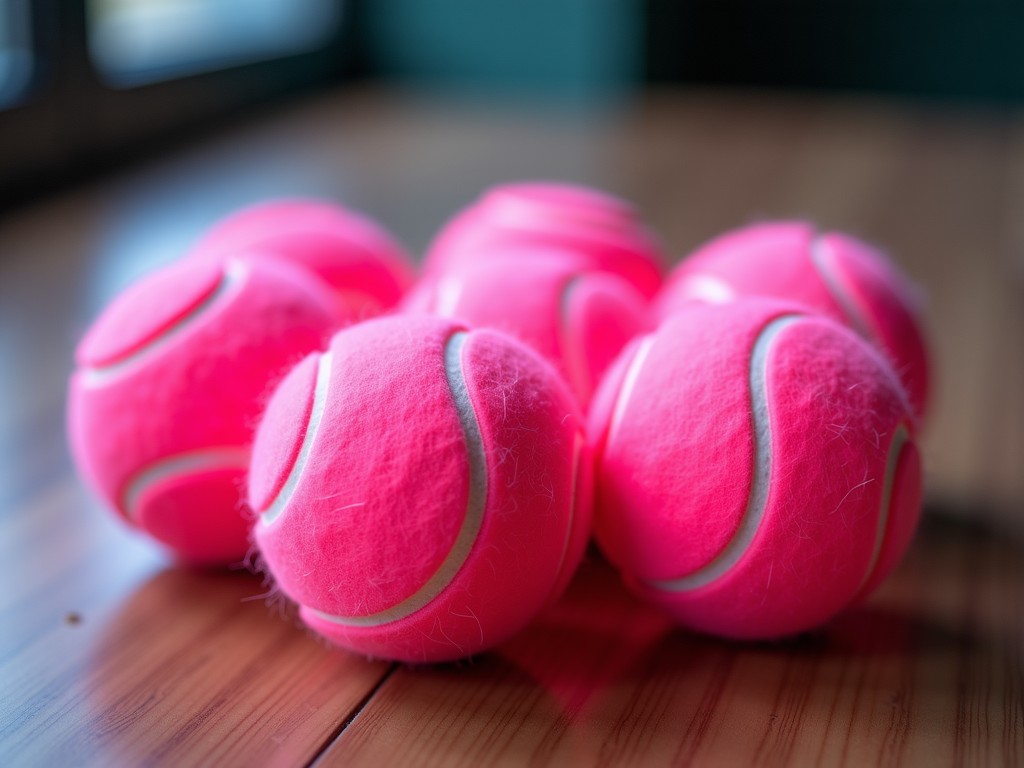
Bulk Pink Indoor Pickleballs For Cold Weather Supplier
These balls are manufactured for indoor pickleball play where ambient temperatures can fall below freezing. The polymer formulation retains elasticity and impact resistance down to –20 °C, preventing
Bulk Pink Indoor Pickleballs for Cold Weather Supplier
These balls are manufactured for indoor pickleball play where ambient temperatures can fall below freezing. The polymer formulation retains elasticity and impact resistance down to –20 °C, preventing the brittleness that causes cracking in standard balls.
Material Composition and Low‑Temperature Performance
The core is a polypropylene copolymer blended with impact‑modifying additives that lower the glass transition temperature. This composition yields a Shore A hardness of approximately 70 at 23 °C and maintains a flexural modulus within 15 % of its room‑temperature value when conditioned at –20 °C for 24 hours.
Diameter, Weight and Bounce Characteristics
Typical production balls measure 74 mm ± 0.5 mm in diameter and weigh 26 g ± 1 g. When dropped from a height of 200 mm onto a concrete surface, the rebound height averages 155 mm, which meets USAPA indoor play specifications. The bounce variation across a batch is kept under ±5 mm to ensure consistent gameplay.
Applications in Indoor Facilities During Winter
Indoor courts often operate with heating systems that create temperature gradients near the floor. A ball that stays pliable at low temperatures delivers a predictable bounce, reducing the likelihood of unexpected skids or joint strain for players. The high‑visibility pink hue remains distinct against dark‑colored court surfaces, improving reaction time in low‑light environments.
| Property | Typical Value | Test Method |
|---|---|---|
| Diameter | 74 mm ± 0.5 mm | Caliper measurement (ASTM D6913) |
| Weight | 26 g ± 1 g | Analytical balance (ASTM D4753) |
| Rebound Height | 155 mm ± 5 mm | Drop test from 200 mm (USAPA) |
| Low‑Temp Flex Limit | –20 °C (no cracking) | Conditioned flex test (ISO 178) |
Customization Options
- Color alternatives: safety orange, high‑visibility yellow, or custom Pantone matches.
- Logo or text printing via pad printing or UV‑cured ink, with registration tolerance ±0.2 mm.
- Packaging configurations: poly bags of 50, 100, or 200 balls; master cartons of 1,000 balls; palletized lots for bulk shipment.
- Optional additive packages for enhanced UV stability if balls will be exposed to occasional sunlight.
Quality Control Philosophy
Each production lot undergoes dimensional sampling using laser micrometers, hardness verification with a durometer, and bounce consistency checks on a calibrated rig. After molding, a subset of balls is conditioned at –20 °C for 12 hours and inspected for surface cracks or delamination. Only lots that pass all three checkpoints are released for shipment.
Frequently Asked Questions
Can the ball diameter be adjusted for specific court standards? Yes, the molding tooling can be modified to produce diameters between 72 mm and 76 mm upon receipt of a detailed specification drawing.
What information is required to receive a quotation? Please provide the desired quantity, packaging preference, any logo artwork files, and the target delivery date.
How are export shipments protected against temperature extremes? Balls are packed in insulated liners with desiccant packs and shipped in climate‑controlled containers when the route includes sub‑zero zones.


