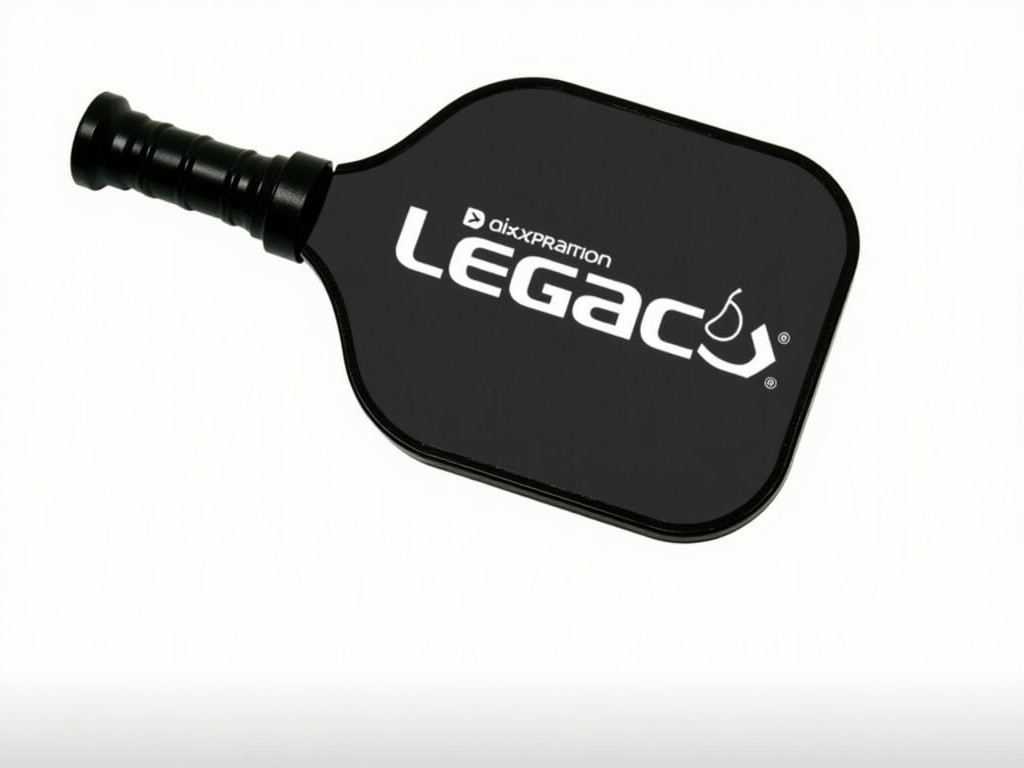
Buy Legacy Pro Pickleball Paddle For Sale
The Legacy Pro paddle is engineered for consistent performance in recreational and institutional play environments. Its design focuses on predictable ball response, controlled vibration transmission,
Legacy Pro Pickleball Paddle
The Legacy Pro paddle is engineered for consistent performance in recreational and institutional play environments. Its design focuses on predictable ball response, controlled vibration transmission, and durable surface integrity under repeated impact.
Key Features
- Weight range: 210‑235 g, adjustable via core density selection
- Face dimension: 400 mm × 200 mm, providing a defined sweet‑spot area
- Edge guard thickness: 2 mm polymer composite, reducing chip propagation
- Grip circumference: 102 mm ± 2 mm, with interchangeable overwrap options
Technical Specifications
| Parameter | Typical Value | Notes |
|---|---|---|
| Core Material | Polypropylene honeycomb | Density configurable 18‑24 kg/m³ |
| Face Material | Carbon‑fiber reinforced polymer | Modulus 70 GPa, surface roughness Ra ≤ 0.8 µm |
| Overall Length | 405 mm | Within USAPA regulation limits |
| Balance Point | 190 mm from butt cap | Neutral to slightly head‑light |
Material Composition Rationale
The polypropylene honeycomb core provides a high strength‑to‑weight ratio while delivering consistent compressive response across the paddle face. Carbon‑fiber reinforcement in the face layer increases tensile stiffness, limiting flex during high‑speed impacts and contributing to a predictable rebound coefficient.
Edge guard polymer is selected for abrasion resistance and impact energy dissipation, reducing the likelihood of delamination at the perimeter after prolonged use.
Performance Characteristics
| Attribute | Typical Range | Measurement Method |
|---|---|---|
| Ball Exit Speed (at 30 m/s swing) | 28‑32 m/s | High‑speed camera analysis |
| Vibration Dampening (peak acceleration) | ≤ 12 g | Accelerometer mounted on handle |
| Sweet‑Spot Effective Width | 150 mm | Defined as region with < 5 % speed variation |
Applications in Institutional and Commercial Settings
Facilities such as community centers, school sports programs, and commercial recreation complexes benefit from paddles that maintain performance consistency across large batches. The predictable weight balance and uniform surface hardness reduce variability in player experience, simplifying inventory management and replacement scheduling.
Distributors sourcing for OEM assembly lines appreciate the paddle’s modular design, which allows core density and grip size to be specified per order without requiring retooling of the molding process.
Quality Control Philosophy
Each paddle undergoes dimensional verification using coordinate measuring equipment, with tolerances of ± 0.5 mm on length and width. Surface hardness is assessed via Shore D testing, targeting a range of 70‑80 to ensure adequate wear resistance without excessive stiffness.
Impact resistance is validated through a standardized drop‑ball test, where a 0.5 kg steel sphere is released from 1 m height onto the face; acceptable units exhibit no visible cracking or delamination after ten repetitions.
Customization Options
- Core density selection from 18 to 24 kg/m³ in 2 kg/m³ increments
- Face finish: matte, gloss, or textured grip‑enhancing coating
- Grip overwrap materials: synthetic leather, perforated polyurethane, or cotton blend
- Laser‑etched logo or serial number on the throat area
- Optional weight‑balancing inserts placed in the handle cavity
Frequently Asked Questions
- Can dimensions be customized? – Length and width are fixed to comply with regulation play; however, weight distribution and grip size can be adjusted per specification.
- What information is required before quotation? – Desired core density, grip circumference, face finish, and any branding details.
- How is quality inspected? – Dimensional checks, hardness testing, and impact resistance validation as described above.
- What packaging methods are available? – Individual poly‑bag placement, bulk corrugated cartons with internal dividers, or palletized options for large orders.
Contact for Purchase Inquiry
For detailed quotations, lead‑time estimates, or to request a sample paddle with specific configuration, please reach out to our sales team.


