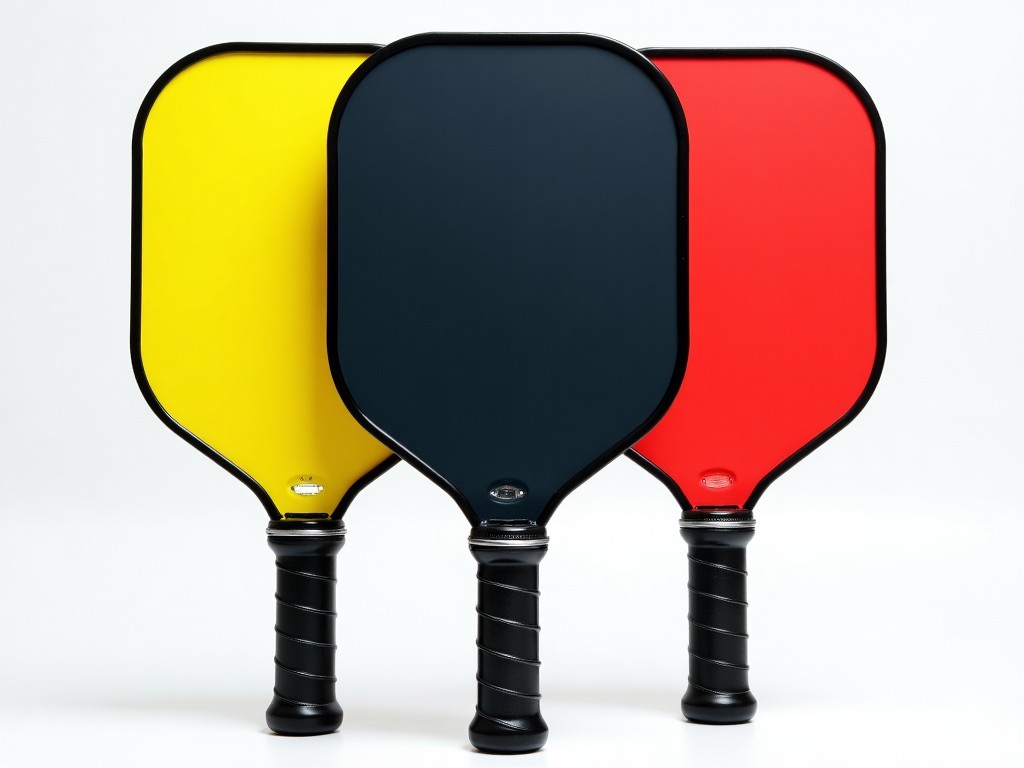
China Custom Carbon Fiber Pickleball Paddles Company
Located in the manufacturing hub of Guangdong, the company focuses exclusively on producing pickleball paddles whose striking faces are built from aerospace‑grade carbon fiber prepreg. The core
China Custom Carbon Fiber Pickleball Paddles Company
Located in the manufacturing hub of Guangdong, the company focuses exclusively on producing pickleball paddles whose striking faces are built from aerospace‑grade carbon fiber prepreg. The core material can be selected from polymer honeycomb, Nomex aramid, or foam, allowing the paddle’s mass distribution and vibration damping to be tuned for specific performance targets.
Each paddle is engineered to meet the dimensional limits set by the USA Pickleball Association while delivering a stiffness‑to‑weight ratio that exceeds traditional fiberglass composites by roughly 30 %. This technical foundation supports the customization options described in the following sections.
Material and Construction
The striking face uses a unidirectional carbon fiber layup oriented at 0°/90° to maximize tensile strength along the paddle’s long axis and shear resistance across the face. Typical areal weight of the carbon fiber prepreg is 180 g/m², cured with an epoxy resin system that achieves a glass transition temperature above 120 °C.
Core options include a 6 mm Nomex honeycomb with a density of 32 kg/m³, a 8 mm polymer hexagonal cell core at 28 kg/m³, or a 10 mm closed‑cell foam core with a compressive strength of 0.4 MPa. The core is bonded to the face using a thin film adhesive that adds less than 2 g to the total paddle weight.
Edge protection is applied as a 0.5 mm thick polyurethane rim, which reduces chipping during play and adds a consistent 3 mm to the overall paddle width.
Customization Options
- Paddle length adjustable from 380 mm to 405 mm in 5 mm increments.
- Width range 190 mm to 210 mm, affecting sweet‑spot size.
- Weight target between 190 g and 230 g, achievable by varying core thickness and face ply count.
- Grip circumference selectable from 100 mm to 115 mm, with optional over‑wrap thickness.
- Surface texture options: smooth matte, light sand‑grain, or aggressive grit for spin enhancement.
- Edge guard colors and logo placement available via screen printing or sublimation.
- Custom paint schemes using UV‑stable pigments that meet ASTM D4236 safety standards.
Manufacturing Process
Carbon fiber plies are cut by CNC laser to tolerance ±0.1 mm, then stacked in a mold that defines the paddle’s final outline. The layup is placed under vacuum bagging and cured in an autoclave at 1.2 bar and 135 °C for 90 minutes, ensuring a void content below 0.5 %.
After demolding, the paddle undergoes CNC trimming to achieve the exact length and width, followed by edge‑guard injection molding. The grip is over‑molded with a thermoplastic elastomer that provides a Shore A hardness of 70 ± 5.
Final inspection includes a coordinate‑measuring machine check of critical dimensions and a laser‑based flex test that records deflection under a 10 N load applied at the paddle’s throat.
Quality Assurance
Each batch is subjected to ultrasonic C‑scan inspection to detect delamination or resin‑rich zones larger than 0.2 mm². Weight is measured with a precision balance calibrated to 0.01 g, and the acceptable tolerance is ±2 g from the target.
Impact resistance is evaluated by dropping a 20 mm steel ball from a height of 1 m onto the paddle face; the maximum allowable crack length after impact is 3 mm. Flexural modulus is derived from a three‑point bend test, with a minimum requirement of 45 GPa for the carbon‑fiber face.
All paddles comply with RoHS and REACH regulations, and a material safety data sheet is provided for every resin system used.
Applications
Competitive players benefit from the high stiffness‑to‑weight ratio, which translates to faster swing speeds and reduced arm fatigue during prolonged matches. The consistent vibration damping lowers the risk of tennis elbow by limiting peak impact forces transmitted to the wrist.
Training facilities choose these paddles because the customizable weight distribution allows coaches to simulate different playing styles—light paddles for quick‑hand drills and heavier versions for power‑development exercises—without needing multiple inventories.
OEM buyers appreciate the repeatable autoclave process, which yields a coefficient of variation in weight below 1.5 % across production lots, simplifying inventory forecasting and reducing warranty claims related to weight inconsistency.
Technical Specifications
| Parameter | Typical Value / Range | Notes |
|---|---|---|
| Paddle Length | 380 mm – 405 mm | Adjustable in 5 mm steps |
| Paddle Width | 190 mm – 210 mm | Influences sweet‑spot area |
| Weight | 190 g – 230 g | ±2 g tolerance per unit |
| Core Thickness | 6 mm – 10 mm | Dependent on core material choice |
| Face Material | Carbon fiber prepreg (180 g/m²) | Unidirectional 0°/90° layup |
| Flexural Modulus | ≥45 GPa (face) | Three‑point bend test |
| Impact Resistance | ≤3 mm crack length after 1 m steel‑ball drop | ASTM D5420 equivalent |
| Surface Finish | Matte, sand‑grain, or grit | Customizable per request |
Frequently Asked Questions
Can dimensions be customized beyond the standard ranges?
Yes. Length, width, and throat geometry can be altered to meet specific player ergonomics, subject to mold feasibility and a minimum order quantity of 50 units.
What information is required before a quotation is issued?
Desired weight target, core material preference, grip size, surface texture, logo artwork files, and expected annual volume. Providing a sample paddle or detailed drawing accelerates the quoting process.
How is quality inspected for each production lot?
Every lot undergoes dimensional CMM verification, weight sampling, ultrasonic C‑scan, and flexural testing. A lot‑specific test report is available upon request.
What packaging methods are available for export shipments?
Paddles are packed in individual corrugated sleeves with corner protectors, then placed in master cartons lined with PE foam. Cartons are sealed with PET strapping and marked with handling labels. Custom palletization can be arranged.
Get a Custom Quote
To discuss your specific paddle requirements, share your design parameters, target weight, and expected volume. Our engineering team will review the details and return a formal quotation within two business days.


