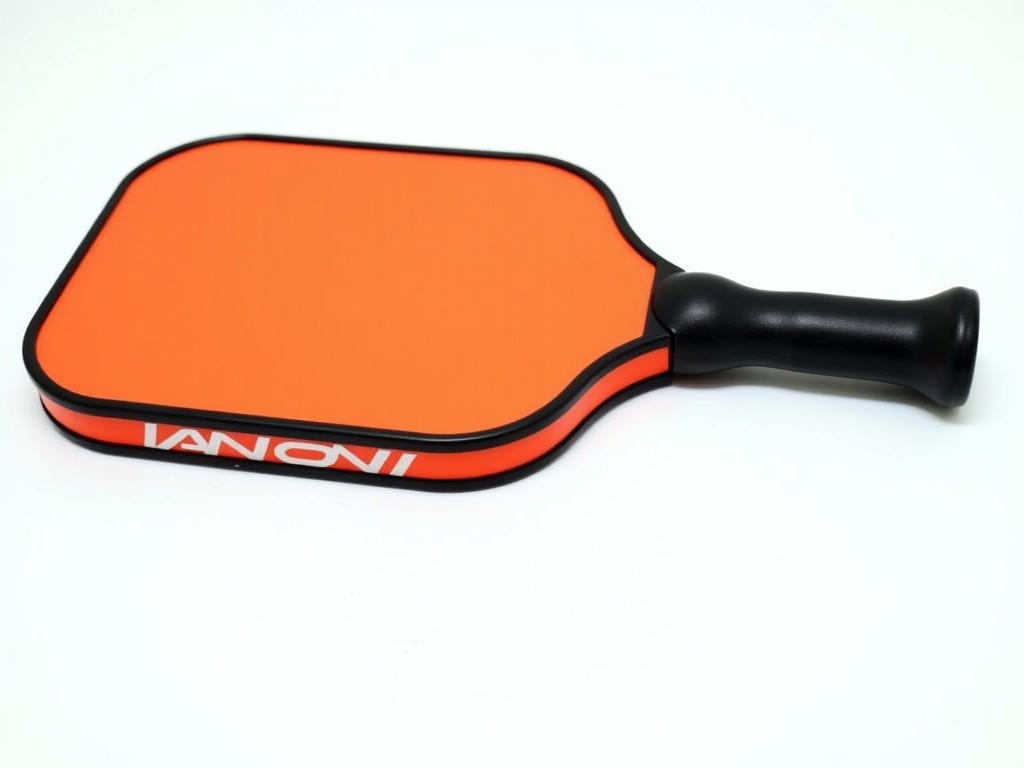
China Ianoni Pickleball Paddle Wholesale Supplier
IANONI pickleball paddles are constructed with a polypropylene honeycomb core bonded to a reinforced face sheet. The core provides consistent rebound characteristics while keeping the overall mass
China IANONI Pickleball Paddle Wholesale Supplier
Product Overview
IANONI pickleball paddles are constructed with a polypropylene honeycomb core bonded to a reinforced face sheet. The core provides consistent rebound characteristics while keeping the overall mass within the range preferred by competitive players. Face sheets are available in carbon fiber, graphite, or composite blends, each offering distinct stiffness and vibration damping properties.
Key Technical Specifications
| Parameter | Typical Value | Notes |
|---|---|---|
| Overall Length | 400 mm ± 2 mm | Measured from tip to butt cap |
| Width (Face) | 190 mm ± 1 mm | Maximum width across the hitting surface |
| Weight | 210 g – 240 g | Depends on core thickness and face material |
| Core Thickness | 12 mm – 16 mm | Polypropylene honeycomb cell size 6 mm |
| Grip Circumference | 102 mm – 108 mm | Standard cushion grip, replaceable |
| Face Material Options | Carbon Fiber, Graphite, Composite | Each option alters flex modulus and surface texture |
Manufacturing Process
The honeycomb core is cut to precise dimensions using CNC routers, then laminated with the selected face sheet under controlled temperature and pressure to ensure uniform adhesion. Edge guards are formed from extruded PVC and attached via ultrasonic welding to prevent delamination. Final trimming removes excess material and creates a smooth perimeter.
Each paddle undergoes a dynamic balance test where the swing weight is measured to verify consistency within ± 5 g·cm². Surface flatness is checked with a laser profilometer to ensure deviation remains under 0.1 mm across the hitting area.
Typical Applications
Sports distributors stock IANONI paddles for club leagues, school physical education programs, and recreational facilities because the weight range accommodates both junior and adult players. The polypropylene core resists moisture absorption, making the paddles suitable for indoor courts with varying humidity levels.
OEM buyers often select the carbon‑fiber face variant for premium lines where higher stiffness translates to increased power output, while the graphite option is favored for control‑oriented models due to its superior vibration damping.
Quality Control Philosophy
Inspection occurs at three stages: incoming raw material, in‑process lamination, and finished product. Raw honeycomb cores are sampled for cell wall thickness and compressive strength. During lamination, peel strength is measured using a tensile tester to confirm adhesion exceeds 1.5 MPa.
Finished paddles are subjected to an impact test where a 42 mm steel ball is dropped from a height of 1 m onto the face; the resulting dent depth must be less than 0.3 mm. All measurements are recorded and traceable to the batch number.
Customization Options
- Face graphic printing – UV‑cured inks, up to 4 colors, registration tolerance ± 0.2 mm
- Core thickness selection – 12 mm, 14 mm, 16 mm (affects weight and power)
- Weight tuning – addition of tungsten tape in the handle area, adjustable in 5 g increments
- Grip size – standard, midsize, oversize; replacement grips available in synthetic or leather
- Edge guard color – black, white, navy, or custom Pantone match
- Logo embossing – recessed or raised, depth 0.1 mm – 0.3 mm
Packaging and Shipping
Each paddle is placed in a low‑density polyethylene bag with a desiccant packet to control moisture. Twelve paddles are stacked in a single‑wall corrugated carton with interleaving sheets to prevent surface abrasion. Master cartons contain 24 inner cartons and are secured on pallets using stretch film and corner protectors.
Shipment volume is optimized for 20‑foot and 40‑foot containers; typical load capacity is 864 paddles per 20‑ft unit. All packaging meets ISPM‑15 standards for international transport.
Frequently Asked Questions
Contact for Wholesale Inquiry
To request a formal quotation, provide your specifications via the contact form or email. Our technical team will review the details, confirm tooling requirements, and return a detailed cost breakdown within two business days.
Request Quote


