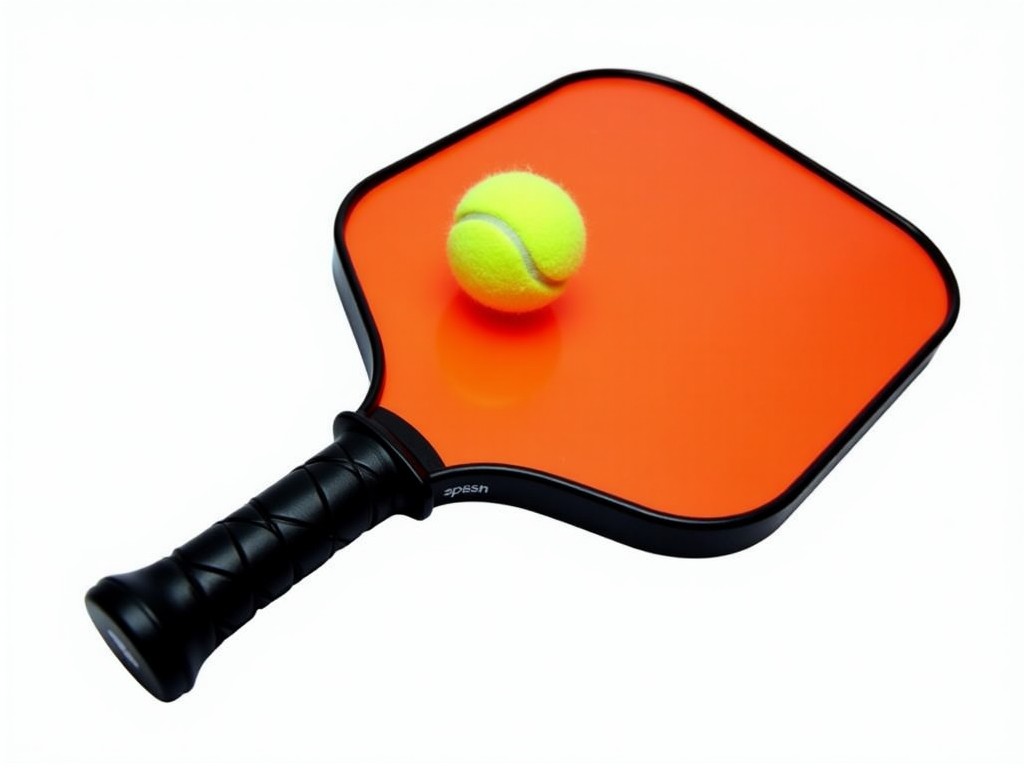
China Professional Carbon Pickleball Paddle Supplier
Carbon fiber paddles are constructed from layered composite sheets that provide a high stiffness‑to‑weight ratio compared with traditional wood or fiberglass faces. The material’s anisotropic nature
China Professional Carbon Pickleball Paddle Supplier
Product Overview
Carbon fiber paddles are constructed from layered composite sheets that provide a high stiffness‑to‑weight ratio compared with traditional wood or fiberglass faces. The material’s anisotropic nature allows designers to align fibers primarily along the loading direction, resulting in a paddle that resists flex during impact while remaining light enough for quick wrist action.
Typical paddle weight for competition‑grade models falls between 180 g and 210 g, with a balance point located 180 mm to 200 mm from the butt cap, offering a neutral to slightly head‑heavy feel favored by players seeking both power and maneuverability.
Material Composition and Layup
The face consists of unidirectional carbon fiber tapes impregnated with epoxy resin, laid up in a quasi‑isotropic schedule (0°/±45°/90°) to distribute stresses evenly across the hitting surface. Core materials vary: polypropylene honeycomb cores provide a cell size of 3‑6 mm and a density of 30‑45 kg/m³, while nomex aramid honeycomb offers higher shear modulus at a comparable weight.
Layer thickness is controlled to a tolerance of ±0.05 mm per ply, ensuring consistent flexural rigidity across production batches. Edge guards are typically made from thermoplastic polyurethane (TPU) with a Shore A hardness of 85‑90, providing abrasion resistance without adding significant mass.
Performance Specifications
Measured swing weight (moment of inertia about the butt cap) ranges from 115 kg·mm² to 130 kg·mm² for the standard 16‑inch length, translating to a perceived heft that supports aggressive drives while allowing quick volleys.
Surface roughness (Ra) of the carbon face is maintained between 0.8 µm and 1.2 µm after finishing, which optimizes ball‑spin generation without excessive wear on the ball’s felt. The paddle’s natural frequency, determined via modal analysis, lies between 450 Hz and 520 Hz, indicating a stiff response that minimizes energy loss on impact.
Customization Options
- Face texture: smooth (Ra ≈ 0.6 µm) or spin‑enhanced (Ra ≈ 1.4 µm) via laser etching.
- Grip circumference: 4.0 in, 4.25 in, or 4.5 in, with optional over‑wrap thickness of 0.5 mm to 1.5 mm.
- Overall length: 15.5 in to 16.5 in; width: 7.5 in to 8.2 in, adjustable in 0.25 in increments.
- Edge guard color: black, white, or custom Pantone match.
- Logo application: sublimation printing on the face or embossing on the grip sleeve.
Quality Control and Testing
Incoming carbon fiber tapes are inspected for areal weight (±2 g/m²) and resin content using FTIR spectroscopy. During layup, a laser‑based thickness mapping system verifies each ply’s position, preventing resin‑rich or resin‑deficient zones.
Finished paddles undergo a three‑point bend test to determine flexural modulus, with acceptance criteria of 45 GPa ± 5 GPa. Impact resistance is evaluated by dropping a 0.5 kg steel ball from a height of 1 m onto the face; permissible surface damage is limited to a crater depth ≤0.2 mm. Weight tolerance for each paddle is held within ±2 g of the target.
Typical Applications
Competitive players benefit from the paddle’s high modulus and low mass, which together enable rapid acceleration of the paddle head during serves and drives while maintaining control on soft shots.
Training facilities select these paddles for durability; the carbon‑fiber face resists delamination under repeated high‑impact exposure, and the TPU edge guard protects against court‑side abrasion.
Recreational users appreciate the consistent feel across temperature ranges (−10 °C to 40 °C) because the epoxy matrix exhibits a low coefficient of thermal expansion (≈30 ppm/°C), minimizing performance drift in indoor or outdoor environments.
Technical Specifications
| Parameter | Typical Value / Range |
|---|---|
| Weight | 180 g – 210 g (±2 g) |
| Length | 15.5 in – 16.5 in (customizable) |
| Width | 7.5 in – 8.2 in (customizable) |
| Balance Point | 180 mm – 200 mm from butt cap |
| Swing Weight | 115 kg·mm² – 130 kg·mm² |
| Face Roughness (Ra) | 0.8 µm – 1.2 µm (smooth) / 1.4 µm (spin‑enhanced) |
| Core Type | Polypropylene honeycomb (30‑45 kg/m³) or Nomex aramid honeycomb |
| Edge Guard Material | TPU, Shore A 85‑90 |
Frequently Asked Questions
Can dimensions be customized?
Yes. Length, width, grip circumference, and edge guard color can be adjusted according to project requirements. A detailed drawing or specification sheet is needed before quotation.
What information is required before quotation?
We need the target weight range, desired balance point, core material preference, face texture (smooth or spin‑enhanced), grip size, and any branding details (logo file, placement).
How is quality inspected?
Each batch undergoes incoming material inspection, in‑process thickness mapping, flexural modulus testing, impact resistance testing, and final weight verification. All test records are available upon request.
What packaging methods are available?
Standard packaging includes individual polypropylene bags with foam corner protectors, placed in corrugated cartons (single‑wall, 150 gsm). For bulk shipments, we offer palletized packaging with edge‑board reinforcement and stretch‑film wrapping.
Contact for Inquiry
To discuss your specific requirements, request a sample, or receive a formal quotation, please use the contact form below.
Send Inquiry


