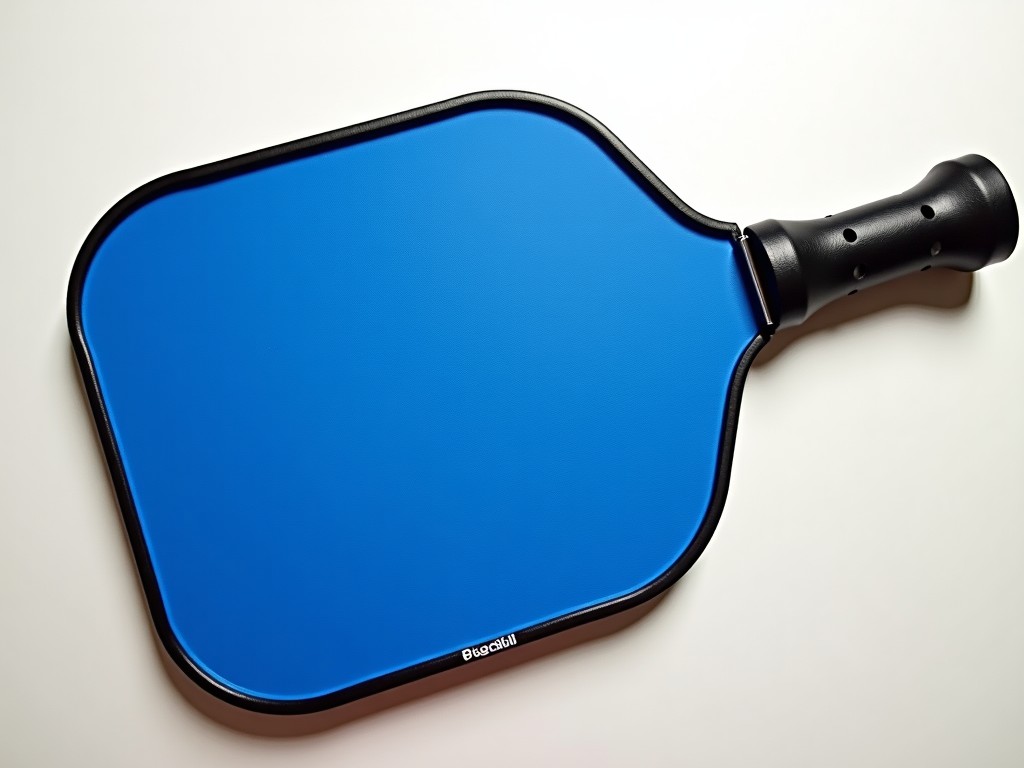
Custom Blue Grit Pickleball Paddle Factory
A blue grit pickleball paddle integrates uniformly dispersed silicon carbide particles, sized in the micron range and tinted blue, into the paddle face to modify surface friction. This alteration
Custom Blue Grit Pickleball Paddle Factory
A blue grit pickleball paddle integrates uniformly dispersed silicon carbide particles, sized in the micron range and tinted blue, into the paddle face to modify surface friction. This alteration influences ball spin, control feel, and wear resistance, allowing players to fine‑tune performance characteristics without changing the underlying geometry.
Material Composition
The paddle core is typically a polypropylene honeycomb or aramid Nomex sheet, selected for its specific density and vibration damping. The face consists of layered carbon fiber or fiberglass plies impregnated with an epoxy resin system that carries the blue grit additive. Grit particles are 30–60 µm in diameter, providing a consistent micro‑abrasive texture while the blue pigment aids visual inspection of coverage.
Customization Options
- Grit size: selectable from 20 µm to 80 µm in 10 µm increments.
- Grit density: low (≈5 wt %), medium (≈10 wt %), high (≈15 wt %) adjustable per player preference.
- Face material: pure carbon fiber, fiberglass, or hybrid lay‑up.
- Core thickness: 10 mm to 16 mm in 2 mm steps.
- Target weight: 200 g to 240 g (±2 g tolerance).
- Grip circumference: 4.0 in to 4.5 in with optional over‑wrap.
- Edge guard: rubber, TPU, or none.
Manufacturing Process
First, the core is molded to final dimensions and cured. Next, the face lay‑up is prepared by mixing the epoxy resin with the predetermined grit concentration and pigment, then impregnating the reinforcement plies. The stack is placed in a vacuum bag, subjected to 120 °C cure for 90 minutes to ensure uniform grit encapsulation and void‑free consolidation. After demolding, edges are trimmed, grip is attached, and the paddle undergoes final machining to achieve exact weight and balance specifications.
Quality Control & Inspection
- Weight verification: ±2 g of target.
- Thickness uniformity: measured at five points, tolerance ±0.1 mm.
- Grit distribution: optical microscopy of cross‑sections, coefficient of variation ≤15 %.
- Adhesion strength: peel test ≥1.5 MPa.
- Impact resistance: drop‑ball test from 1.5 m, no delamination.
- Surface roughness: Ra 1.2–1.8 µm measured with profilometer.
Technical Specifications
| Parameter | Typical Range | Notes |
|---|---|---|
| Overall Length | 395 mm – 405 mm | USAPA‑approved limit |
| Width | 190 mm – 200 mm | Measured at widest point |
| Thickness (face + core) | 22 mm – 28 mm | Varies with core selection |
| Weight | 200 g – 240 g | ±2 g tolerance |
| Grit Size | 20 µm – 80 µm | Silicon carbide, blue pigment |
| Grit Density | 5 wt % – 15 wt % | Adjustable per request |
| Core Material | PP honeycomb / Nomex | Density 30–45 kg/m³ |
| Face Material | Carbon fiber / Fiberglass | 0.2 mm – 0.35 mm ply thickness |
| Edge Guard | Rubber / TPU / None | Adds 2–4 mm to perimeter |
Applications & Performance Benefits
The micro‑abrasive grit increases the coefficient of friction between paddle and ball, enabling greater spin generation on serves and topspin shots without sacrificing power. The blue hue provides a visual cue for wear monitoring, allowing players and coaches to assess grit degradation over time. Combined with a lightweight core, the paddle delivers a balanced swing weight that reduces forearm fatigue during extended play, making it suitable for competitive club players and training facilities seeking consistent performance across batches.
Frequently Asked Questions
Can the grit concentration be adjusted after a sample is approved?
Yes. The grit concentration is a variable parameter in the resin mixture and can be modified for subsequent production runs without altering tooling, provided the new ratio remains within the processable viscosity range of the epoxy system.
What file formats are required for custom artwork or logos?
We accept vector files in .ai, .eps, or .svg formats for spot‑color or full‑color printing on the paddle face. Raster images must be at 300 dpi and supplied as .tiff or .png with transparent background.
What is the typical production lead time for a custom order?
Lead time ranges from 3 to 4 weeks after final artwork approval and material confirmation, depending on order size and current capacity. Expedited options are available upon request.
For a detailed quote or to discuss specific grit specifications, contact our engineering team.
Request a Quote


