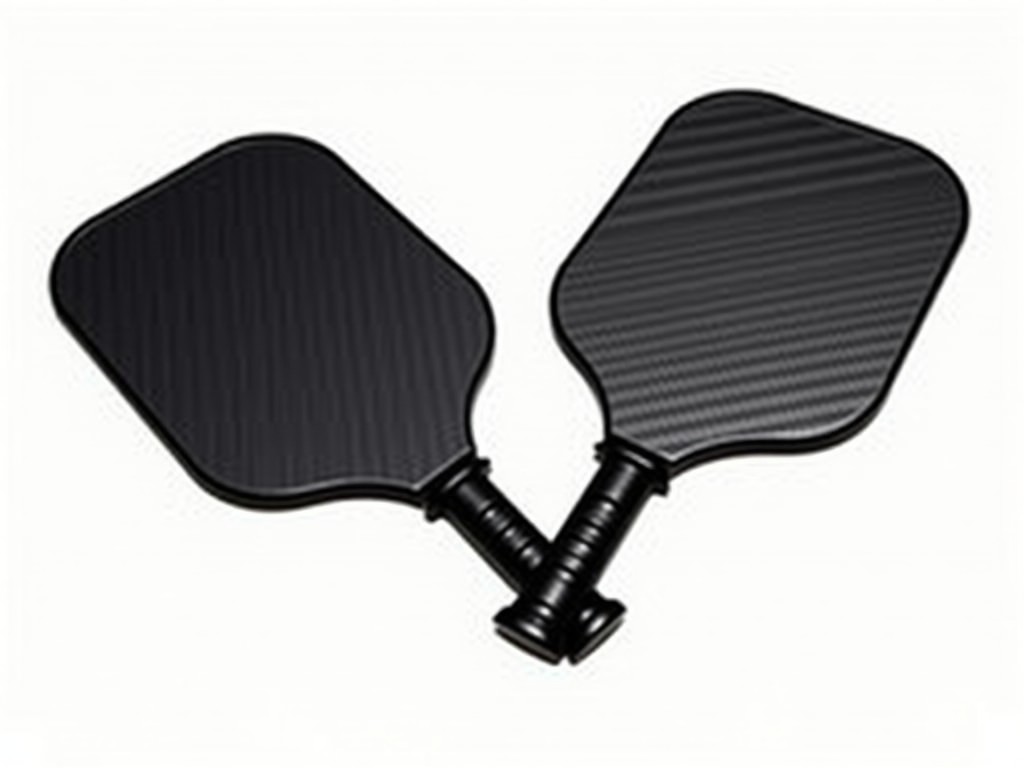
Custom Carbon Fiber Pickleball Paddle Manufacturer
Carbon fiber composites offer a high strength‑to‑weight ratio that directly influences paddle swing speed and control. When the fiber orientation is optimized, the laminate can achieve tensile
Custom Carbon Fiber Pickleball Paddle Manufacturer
Carbon fiber composites offer a high strength‑to‑weight ratio that directly influences paddle swing speed and control. When the fiber orientation is optimized, the laminate can achieve tensile stiffness exceeding 70 GPa while keeping the overall mass below 220 g for a standard‑size blade.
Material and Construction Details
The paddle face typically uses a unidirectional prepreg carbon fiber sheet laid at 0° and ±45° angles to balance longitudinal stiffness with torsional stability. A thin layer of epoxy resin, cured under vacuum pressure, binds the fibers and determines the final glass transition temperature, usually around 120 °C for aerospace‑grade systems.
Core materials vary between a Nomex honeycomb core (density 30–45 kg/m³) for maximal stiffness or a polymer polypropylene core (density 55–65 kg/m³) for increased vibration damping. Core thickness is generally 10–12 mm, contributing to the overall paddle thickness of 16–18 mm.
Performance Characteristics
Measured swing weight for a typical carbon fiber paddle falls between 95 and 105 kg·cm², allowing rapid wrist action without excessive fatigue. Flexural modulus measured in a three‑point bend test ranges from 4.5 to 5.5 GPa, providing a responsive feel while limiting energy loss on impact.
Impact resistance is evaluated by dropping a 2 kg steel ball from a height of 0.5 m onto the paddle face; carbon fiber laminates commonly withstand more than 15 cycles without visible delamination, whereas traditional glass‑fiber composites show surface cracking after 5–7 cycles.
Customization Options
- Blade shape: standard, widebody, or elongated; dimensions adjustable within ±3 mm.
- Grip circumference: 3.5 in, 3.75 in, or 4.0 in; optional tapered or contoured profiles.
- Surface texture: smooth, sand‑spun, or patterned for spin enhancement.
- Edge guard materials: TPU, rubber, or carbon‑fiber reinforced strips.
- Weight balancing: internal tungsten or steel inserts adjustable in 0.5 g increments.
- Color finish: matte, gloss, or custom graphics via sublimation printing.
Manufacturing Process Overview
Prepreg sheets are cut to shape using CNC laser cutters, then laid onto a molded bladder that defines the core geometry. The layup is vacuum‑bagged and transferred to an autoclave where temperature reaches 135 °C and pressure is held at 0.8 MPa for 90 minutes, ensuring full resin cure and minimal void content (<0.5 %).
After curing, the bladder is removed and the paddle undergoes CNC trimming to achieve final tolerances of ±0.2 mm on edge dimensions. Surface finishing includes light sanding and application of a UV‑stable clear coat to protect against abrasion and UV degradation.
Quality Control Philosophy
Each paddle is weighed on a precision balance (±0.1 g) to verify that the mass falls within the target range specified by the customer. Thickness is measured at five points across the blade using a digital micrometer, with acceptance criteria of ±0.15 mm.
Flexural stiffness is confirmed by a three‑point bend test at a span of 100 mm; the load‑deflection curve must match the calculated stiffness within ±5 %. Impact testing follows ASTM D7136, recording the number of cycles before first visible damage; a minimum of 12 cycles is required for approval.
Visual inspection under 10× magnification checks for resin-rich areas, fiber misalignment, or surface defects. Any paddle failing any criterion is segregated for rework or scrap, ensuring that only conforming units proceed to packaging.
Application Rationale
Competitive players benefit from the high stiffness‑to‑weight ratio, which translates into faster swing speeds and greater control over shot placement. The reduced mass lowers the moment of inertia, allowing quicker wrist action during volleys and dinks.
Training environments appreciate the consistent feel across multiple paddles; tight tolerances ensure that athletes experience minimal variation when switching between practice and match equipment. The vibration‑dampening core options also help reduce forearm strain during extended sessions.
Recreational users gain durability; the carbon fiber laminate resists chipping and cracking better than traditional wood or glass‑fiber paddles, extending the usable life even with frequent outdoor play on abrasive surfaces.
Material Comparison Table
| Property | Carbon Fiber | Graphite | Glass‑Fiber Composite |
|---|---|---|---|
| Typical Weight (g) | 190–215 | 200–230 | 220–250 |
| Flexural Modulus (GPa) | 4.5–5.5 | 3.0–4.0 | 2.0–3.0 |
| Impact Cycles to Failure | >15 | 8–12 | 4–6 |
| Relative Cost Factor | 1.0 (baseline) | 0.8–0.9 | 0.6–0.7 |
Frequently Asked Questions
Yes, blade length, width, and thickness can be adjusted within ±3 mm to match player preferences or regulatory limits.
What information is required before quotation?We need the desired weight range, grip size, core type, surface finish, and any optional inserts (e.g., balance weights). A sketch or CAD file helps expedite the layout.
Which materials are available for the core?Nomex honeycomb, polypropylene polymer, and aluminum alloy cores are stocked; alternative cores can be sourced upon request.
How is quality inspected?Each paddle undergoes weight verification, thickness measurement, flexural stiffness testing, impact cycling, and visual inspection under magnification before release.
What packaging methods are available?Individual paddles are placed in PE foam sleeves, then packed in single‑wall corrugated cartons with corner protectors. Palletizing and heat‑shrink wrapping are offered for bulk orders.
What is the typical production lead time?Lead time ranges from 10 to 18 business days depending on order complexity and current capacity; exact timing is confirmed after quote acceptance.
How are samples arranged?Sample paddles can be produced after receipt of a signed sample agreement and payment of sample fees; shipping is arranged via express courier with tracking.
Get in Touch
To discuss a custom carbon fiber pickleball paddle project, please provide your performance targets, required quantities, and any special cosmetic or functional requests. Our engineering team will review the specifications and return a detailed feasibility assessment.


