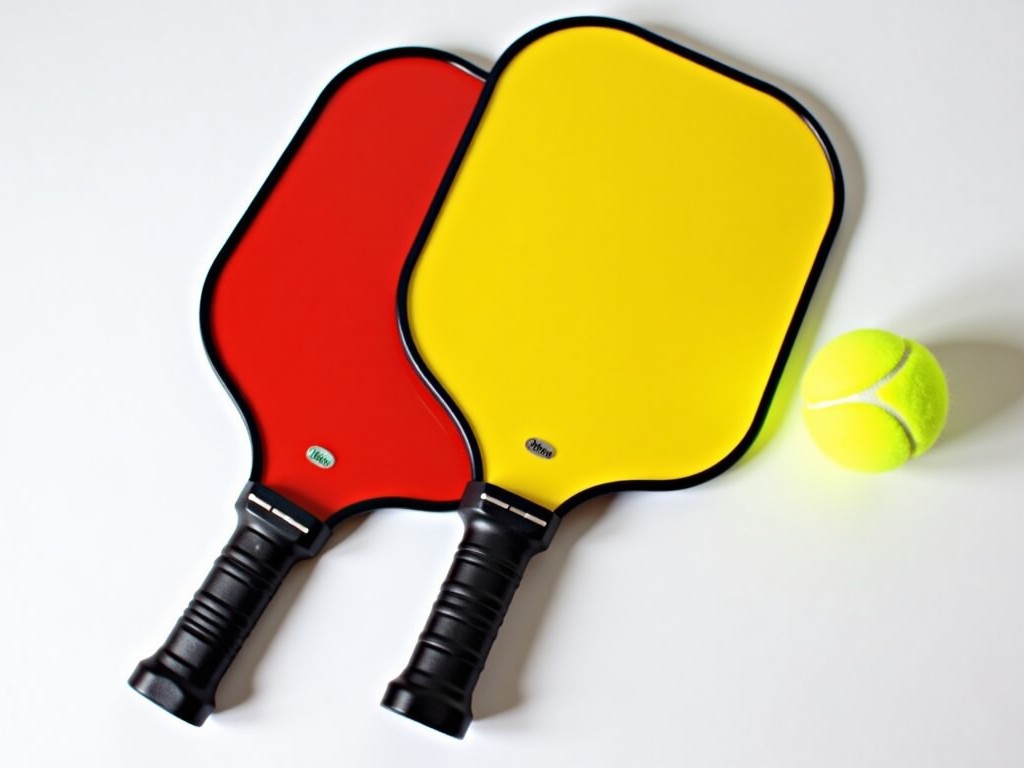
Custom Lightweight Pickleball Paddles Factory
Manufacturers seeking paddles that reduce athlete fatigue while maintaining responsive ball control often focus on mass distribution and core geometry. This page explains how material selection,
Custom Lightweight Pickleball Paddles Factory
Manufacturers seeking paddles that reduce athlete fatigue while maintaining responsive ball control often focus on mass distribution and core geometry. This page explains how material selection, structural design, and tight tolerances combine to produce paddles that meet competitive weight targets without sacrificing durability.
Material Selection and Core Construction
The core determines both weight and vibration damping. Commonly used cores include polypropylene honeycomb with cell sizes ranging from 6 mm to 10 mm, which yields densities between 0.025 g/cm³ and 0.035 g/cm³. Nomex aramid honeycomb offers higher stiffness at a comparable density, while aluminum cores provide increased rigidity for players who prefer a firmer feel.
Core thickness directly influences paddle mass; a 12 mm thick polypropylene core typically contributes 5.5 oz to the total weight, whereas a 16 mm Nomex core adds approximately 6.8 oz. Engineers adjust thickness and cell wall thickness to hit target weight ranges while preserving a consistent sweet spot.
Face Surface Options
The striking surface affects ball spin, power transfer, and wear resistance. Carbon fiber weaves with a 3 k tow weight of 200 g/m² produce a surface roughness (Ra) of roughly 8 µm, enhancing grip on the ball for topspin shots. Fiberglass laminates, typically 0.2 mm thick per ply, deliver a smoother finish (Ra ≈ 4 µm) that favors consistent power output.
Graphite overlays, when applied as a 0.1 mm top layer, increase surface hardness to about 7 H on the pencil scale, reducing surface deformation during high‑impact strikes. Manufacturers can combine materials—such as a carbon fiber base with a graphite top coat—to tune both spin potential and durability.
Weight and Balance Engineering
Competitive players often seek paddles between 7.0 oz and 7.8 oz to minimize arm strain during extended rallies. Achieving this range requires precise calculation of core volume, face ply weight, and edge guard mass. A typical edge guard made of PVC rubber adds 0.2 oz per inch of perimeter.
Balance point, measured from the handle end, influences swing weight. A balance point of 10.5 in yields a swing weight near 95 oz·in², which many players describe as maneuverable yet stable. Adjusting core thickness or adding internal weighting rods shifts the balance point in increments of 0.2 in, allowing fine‑tuning for individual playing styles.
Customization Capabilities
- Grip circumference: 4.0 in to 4.75 in, with options for perforated or cushioned overlays.
- Paddle shape: standard wide‑body, elongated, or teardrop profiles, each altering the effective hitting area.
- Edge guard thickness: 0.1 in to 0.25 in, available in black, navy, or custom Pantone matches.
- Surface finish: matte, satin, or gloss, affecting both glare and friction.
- Logo application: laser engraving, sublimation printing, or embossing, with resolution up to 600 dpi.
Typical Applications
Lightweight paddles reduce the inertial load on the wrist and elbow during rapid volley exchanges, which is especially beneficial for players who participate in multiple matches per day. By lowering the mass moment of inertia, athletes can achieve quicker reaction times at the net without compromising power generation from the shoulder.
In training environments, coaches often specify paddles near the lower end of the weight spectrum to help beginners develop proper swing mechanics before progressing to heavier models. The consistent balance point across custom orders ensures that players experience a uniform feel when switching between practice and competition gear.
Quality Assurance and Testing
Each paddle undergoes weight verification on a calibrated scale with a tolerance of ±0.1 oz. Balance point is measured using a precision pivot fixture, accepting deviations of no more than ±0.05 in. Surface flatness is assessed with a laser profilometer, ensuring that any deviation from a true plane remains under 0.002 in across the hitting area.
Impact resistance is evaluated by dropping a standard pickleball from a height of 4 ft onto the paddle face at five distinct points; no visible cracking or delamination is permitted. Additionally, ultrasonic scans inspect the core for internal voids or inconsistent cell wall thickness, guaranteeing uniform performance across production batches.
Specification Table
| Parameter | Typical Range | Customizable Options |
|---|---|---|
| Total Weight | 7.0 oz – 7.8 oz | Adjustable via core thickness & face ply count |
| Balance Point (from handle) | 9.5 in – 11.5 in | Shifted with internal weighting rods |
| Core Material | Polypropylene honeycomb, Nomex, Aluminum | Hybrid cores available upon request |
| Face Material | Carbon fiber, Fiberglass, Graphite | Layer combinations & surface finishes |
| Grip Size | 4.0 in – 4.75 in circumference | Custom perforations, cushioned overlays |
Frequently Asked Questions
Can dimensions be customized beyond standard shapes? Yes. Paddle length, width, and throat profile can be altered to meet specific ergonomic or regulatory requirements, subject to tooling feasibility.
What information is needed before a quotation? Detailed specifications including target weight, preferred core material, face composition, grip size, edge guard color, and any branding files are required to generate an accurate cost estimate.
Which materials are available for the core? Polypropylene honeycomb (various cell sizes), Nomex aramid honeycomb, and aluminum alloy cores are stocked; alternative composites can be sourced upon request.
How is quality inspected? Each unit undergoes weight, balance, surface flatness, impact, and ultrasonic inspections as outlined in the quality assurance section.
What packaging options exist for export shipments? Paddles are packed in individual foam sleeves, placed in corrugated cartons with corner protectors, and can be palletized or containerized according to Incoterms.
Request a Quote
To begin a custom lightweight paddle project, provide your performance targets, material preferences, and branding details. Our engineering team will review the requirements and respond with a feasibility analysis, lead time estimate, and itemized pricing.


