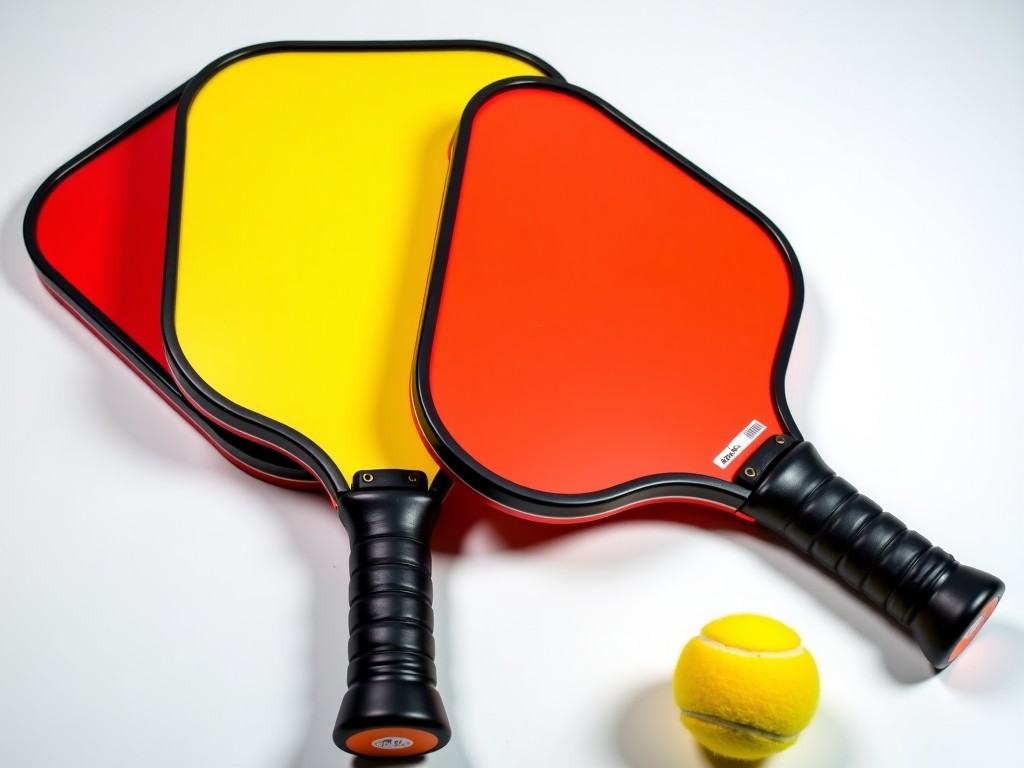
Custom One Piece Oversized Pickleball Paddles Factory
This page describes the engineering and production details for single‑piece, oversized pickleball paddles that are built to order in our facility. The focus is on dimensional tolerances, material
Custom One-Piece Oversized Pickleball Paddles – Factory Direct Manufacturing
This page describes the engineering and production details for single‑piece, oversized pickleball paddles that are built to order in our facility. The focus is on dimensional tolerances, material selection, and repeatable manufacturing steps that reduce variability for bulk purchasers.
Design & Construction
The paddle is molded as a monolithic slab, eliminating the joint between handle and blade that can introduce flex or delamination under repeated impact. Overall length is typically 420 mm to 460 mm, with a width ranging from 200 mm to 230 mm, giving a hitting surface area up to 105 cm². Thickness is held between 12 mm and 18 mm, measured at the center of the face, to balance swing weight and stiffness.
Edge radii are kept below 2 mm to reduce chipping, while the handle diameter is tapered from 36 mm at the butt to 28 mm at the throat, providing a grip circumference that fits most adult hands without over‑gripping. The core is a uniform polymer foam with a density of 0.35 g/cm³ ± 0.02, contributing to a nominal weight of 260 g ± 15 g for the oversized configuration.
Material Options
- Face sheet: UV‑stabilized polypropylene copolymer, thickness 0.8 mm ± 0.05 mm, Shore D hardness 70 ± 3.
- Core: Closed‑cell EPP (expanded polypropylene) or EPE (expanded polyethylene) foam, selectable density 0.30–0.40 g/cm³.
- Edge guard: Optional TPU over‑mold, hardness 85 ShA, thickness 1.5 mm.
- Surface finish: Matte or low‑gloss coating, coefficient of friction 0.4–0.6 (ASTM D1894).
Customization Capabilities
Dimensional adjustments are made by altering the mold cavity dimensions; length can be changed in 5 mm increments, width in 3 mm steps, and thickness in 1 mm steps without requiring new tooling for minor variations. Weight targets are achieved by selecting core density and adjusting face‑sheet thickness within the tolerances noted above.
Graphic application uses pad‑printing or sublimation on the face sheet, with registration tolerance ±0.2 mm. Custom logos, color gradients, or texture patterns are available, and the coating remains compliant with USAPA paddle surface roughness limits (Ra < 30 µm).
- Length: 400 mm–480 mm (custom)
- Width: 180 mm–250 mm (custom)
- Thickness: 10 mm–22 mm (custom)
- Weight range: 220 g–340 g (depending on core & face)
- Handle shape: Straight, tapered, or ergonomic contour
- Color: Any Pantone or CMYK match
Manufacturing Process
Production begins with CNC‑machined aluminum molds that are polished to a surface roughness of Ra 0.4 µm. The selected foam core is pre‑heated to 80 °C and placed into the mold, followed by injection of the polypropylene face sheet at 200 °C under 150 bar pressure. The cycle time averages 45 seconds per paddle, allowing a daily output of up to 1,200 units per shift.
After molding, parts undergo a secondary annealing step at 60 °C for 10 minutes to relieve internal stresses, then are trimmed to final dimensions using a 5‑axis milling center with positional accuracy ±0.05 mm. Edge guards, if specified, are over‑molded in a separate station using a low‑temperature TPU process.
Quality Control
Each paddle is inspected for dimensional conformance using a coordinate measuring machine (CMM) with a measurement uncertainty of ±0.02 mm. Weight is verified on a calibrated scale with readability 0.1 g. Impact resistance is tested by dropping a 0.5 kg steel ball from a height of 1 m onto the face; acceptable performance is defined as no visible cracking and a residual deflection < 0.5 mm.
- Length tolerance: ±1.0 mm
- Width tolerance: ±0.8 mm
- Thickness tolerance: ±0.5 mm
- Weight tolerance: ±5 g
- Surface roughness (Ra): ≤ 25 µm
- Adhesion of coating: ≥ 2 MPa (ASTM D4541)
Applications
The enlarged hitting surface increases the sweet‑spot area, which benefits players seeking greater forgiveness on off‑center contacts, such as beginners, recreational players, or athletes using the paddle for stroke‑development drills. The one‑piece construction eliminates handle‑blade vibration modes that can affect feedback in high‑speed rallies, making the paddle suitable for training environments where consistent feel is prioritized over maximal power.
Institutional buyers, such as school sports programs or community centers, often select oversized paddles to reduce the learning curve and minimize equipment wear due to the larger impact area distributing forces over a broader zone. The uniform material composition also simplifies recycling at end‑of‑life, supporting sustainability initiatives.
Comparison Table
| Parameter | Standard Paddle (Typical) | Oversized One‑Piece Paddle (Custom) |
|---|---|---|
| Length (mm) | 380–410 | 420–460 |
| Width (mm) | 190–203 | 200–230 | Thickness (mm) | 10–14 | 12–18 |
| Weight (g) | 210–240 | 260–300 |
| Face Area (cm²) | 70–80 | 90–105 |
| Core Density (g/cm³) | 0.30–0.35 | 0.35–0.40 |
Frequently Asked Questions
- Can the paddle dimensions be fully customized?
- Yes. Length, width, thickness, and handle geometry can be adjusted within the ranges listed above. Minor changes (< 5 mm) do not require new tooling.
- What information is needed for a quotation?
- Please provide target dimensions, desired core material, face‑sheet color or graphic files, quantity, and any special requirements such as edge guards or packaging.
- Which materials are available for the core?
- Closed‑cell EPP and EPE foams are stocked; densities from 0.30 g/cm³ to 0.40 g/cm³ are offered. Other polymers can be sourced upon request.
- How is quality inspected?
- Each paddle undergoes CMM dimensional checks, weight verification, impact‑resistance testing, and surface‑roughness measurement. Results are recorded per batch and available on request.
- What packaging options are available?
- Standard packaging is a single‑wall corrugated box with internal foam inserts. Custom branding, bulk pallet packs, or heat‑shrink wrapping can be arranged.
- What is the typical production lead time?
- Lead time ranges from 10 to 20 business days depending on order size and material availability; exact timing is confirmed at quote.
Get a Quote
To discuss your specific requirements for custom one‑piece oversized pickleball paddles, please provide the details outlined above. Our engineering team will review the specifications and return a detailed quotation with lead‑time and tooling information.
Request a Quote


