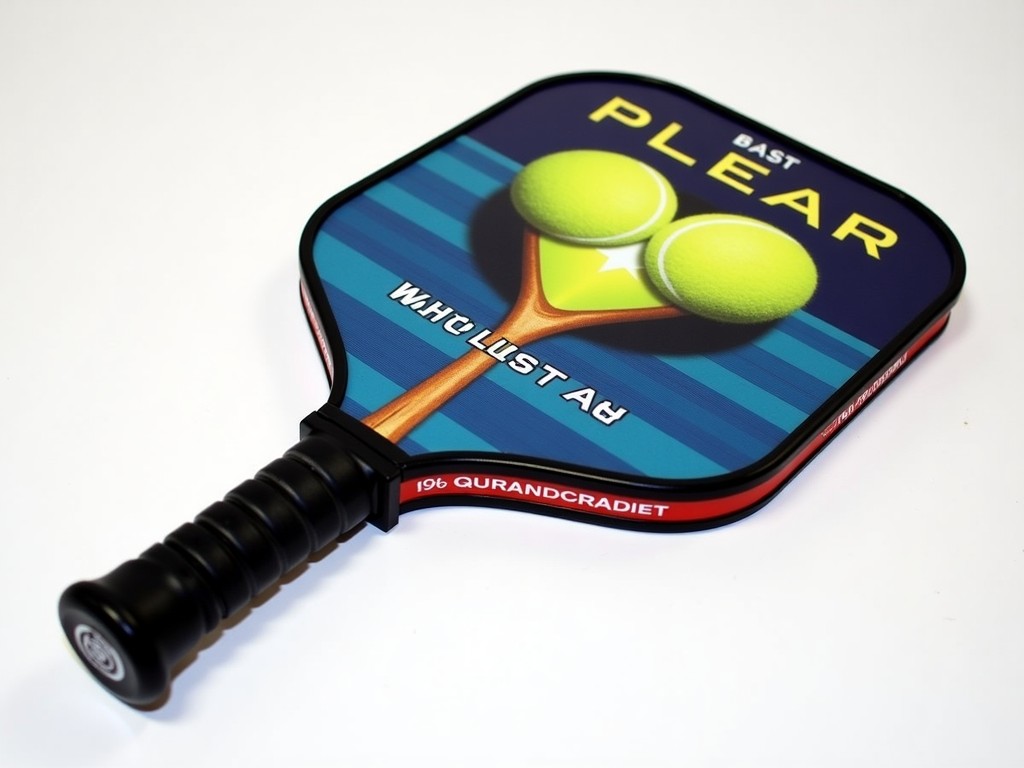
Custom Pickleball Paddle Designs Manufacturer
Procurement engineers evaluating paddle suppliers benefit from understanding how design variables affect play characteristics and manufacturing feasibility. This page explains the technical factors
Custom Pickleball Paddle Designs Manufacturer
Procurement engineers evaluating paddle suppliers benefit from understanding how design variables affect play characteristics and manufacturing feasibility. This page explains the technical factors that influence paddle performance, the material options commonly used, and the customization pathways available for industrial buyers.
Design Variables that Influence Performance
The striking surface area, core thickness, and edge guard geometry collectively determine ball response, vibration damping, and weight distribution. Adjusting the face material’s texture alters spin potential, while varying the core’s cell size changes stiffness and rebound speed.
A typical paddle length ranges from 395 mm to 405 mm, width from 190 mm to 200 mm, and overall weight between 190 g and 235 g. These dimensions are constrained by USAPA regulations, which limit total length to 406 mm and width to 240 mm.
Material Options and Their Engineering Implications
- Polypropylene honeycomb cores provide a consistent stiffness-to-weight ratio, commonly measured at 0.12 g/cm³ density with compressive strength around 0.8 MPa.
- Carbon‑fiber reinforced faces deliver higher tensile strength (> 350 MPa) and reduced flex, enabling thinner profiles without sacrificing durability.
- Graphite‑blend surfaces offer a balance of stiffness and surface roughness, typically producing a coefficient of friction between 0.3 and 0.4 for enhanced ball grip.
- Edge guards made from TPU or rubber composites add impact resistance, measured by Shore A hardness values of 70‑85.
Customization Choices for OEM Requirements
Customization extends beyond cosmetic graphics to functional parameters that directly affect play. The following list outlines the most frequently adjusted attributes and the typical ranges achievable through standard tooling.
- Core thickness: 10 mm to 16 mm in 0.5 mm increments.
- Face material layers: 1 to 4 plies of carbon, graphite, or fiberglass.
- Grip circumference: 100 mm to 115 mm, with optional tapered profiles.
- Weight tolerance: ± 5 g achievable via core density adjustments.
- Surface finish: matte, satin, or gloss with measured roughness (Ra) between 0.8 µm and 2.5 µm.
Typical Specification Table
| Parameter | Typical Range | Notes |
|---|---|---|
| Overall Length | 395 mm – 405 mm | USAPA max 406 mm |
| Width | 190 mm – 200 mm | USAPA max 240 mm |
| Weight | 190 g – 235 g | Adjustable via core density |
| Core Thickness | 10 mm – 16 mm | Impacts stiffness and vibration damping |
| Face Material | Carbon, Graphite, Fiberglass, Composite | Determines tensile strength and surface texture |
| Grip Size | 100 mm – 115 mm circumference | Custom taper available |
Manufacturing Considerations
Production begins with CNC‑cut core blanks, followed by lay‑up of face plies using vacuum bagging to ensure uniform resin distribution. Edge guards are injection‑molded and bonded with structural adhesive, achieving peel strength exceeding 1.5 MPa. Final trimming is performed on water‑jet systems to maintain tolerances of ± 0.2 mm on critical dimensions.
Inline inspection includes weight verification (± 2 g), thickness measurement via laser micrometer (± 0.05 mm), and surface roughness profiling. Batches are subjected to a 500‑cycle impact test simulating game‑play stresses, with acceptable deflection limits set at < 0.3 mm under 50 N load.
Applications in Recreational and Competitive Settings
Paddles tailored for community courts prioritize durability and a larger sweet spot, often utilizing thicker polypropylene cores and textured graphite faces to reduce vibration for novice players. Competitive models emphasize reduced mass and increased stiffness, enabling faster swing speeds and precise shot placement, which correlates with higher player satisfaction scores in league play.
Distributors supplying sports‑facility chains benefit from offering a modular product line where core thickness and face composition can be swapped without retooling the entire line, thereby lowering inventory carrying costs while meeting varied end‑user requirements.
Frequently Asked Questions
- Can dimensions be customized beyond standard ranges?
- Length and width are limited by USAPA regulations; however, weight, grip size, and core thickness can be adjusted within the ranges specified in the table.
- What information is required before quotation?
- Desired weight target, preferred face material, grip circumference, order volume, and any required branding or surface artwork.
- What materials are available for the core?
- Polypropylene honeycomb is standard; Nomex and aluminum honeycomb cores are available upon request for specific stiffness requirements.
- How is quality inspected?
- Each paddle undergoes weight verification, thickness measurement, surface roughness check, and a 500‑cycle impact test before packaging.
- What packaging methods are available?
- Individual sleeves with foam ends, bulk cartons with interleaving sheets, or custom‑printed retail boxes; all options include corner protectors to prevent edge damage.
- How are export shipments protected?
- Palletized shipments use heat‑shrink wrap and moisture‑barrier layers; shock indicators are attached to monitor handling conditions.
- What is the typical production lead time?
- Four to six weeks for tool‑ready designs; eight to ten weeks when new core molds or face lay‑up fixtures are required.
- How are samples arranged?
- Sample paddles are produced using the same production process as mass production; shipping costs are borne by the requester, and sample fees are credited toward the first order.


