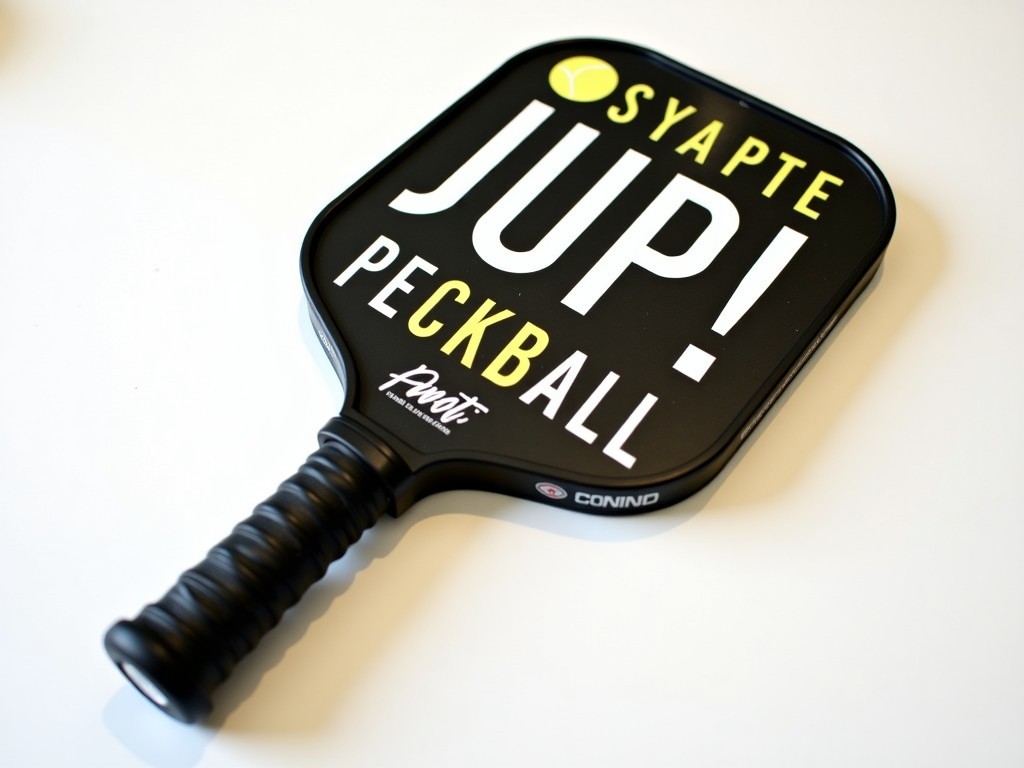
Custom Printed Pickleball Paddles Wholesale
Wholesale buyers sourcing pickleball paddles for resale or club programs require components that meet strict performance tolerances while allowing brand‑specific graphics. The paddle’s striking
Custom Printed Pickleball Paddles – Wholesale Supply
Wholesale buyers sourcing pickleball paddles for resale or club programs require components that meet strict performance tolerances while allowing brand‑specific graphics. The paddle’s striking surface, core, and grip must maintain consistent weight distribution and rebound characteristics across large production runs.
Material Construction and Performance Characteristics
A typical paddle comprises a polymer honeycomb core (often polypropylene or Nomex) sandwiched between two composite faces. The core thickness ranges from 10 mm to 16 mm, influencing the paddle’s stiffness and sweet‑spot size. Face materials such as carbon‑fiber reinforced polymer, fiberglass, or graphite provide tensile strengths between 300 MPa and 500 MPa, which directly affect ball‑speed retention and vibration damping.
Dimensional Specifications and Tolerances
Official play dictates a maximum length of 405 mm and a width not exceeding 203 mm. Wholesale suppliers control these dimensions to ±0.5 mm to ensure compliance with tournament regulations. Grip circumference is usually held between 100 mm and 110 mm, with a tolerance of ±1 mm to accommodate various overgrip thicknesses.
| Parameter | Typical Range | Tolerance |
|---|---|---|
| Overall Length | 380 mm – 405 mm | ±0.5 mm |
| Width | 150 mm – 203 mm | ±0.5 mm |
| Weight | 190 g – 260 g | ±2 g |
| Core Thickness | 10 mm – 16 mm | ±0.3 mm |
Printing Technology and Durability
Graphics are applied using UV‑curable inks that polymerize at 365 nm, forming a cross‑linked layer with a Shore D hardness of approximately 80. This process yields adhesion strengths exceeding 2.5 MPa on composite surfaces, ensuring resistance to abrasion from repeated ball impact and exposure to outdoor UV radiation for up to 500 hours without noticeable fading.
Customization Options
- Face material selection: carbon‑fiber, fiberglass, or hybrid layup
- Core type: polypropylene honeycomb, Nomex, or aluminum‑core variants
- Weight tuning via core density adjustments (±10 g)
- Grip size and shape: standard, enlarged, or tapered profiles
- Print area coverage: full‑face, partial, or edge‑to‑edge graphics
- Optional edge guard materials: TPU or rubberized strips
Quality Control and Testing Procedures
Each batch undergoes dimensional verification using calibrated calipers, weight measurement on analytical balances (±0.1 g), and flexural stiffness testing via three‑point bend fixtures. Surface adhesion is assessed with cross‑hatch tape tests per ASTM D3359, and impact resilience is measured by rebound height after a standardized ball drop from 1.5 m. Results are logged and compared against predefined control charts to detect drift beyond 2 σ.
Typical Applications in Sports Distribution and Retail
Wholesale paddles serve specialty sports retailers that need uniform stock for league‑play programs, as well as promotional distributors who require branded merchandise for tournaments and corporate events. The ability to maintain tight weight tolerances ensures consistent player experience across large inventories, reducing return rates linked to performance variability.
Ordering Process and Lead Times
Purchase orders trigger a material‑requirement planning step where core and face layups are scheduled based on selected specifications. After layup curing (typically 2 hours at 120 °C for epoxy systems), panels are CNC‑cut to shape, printed, and finished with grip installation. Standard production cycles range from 10 to 18 business days, with expedited options available for orders exceeding 500 units.
Frequently Asked Questions
Yes, length and width can be adjusted within the bounds of USAPA regulations; any deviation requires a compliance waiver.
What file formats are accepted for artwork?
Vector formats (AI, EPS, SVG) are preferred for crisp edges; high‑resolution raster files (300 dpi TIFF or PNG) are also accepted.
How is color fidelity verified?
A proof is printed on a sample substrate and measured with a spectrophotometer; ΔE values below 2 are considered acceptable.
What packaging options protect the paddles during transit?
Individual paddles are placed in polyethylene sleeves, then stacked in corrugated cartons with corner protectors and moisture‑barrier liners.
What is the typical minimum order quantity?
Most tooling setups allow runs as low as 50 units, though unit pricing improves significantly at 200 units or more.
Get a Quote
To receive a detailed quotation, provide your desired specifications (core material, face type, weight target, artwork files, and order volume). Our engineering team will review the inputs and return a cost breakdown within one business day.
Request Quote


