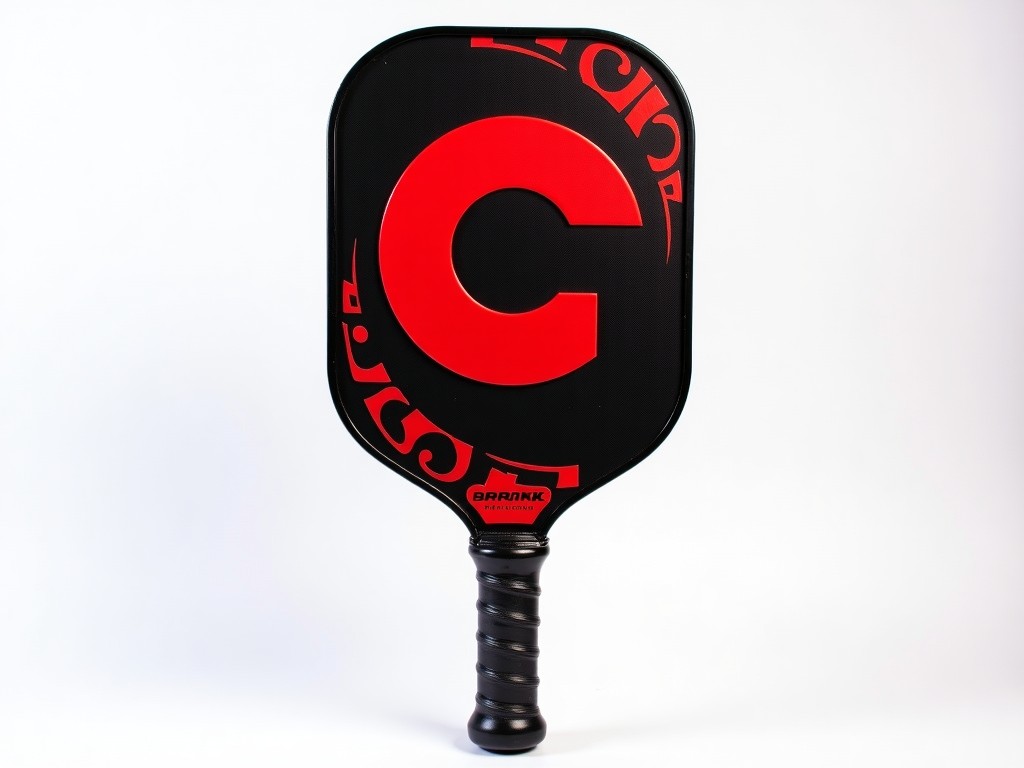
Custom Professional Pickleball Paddle Pro Supplier
Competitive pickleball demands equipment that transfers player intent to ball with minimal loss, requiring precise control over mass distribution, stiffness, and surface interaction. The design
Custom Professional Pickleball Paddle Pro Supplier
Competitive pickleball demands equipment that transfers player intent to ball with minimal loss, requiring precise control over mass distribution, stiffness, and surface interaction.
The design process begins with defining target swing weight and balance point based on player biomechanics, then iteratively adjusting core thickness and face lay‑up to meet those targets while maintaining durability under repeated impact.
Design Philosophy and Engineering Approach
Engineers model the paddle as a tapered beam, calculating moment of inertia about the handle to predict maneuverability and power output. Finite‑element analysis evaluates stress concentrations at the throat and edge guard under peak impact loads.
Prototypes are instrumented with accelerometers to measure vibration modes; damping is tuned through core cell geometry and resin selection to reduce unwanted feedback without dulling feel.
Core Materials and Construction
A polymer honeycomb core provides the primary stiffness‑to‑weight ratio; core thickness typically ranges from 10 mm to 16 mm, with cell size influencing shear modulus and impact energy absorption.
Face layers consist of unidirectional carbon fiber or woven fiberglass impregnated with epoxy resin; fiber volume fraction is controlled between 55 % and 65 % to achieve a tensile modulus of 70 – 85 GPa while keeping areal density under 350 g/m².
- Polypropylene honeycomb – density 30–45 kg/m³, cell diameter 6 mm
- Nomex‑based honeycomb – density 48–60 kg/m³, higher thermal resistance
- Carbon‑fiber face – modulus 230 GPa, thickness 0.30 mm per ply
- Fiberglass face – modulus 70 GPa, thickness 0.35 mm per ply
Face Surface Characteristics
Surface texture is quantified by average roughness (Ra) measured in micrometres; a range of 2 – 4 µm provides sufficient ball‑spin generation while limiting wear on the polymer coating.
The coefficient of friction between ball and face is maintained between 0.35 and 0.45 under dry conditions, ensuring consistent grip for topspin and slice shots.
Weight and Balance Specifications
| Parameter | Typical Range | Unit |
|---|---|---|
| Total weight | 210 – 240 | g |
| Balance point from handle end | 190 – 210 | mm |
| Swing weight (about handle) | 95 – 115 | kg·cm² |
| Core thickness | 10 – 16 | mm |
| Face tensile modulus | 70 – 85 | GPa |
| Surface roughness Ra | 2 – 4 | µm |
Customization Parameters
Adjustable features enable fine‑tuning to match individual player profiles without redesigning the entire paddle.
- Grip circumference – 100 mm to 115 mm in 2 mm increments
- Handle shape – rectangular, octagonal, or tapered
- Weight distribution – addition of tungsten tape at 3 mm intervals along the throat
- Face color – matte or gloss finish with UV‑stable pigments
- Edge guard profile – low‑drag rubber or reinforced TPU
Quality Assurance and Testing
Each paddle undergoes dimensional inspection using coordinate‑measuring machines; weight tolerance is held to ± 2 g and balance point to ± 3 mm.
Impact testing simulates 150 km/h ball strikes; peak load must remain below 2.5 kN with no delamination observed after 500 cycles.
Surface roughness is verified with a profilometer; batches outside the 2‑4 µm Ra range are rejected.
Applications in Competitive Play
A paddle with a balance point near 200 mm and swing weight around 105 kg·cm² favours quick wrist action for net‑play exchanges, suitable for doubles specialists seeking rapid reaction times.
Conversely, a head‑heavy configuration (balance > 215 mm, swing weight > 115 kg·cm²) generates higher ball velocity for baseline power hitters in singles matches, albeit with increased forearm load.
Frequently Asked Questions
Get a Technical Datasheet or Sample
To discuss your specific performance targets and receive a detailed datasheet, request a technical datasheet. For evaluation, arrange a sample shipment or contact our engineering team directly.


