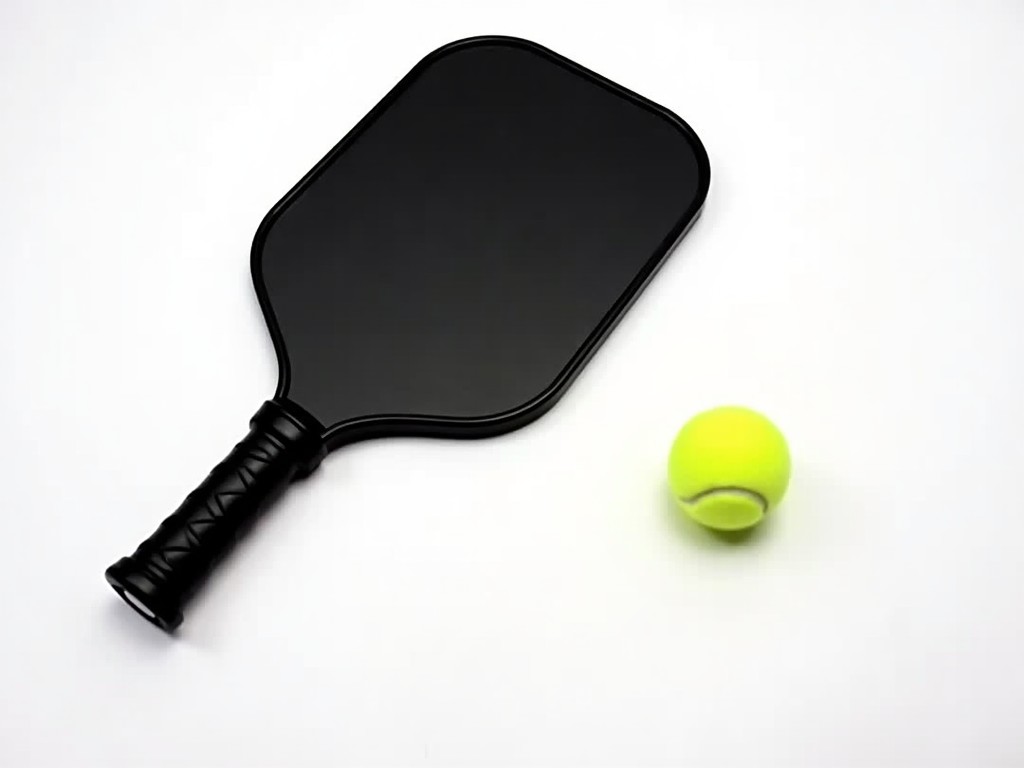
Custom Raw Carbon Fiber Pickleball Paddle Manufacturer
We produce pickleball paddles whose striking surfaces are made from unidirectional raw carbon fiber prepreg, allowing precise control over fiber orientation and resin content. This approach yields a
Custom Raw Carbon Fiber Pickleball Paddle Manufacturer
We produce pickleball paddles whose striking surfaces are made from unidirectional raw carbon fiber prepreg, allowing precise control over fiber orientation and resin content. This approach yields a laminate with high specific stiffness and low mass, which directly influences ball response and player maneuverability. Typical areal weight ranges from 120 to 180 gsm depending on layer count and thickness.
The raw finish leaves the fiber texture exposed, eliminating additional coating steps that could alter surface friction or add weight. Surface roughness is measured in the range of 10–20 µm Ra, providing consistent grip without compromising swing speed. Buyers can select the exact number of plies, layup angle, and core thickness to meet performance targets.
Material Properties
Carbon fiber tensile strength typically falls between 3,500 and 5,500 MPa, while modulus varies from 230 to 400 GPa based on fiber grade (standard, intermediate, high). The epoxy matrix contributes a shear strength of approximately 70 MPa and a glass transition temperature around 120 °C. These values are indicative; actual properties depend on the specific prepreg selected and curing cycle.
Density of the cured laminate is about 1.55 g/cm³, giving a high strength‑to‑weight ratio compared with traditional wood or composite paddles. Moisture absorption is less than 0.2 % after 24 h immersion, ensuring dimensional stability in varying humidity. Thermal expansion coefficient is close to 0.8 × 10⁻⁶ /K, minimizing warping under temperature fluctuations.
Manufacturing Process
Plies are cut to shape using CNC laser or die‑cut tools to maintain fiber alignment within ±2° tolerance. Layup is performed on a temperature‑controlled mold, with vacuum bagging applied to achieve a void content below 1 %. Cure cycles follow the prepreg manufacturer’s recommendations, typically 120 °C for 60 minutes under 0.8 bar pressure.
After demolding, edges are trimmed and the paddle face is inspected for surface uniformity. No additional painting or clear coat is applied unless requested, preserving the raw carbon fiber appearance and weight characteristics. Final dimensions are verified with a coordinate measuring machine to ±0.1 mm accuracy.
Customization Options
- Number of carbon fiber plies: 2 to 8, adjustable in increments of one.
- Layup angles: 0°, ±45°, 90°, or custom sequences for tailored flex.
- Core material options: polypropylene honeycomb, Nomex, or foam, thickness 6–16 mm.
- Edge guard materials: TPU, rubber, or none, with custom profiles.
- Grip size and shape: standard, enlarged, or tapered, with optional overwrap.
Each option influences measurable parameters such as swing weight, balance point, and vibration damping. For example, increasing ply count from 4 to 6 raises flexural rigidity by roughly 30 % while adding ≈4 g to total mass. Customers provide target values for these parameters, and we adjust the layup accordingly.
Performance Characteristics
| Property | Typical Value | Unit |
|---|---|---|
| Swing Weight (midpoint) | 180–220 | g·cm² |
| Balance Point from Handle End | 190–210 | mm |
| Natural Frequency (first bending mode) | 450–560 | Hz |
| Coefficient of Restitution (ball‑paddle) | 0.42–0.48 | — |
Values are presented as typical ranges; actual results vary with specific layup, core selection, and finish. All measurements follow ASTM F2270 for paddle dynamics where applicable.
Quality Control Philosophy
Each batch undergoes incoming inspection of prepreg for areal weight, resin content, and fiber alignment using optical microscopy and burn‑off testing. In‑process checks include vacuum pressure monitoring, temperature loggers, and post‑cure Tg verification via DMA. Final inspection comprises dimensional checks, surface defect grading (≤2 % visual defects allowed), and mechanical testing of three‑point flexural strength.
Statistical process control charts track key parameters such as void content and flex modulus; actions are triggered when values exceed ±2σ from the mean. Documentation includes traceability logs linking raw material lot numbers to each paddle’s serial identifier, supporting auditability for OEM clients.
Applications in Pickleball Equipment
The high stiffness‑to‑weight ratio of raw carbon fiber enables paddles that deliver rapid energy transfer during dinks and drives while reducing player fatigue over extended play. Because the surface lacks additional coatings, spin generation relies purely on texture and impact angle, offering a predictable feel preferred by advanced competitors.
Customizable balance points allow manufacturers to tailor paddles for specific playing styles: head‑heavy designs increase power for baseline shots, whereas handle‑biased configurations improve maneuverability for net play. The low thermal expansion ensures consistent performance across indoor and outdoor environments where temperature swings can reach 30 °C.
Request a Quote
To begin a custom paddle project, provide target values for swing weight, balance point, preferred core material, and any dimensional constraints. Our engineering team will respond with a feasible layup proposal, estimated tooling costs, and lead time.


