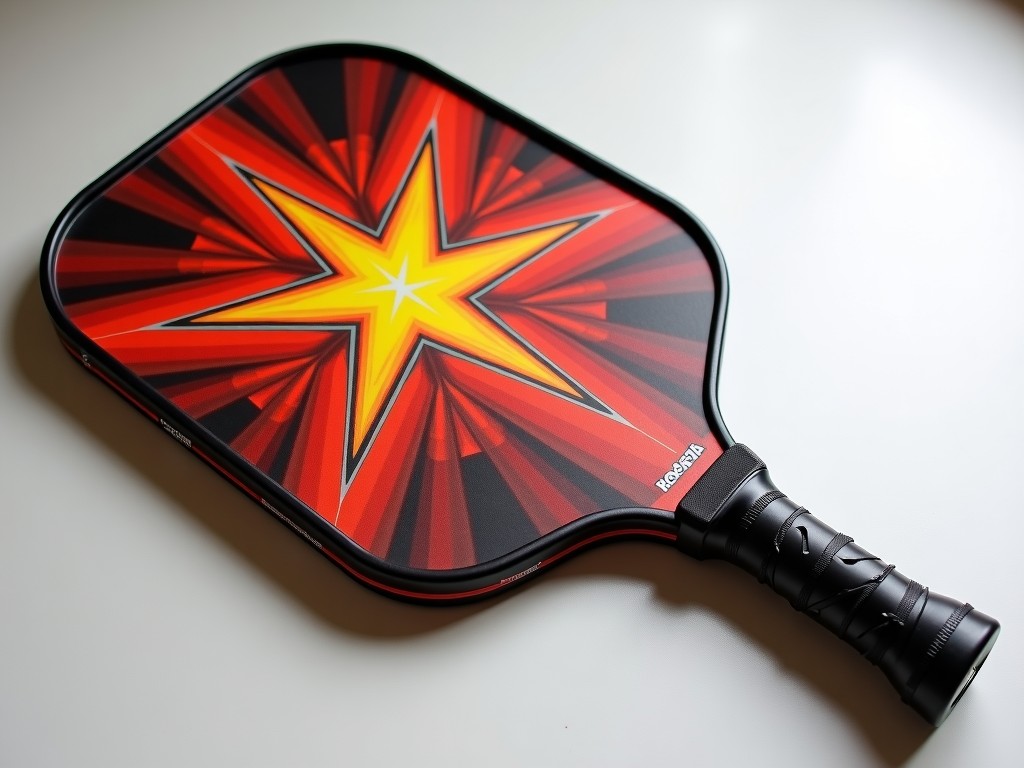
Custom Short Handle Pickleball Paddle Company
A short handle pickleball paddle reduces the distance between the gripping hand and the paddle face, which changes the moment of inertia and allows faster wrist action. This configuration is often
Custom Short Handle Pickleball Paddle Company
A short handle pickleball paddle reduces the distance between the gripping hand and the paddle face, which changes the moment of inertia and allows faster wrist action. This configuration is often selected by players who prioritize quick volleys and precise placement at the net. Engineers evaluate handle length, grip circumference, and weight distribution to achieve the desired swing speed and control balance.
Design & Engineering Considerations
Shortening the handle shifts the center of mass toward the paddle head, increasing head‑heavy bias. This bias enhances power on drives but requires careful counterbalancing to avoid excessive wrist strain. Finite‑element analysis is used to model vibration modes and ensure that the natural frequency stays outside the typical impact range of 150‑250 Hz, reducing the risk of arm fatigue.
Material Options
Core materials commonly include polypropylene honeycomb (density ~0.03 g/cm³), Nomex aramid honeycomb (density ~0.04 g/cm³), and aluminum alloy cores (density ~0.10 g/cm³). Face materials range from carbon fiber woven sheets (tensile modulus ~70 GPa) to fiberglass (modulus ~20 GPa) and graphite composites. The combination of core thickness (typically 10‑16 mm) and face lay‑up determines the overall paddle stiffness and rebound coefficient.
Customization Choices
- Handle length adjustable from 90 mm to 110 mm in 2 mm increments.
- Grip circumference offered in 100 mm, 105 mm, and 110 mm diameters.
- Weight tuning via internal weight plugs ranging from 5 g to 20 g.
- Surface texture options: smooth, light sand‑grain, or patterned for spin.
- Edge guard materials: TPU rubber, polyurethane, or none for weight savings.
- Color matching available through Pantone‑specified inks on the face laminate.
Performance Characteristics
| Parameter | Typical Range | Notes |
|---|---|---|
| Overall Length | 340‑360 mm | Includes handle and face |
| Weight | 190‑230 g | Adjustable with internal plugs |
| Balance Point (from handle end) | 190‑210 mm | Head‑heavy bias for power |
| Face Stiffness (flexural modulus) | 2.5‑4.0 GPa | Dependent on core/face combo |
| Rebound Coefficient (e) | 0.45‑0.55 | Measured per ASTM F1895 |
Applications in Play Styles
The reduced lever arm of a short handle enables quicker wrist snap, which benefits players who rely on fast exchanges at the non‑volley zone. Singles competitors often favor this geometry for its ability to generate sharp angles with minimal preparation time. In doubles, the configuration supports rapid net play while still providing sufficient mass for defensive blocks when the paddle is held in a backhand grip.
Quality Control Philosophy
Each paddle undergoes dimensional verification with a coordinate measuring machine (±0.1 mm tolerance on length and width). Mass is checked against target weight using a calibrated scale (±0.5 g). Dynamic balance is assessed via a pendulum test to ensure the center of mass falls within the specified range. Impact resistance is evaluated by dropping a 0.5 kg steel ball from 1 m onto the face; acceptable units show no delamination or crack propagation exceeding 2 mm.
Frequently Asked Questions
- Can the handle length be adjusted after production? – No, handle length is set during molding; however, interchangeable grip sleeves are available for fine‑tuning.
- What information is required for a quotation? – Desired handle length, grip size, core material, face material, target weight, and any cosmetic preferences.
- Which inspection standards are followed? – Dimensional checks per ISO 1101, weight per ASTM E8, and impact per internal protocol derived from ASTM F1895.
- How are samples arranged? – Sample paddles are produced within 7‑10 business days and shipped via express courier with tracking.
Ready to Discuss Your Requirements?
Our engineering team is prepared to review your performance targets and propose a paddle configuration that meets your specifications. To start the conversation, please use the contact form below or reach out directly via the provided link.
Submit Inquiry


