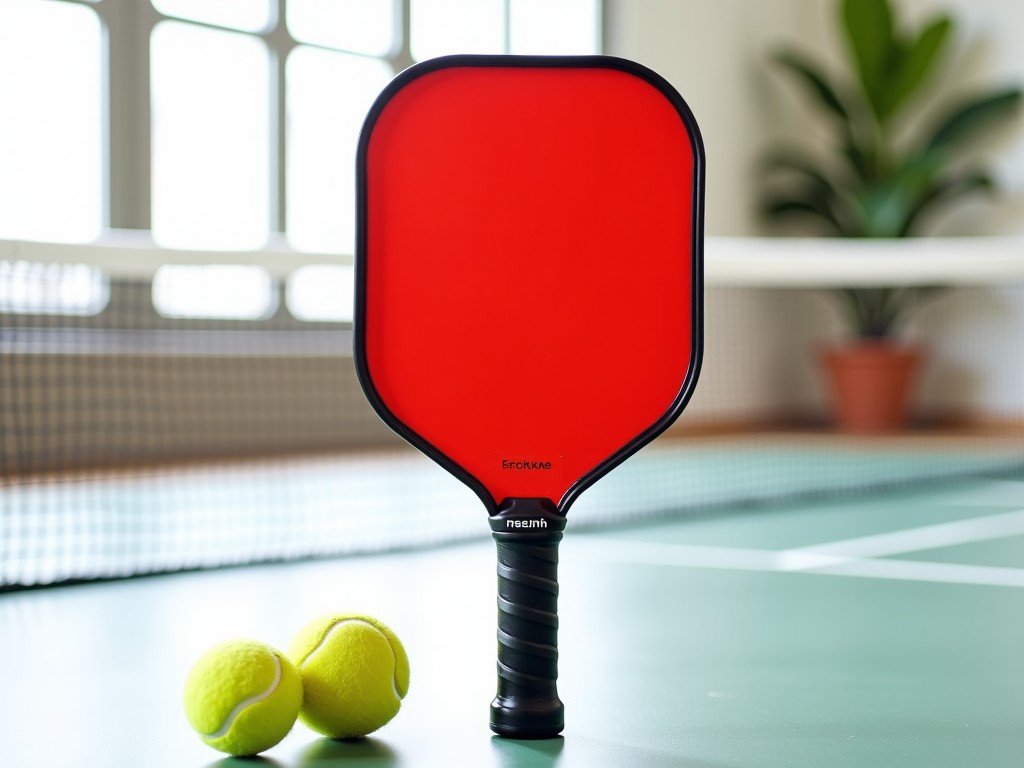
Direct Factory Adjustable Backyard Pickleball Net Company
The net system is engineered for quick installation on residential courts while maintaining tournament‑grade tension stability. A powder‑coated steel frame provides corrosion resistance suitable for
Direct Factory Adjustable Backyard Pickleball Net
Design Overview
The net system is engineered for quick installation on residential courts while maintaining tournament‑grade tension stability. A powder‑coated steel frame provides corrosion resistance suitable for outdoor exposure. All moving parts are sealed to prevent ingress of dust and moisture.
Frame Construction and Materials
Primary uprights consist of 2 mm thick cold‑rolled steel tubing with a yield strength of approximately 350 MPa. Cross‑braces use 1.5 mm tubing to limit lateral deflection under load. Joints employ reinforced gussets welded with continuous fillet welds to achieve a shear capacity exceeding 2 kN per connection.
- Frame finish: epoxy polyester powder coating, 80 µm average thickness, salt‑spray tested 500 hours.
- Ground anchors: hot‑dip galvanized steel stakes, 12 mm diameter, 300 mm embedment depth.
- All fasteners are grade 8.8 zinc‑plated bolts with nylon lock nuts.
Adjustment Mechanism
Height adjustment utilizes a dual‑pin sliding collar system integrated into each upright. Pins are hardened steel (HRC 55) with a 6 mm diameter, allowing incremental changes of 25 mm. A spring‑loaded detent ensures positive engagement and prevents accidental release during play.
Locking torque required to move the collar is approximately 12 Nm, providing sufficient resistance to withstand ball impact forces up to 150 N without slip.
Net Specifications
| Parameter | Typical Value |
|---|---|
| Mesh material | Polyethylene, UV‑stabilized, 1.2 mm diameter |
| Mesh opening | 45 mm square |
| Net height (adjustable range) | 915 mm to 1065 mm |
| Net width | 6100 mm (standard court) |
| Top cable tension | 180 ± 20 N (adjustable via turnbuckle) |
| Weight (complete system) | 22 kg |
Typical Applications
The adjustable net serves residential pickleball enthusiasts who require regulation height for competitive play and lower heights for youth or recreational sessions. Its portability also makes it suitable for multi‑use community centers where courts are converted for other sports.
- Home backyard courts needing quick height changes between adult and junior play.
- School physical‑education programs storing equipment in limited space.
- Temporary event installations where ground anchoring is required but permanent fixtures are prohibited.
Customization Options
Factory‑direct production allows modifications to frame dimensions, coating colors, and net material specifications without altering core mechanical design. Customers can request alternative mesh densities or reinforced edge tapes based on anticipated usage intensity.
- Frame length: adjustable from 5.5 m to 6.5 m to accommodate non‑standard court widths.
- Coating colors: RAL palette available upon request, with matching UV‑stable pigments.
- Net material: optional polypropylene multifilament for increased abrasion resistance.
- Accessory kits: includes portable wheel set, storage bag, and ground‑anchor variations.
Quality Control Process
Each frame undergoes dimensional inspection using coordinate‑measuring machines with a tolerance of ±0.5 mm on critical weld locations. Net tension is verified with a calibrated load cell before packaging. Visual inspection checks for coating uniformity, weld continuity, and fastener torque compliance.
Statistical process control monitors key parameters such as coating thickness and weld penetration, triggering corrective action if values deviate beyond established control limits (±2 σ).
Packaging and Shipping
Systems are packed in double‑wall corrugated cartons with internal polyethylene foam corners to protect frame ends. Nets are rolled on a rigid core and secured with biodegradable straps. Each package includes a printed assembly guide and a QR code linking to a video tutorial.
Palletized shipments use heat‑shrink wrap and corner boards, achieving a maximum stacking height of 1.2 m without deformation. Export containers are fitted with desiccant packs to maintain relative humidity below 50 % during transit.
Lead Time and Sampling
Standard production lead time is 15 working days after receipt of approved technical drawings and material specifications. Sample units can be dispatched within 5 working days, with sample costs credited against subsequent orders.
Customers receive a first‑article inspection report detailing critical dimensions, coating adhesion (ASTM D3359), and net tensile strength (ASTM D5035) prior to full‑scale production.
Frequently Asked Questions
- Can dimensions be customized? Yes, frame width and height adjustment ranges are adjustable per project requirements.
- What information is required before quotation? Required data includes desired court width, preferred net material, coating color, and any accessory needs.
- What materials are available for the net? Standard UV‑stabilized polyethylene; optional polypropylene multifilament or polyester blends.
- How is quality inspected? Dimensional CMM checks, load‑cell tension verification, coating adhesion testing, and visual weld inspection.
- What packaging methods are available? Standard carton with foam protection; optional wooden crating for high‑impact transport.
- How are export shipments protected? Desiccant packs, heat‑shrink pallet wrap, and corner boards to prevent moisture and mechanical damage.
- What is the typical production lead time? 15 working days for standard configurations; samples within 5 working days.
- How are samples arranged? Samples are shipped via express courier with tracking; costs are reimbursed upon order confirmation.
Contact for Technical Inquiry
For detailed specifications, customization requests, or to arrange a technical consultation, use the inquiry form below. Our engineering team will respond with a formal quotation and lead‑time confirmation within one business day.
Submit Technical Inquiry


