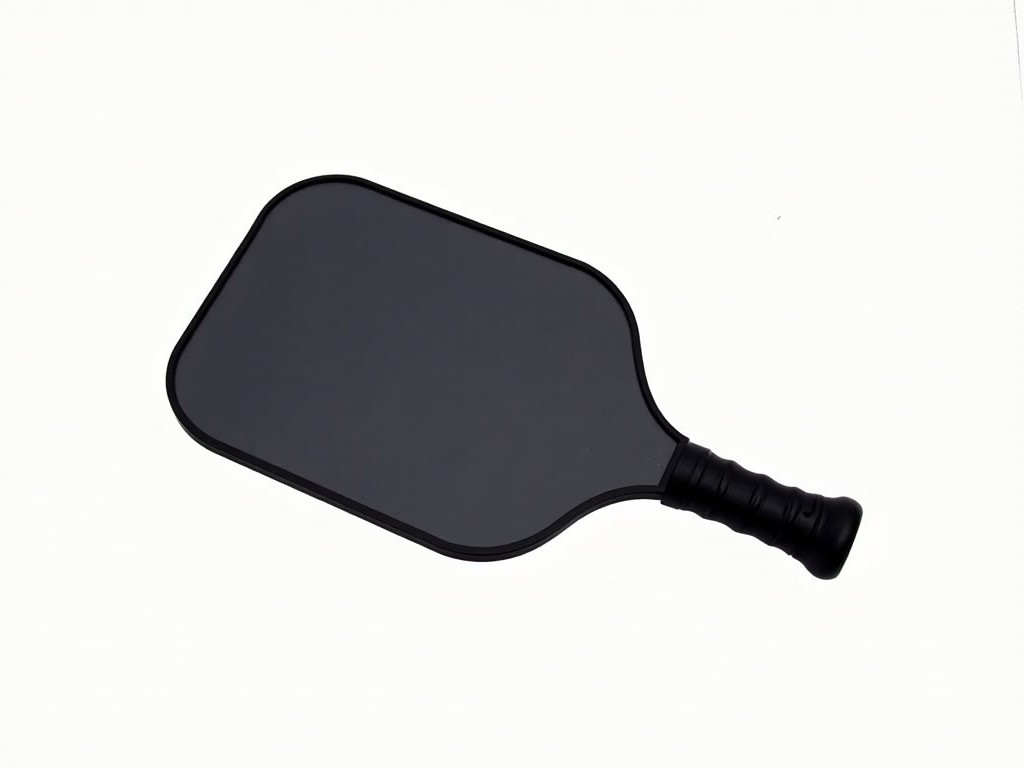
Direct Factory Durable Lightweight Pickleball Paddles Supplier
Procurement engineers evaluate paddle performance by examining core density, face material stiffness, and edge guard geometry. These parameters directly influence ball response, player fatigue, and
Direct Factory Durable Lightweight Pickleball Paddles Supplier
Procurement engineers evaluate paddle performance by examining core density, face material stiffness, and edge guard geometry. These parameters directly influence ball response, player fatigue, and product lifespan under repeated impact cycles.
Material Composition
The paddle face typically uses a carbon‑fiber reinforced polymer sheet with a nominal thickness of 0.8 mm, providing a tensile modulus around 70 GPa while keeping areal weight below 150 g/m². The core consists of a honeycomb polypropylene structure, cell size 6 mm, wall thickness 0.4 mm, delivering a compressive strength of approximately 0.4 MPa.
Edge guards are extruded from TPU with a Shore A hardness of 85, offering abrasion resistance and impact dampening without adding significant mass.
Mechanical Properties
| Property | Typical Value | Test Method |
|---|---|---|
| Face Flexural Modulus | 68 GPa | ASTM D790 |
| Core Compressive Strength | 0.42 MPa | ASTM D695 |
| Overall Paddle Weight | 210 ± 5 g | ISO 7211/1 |
| Swing Speed Tolerance | ± 2 % at 30 m/s | Internal dynamics test |
Dimensional Specifications
Standard paddle length measures 400 mm from tip to butt, with a width of 190 mm at the widest point. Face thickness varies from 0.8 mm to 1.2 mm depending on reinforcement layout, while overall thickness including core and edge guard stays under 25 mm.
Tolerance on length and width is held to ± 1 mm, ensuring consistent grip geometry across production batches.
Customization Options
- Face graphic printing using UV‑cured inks, registration tolerance ± 0.2 mm.
- Core cell size adjustment from 4 mm to 8 mm to tune power versus control characteristics.
- Edge guard profile selection: rounded, beveled, or reinforced rib designs.
- Handle grip circumference options: 100 mm, 105 mm, 110 mm with over‑wrap thickness 0.5 mm to 1.5 mm.
- Weight balancing kits: removable tungsten inserts up to 5 g for fine‑tuning swing weight.
Applications
Facilities requiring high‑volume paddle supply benefit from the low‑density core, which reduces shipping weight per unit by roughly 18 % compared with solid‑foam alternatives, lowering freight costs for regional distributors.
Indoor clubs appreciate the consistent surface roughness (Ra ≈ 1.2 µm) that minimizes ball skid, while outdoor courts gain from UV‑stabilized face coating that retains color integrity after 500 hours of accelerated weathering.
OEMs integrating paddles into training systems can specify embedded sensor cavities within the core, maintaining overall mass under 220 g while accommodating electronics up to 12 mm³ volume.
Quality Assurance
Each lot undergoes incoming material verification: fiber areal weight checked via ASTM D3776, honeycomb cell dimensions measured with laser micrometry, and TPU hardness confirmed with durometer readings.
In‑process controls include automated optical inspection of face alignment (± 0.1 mm) and ultrasonic thickness mapping of the core to detect voids larger than 0.5 mm.
Final validation consists of impact fatigue testing at 2 Hz for 10 000 cycles, with acceptable deflection change limited to 2 % of initial value.
Packaging & Logistics
Paddles are stacked in groups of six, separated by interleaved corrugated sheets with a flute height of 3 mm, then placed in double‑wall cartons rated for 25 kg burst strength.
Carton dimensions are 420 mm × 210 mm × 130 mm, providing a volumetric efficiency of 78 % for standard pallet configurations (1.2 m × 1.0 m).
For export shipments, desiccant packets (5 g each) and corner protectors are added, meeting ISPM‑15 wood‑free packaging requirements.
Frequently Asked Questions
- Can dimensions be customized? Yes, length, width, and thickness tolerances can be adjusted per project requirements; tooling changes may affect lead time.
- What information is required before quotation? Detailed drawing or spec sheet, desired face graphics, core cell size preference, order quantity, and delivery destination.
- What materials are available? Standard carbon‑fiber face, polypropylene honeycomb core, TPU edge guard; alternative faces such as glass‑fiber or aramid are offered upon request.
- How is quality inspected? Incoming material checks, in‑process optical and ultrasonic inspections, and final impact fatigue tests as described above.
- What packaging methods are available? Standard six‑pack cartons, bulk pallet packs, or custom crate solutions for oversized orders.
- How are export shipments protected? Desiccant, corner boards, and heat‑shrink wrapping comply with international shipping standards.
- What is the typical production lead time? Four to six weeks for standard configurations; custom designs may extend to eight to ten weeks depending on tooling.
- How are samples arranged? Sample paddles can be shipped within five working days after spec approval, with freight charges collect or prepaid as agreed.
Contact for Technical Inquiry
Engineers seeking detailed data sheets, CAD models, or sample evaluation kits should provide application specifics and required quantities.
Submit Inquiry


