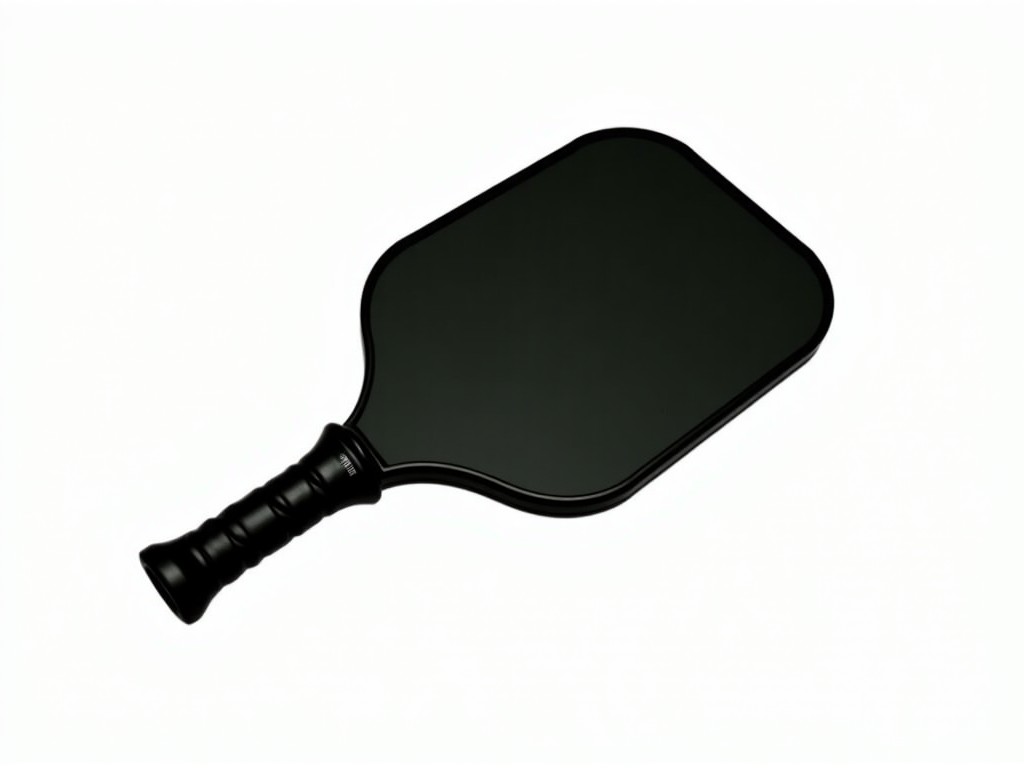
Direct Factory High Quality Carbon Fiber Pickleball Paddle Top Factory
Producing a pickleball paddle from carbon fiber involves selecting a resin system, fiber tow, and layup sequence that together determine stiffness, weight distribution, and impact resistance. The
Direct Factory Carbon Fiber Pickleball Paddle
Producing a pickleball paddle from carbon fiber involves selecting a resin system, fiber tow, and layup sequence that together determine stiffness, weight distribution, and impact resistance. The factory controls each step from raw material inspection to final trimming, allowing tight tolerances on dimensions and performance characteristics.
Material Composition and Layup
The paddle core uses unidirectional carbon fiber tapes impregnated with an epoxy resin rated for a glass transition temperature above 80 °C, providing a stable modulus under repeated impact. Outer layers incorporate a biaxial weave at ±45° to enhance torsional stiffness and reduce face deformation during off‑center hits.
A typical layup consists of three layers: a 0°‑oriented inner layer for longitudinal strength, a ±45° biaxial middle layer for shear resistance, and an outer 0° layer that contributes to surface hardness. The total laminate thickness is calibrated to achieve a target face stiffness while keeping overall mass within the desired range.
Dimensional and Mechanical Properties
Key performance indicators are measured on finished paddles using standardized fixtures: mass, balance point, swing weight, and flexural stiffness. These values guide players in selecting a paddle that matches their swing speed and control preferences.
| Parameter | Typical Range | Measurement Method |
|---|---|---|
| Mass (g) | 210–240 | Precision scale (±0.1 g) |
| Balance point from butt (mm) | 190–210 | Balancing beam |
| Swing weight (kg·cm²) | 95–115 | Pendulum method |
| Flexural stiffness (N·mm²) | 1.2–1.6×10⁶ | Three‑point bend test |
Customization Options
Factory‑direct production enables adjustment of several design variables without changing the core manufacturing line. Each option is discussed in terms of its effect on the measurable properties listed above.
- Weight tuning: adding or removing thin carbon fiber plies shifts total mass by 5–15 g while preserving balance point.
- Grip circumference: offered in 3.5 in, 3.75 in, and 4.0 in diameters, each with a polyurethane over‑wrap that adds ≤2 g.
- Face shape: standard widebody, elongated, or teardrop profiles alter swing weight by ±8 kg·cm².
- Edge guard thickness: 1.0 mm to 2.0 mm TPU strip influences edge impact resistance and adds 0.5–1.2 g.
- Surface finish: matte or gloss UV‑cured coating affects coefficient of friction (0.2–0.4) and does not change structural stiffness.
Quality Control Philosophy
Inspection begins with incoming fiber tow areal weight and resin viscosity checks, continues with in‑process ply orientation verification using a laser‑based layup monitor, and ends with final product testing. Each paddle undergoes dimensional measurement (±0.2 mm tolerance), mass verification, and a low‑velocity impact test to confirm no delamination.
Statistical process control charts track key parameters such as laminate thickness and flexural stiffness; any batch exceeding the defined control limits triggers a root‑cause review before release.
Applications in Pickleball Play
The high specific stiffness of carbon fiber allows a thinner face that transmits less vibration to the hand, reducing fatigue during extended rallies. Combined with a balanced swing weight, the paddle offers quick maneuverability for net play while retaining sufficient power for baseline drives.
Players who prioritize control benefit from the consistent flex response across the face, which minimizes hot spots and provides predictable ball rebound angles. The durability of the carbon‑fiber/epoxy system resists cracking from repeated ball impact, extending service life compared with traditional glass‑fiber composites.
Ordering, Samples, and Lead Time
Minimum order quantity starts at 50 units for a custom configuration; sample paddles are produced within 7–10 business days after receipt of technical specifications. Production lead time for a full order ranges from 18 to 25 days, depending on selected options and current factory load.
To initiate a quotation, provide the desired weight range, grip size, face shape, and any required branding or packaging details. The factory will return a detailed cost sheet, lead‑time confirmation, and sample availability schedule.


