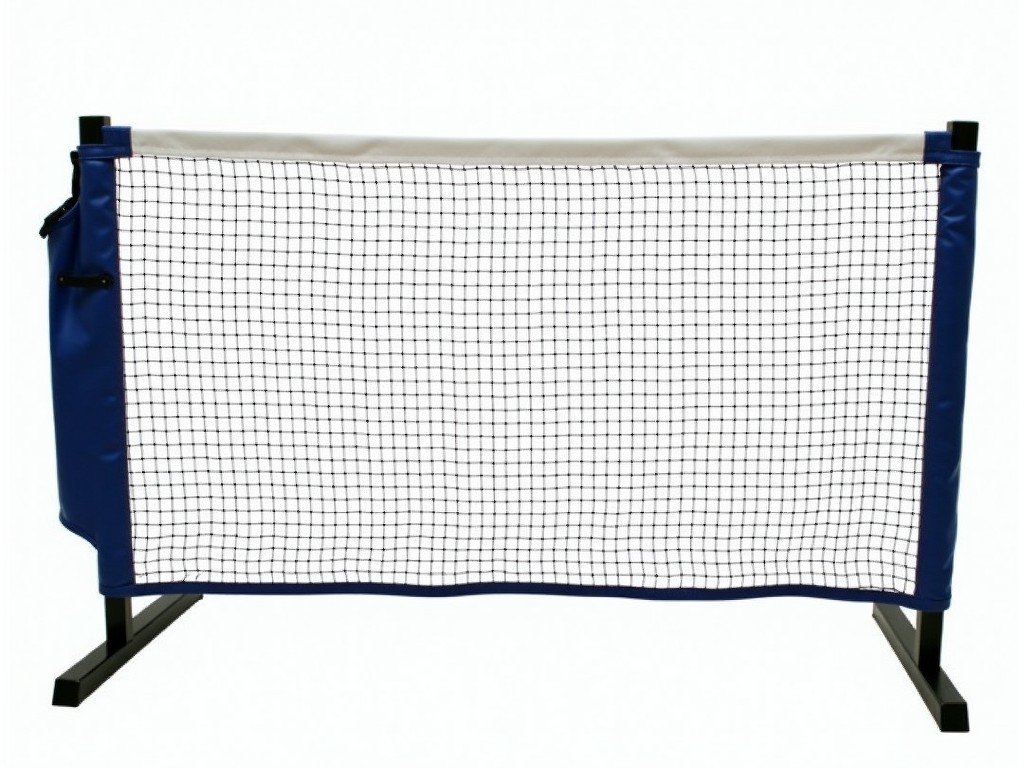
Direct Factory Portable Pickleball Net Supplier
A portable pickleball net system provides a regulated playing surface that can be assembled and disassembled without permanent installation. Supplying directly from the factory eliminates
Direct Factory Portable Pickleball Net
A portable pickleball net system provides a regulated playing surface that can be assembled and disassembled without permanent installation. Supplying directly from the factory eliminates intermediary handling, reduces lead time, and allows dimensional or material adjustments to match specific venue requirements.
Design and Materials
The frame utilizes 6063‑T5 extruded aluminum alloy with a wall thickness of 1.2 mm, providing a tensile strength of approximately 210 MPa while keeping the total mass under 14 kg. All exposed surfaces receive a clear anodize coating (minimum 12 µm) to resist corrosion in outdoor environments.
The netting is constructed from UV‑stabilized high‑density polyethylene (HDPE) filaments, woven into a 45 mm square mesh. The material exhibits a break strength of 280 N per strand and retains >90 % of its original tensile capacity after 500 hours of accelerated UV exposure (ASTM G154).
Connection hardware consists of stainless‑steel quick‑release pins (A2‑70) and powder‑coated steel tension ratchets rated for 250 N·m torque, ensuring consistent net tension across temperature ranges from ‑10 °C to +45 °C.
Dimensions and Performance
| Parameter | Typical Value | Tolerance |
|---|---|---|
| Overall Width (between posts) | 6.10 m (20 ft) | ±10 mm |
| Net Height at Sideline | 0.914 m (36 in) | ±5 mm |
| Net Height at Center | 0.864 m (34 in) | ±5 mm |
| Total System Mass | 13.8 kg | ±0.5 kg |
| Wind Rating (steady) | 15 m/s (34 mph) | – |
Setup and Deployment
Each pole incorporates a telescopic section with three locking positions, enabling rapid height adjustment without tools. The quick‑release pins engage in under two seconds per joint, and the tension ratchet achieves target net tension in approximately 30 seconds.
Stability is enhanced by optional weighted bases (up to 4 kg each) that attach via a quarter‑turn bolt, increasing resistance to lateral gusts without altering the net geometry.Applications
Quality Control and Testing
Load testing applies a static 150 N force uniformly across the net surface for five minutes; deflection is measured to ensure it remains below 12 mm, indicating adequate tension retention.
Customization Options
Packaging and Logistics
For export shipments, cartons are stacked on ISPM‑15 compliant pallets, wrapped in 80 µm stretch film, and fitted with corner protectors. Moisture barrier bags are included when destination humidity exceeds 70 % RH.
Frequently Asked Questions
Can dimensions be customized to match non‑standard court sizes?
What information is required before a quotation is issued?
Which materials are available for the frame and netting?
How is quality inspected before shipment?
What packaging methods protect the product during long‑haul transport?
Contact for Technical Inquiry
Submit Inquiry


