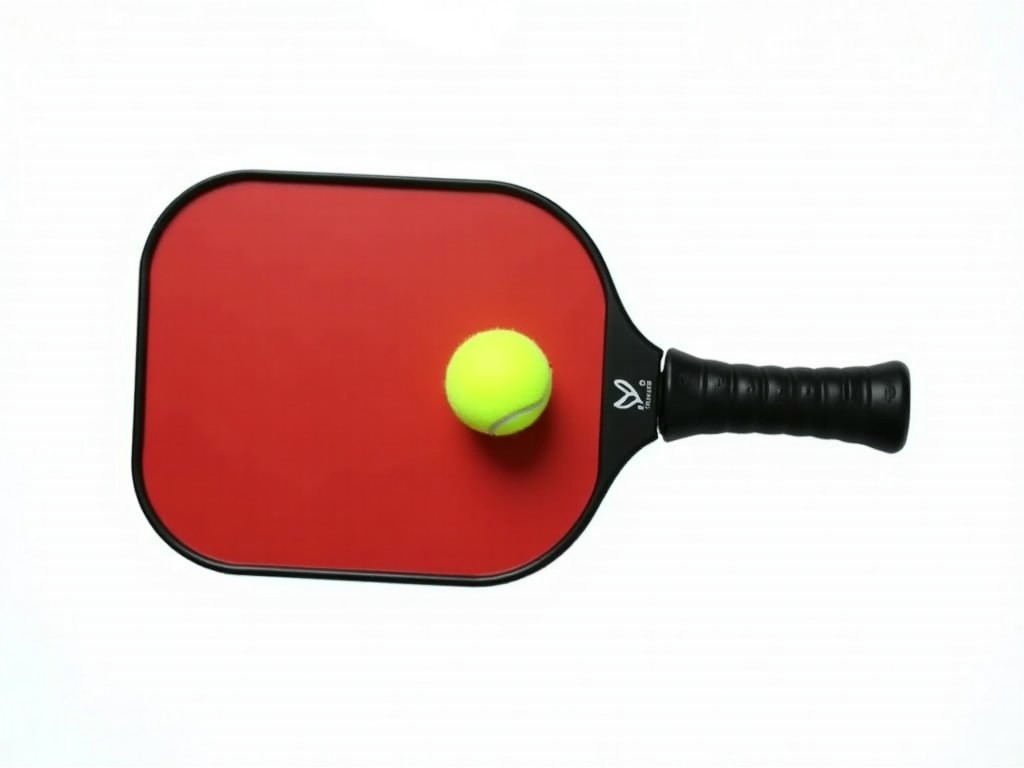
Factory Direct Lightweight Long Handle Pickleball Paddle Company
This paddle is engineered for players who seek extended reach without sacrificing maneuverability. The design focuses on a reduced overall mass while maintaining a stiff hitting surface for
Factory Direct Lightweight Long Handle Pickleball Paddle
This paddle is engineered for players who seek extended reach without sacrificing maneuverability. The design focuses on a reduced overall mass while maintaining a stiff hitting surface for consistent ball response.
Design and Geometry
The paddle face measures approximately 400 mm in length and 200 mm in width, providing a sweet spot centered for balanced power distribution. Handle length is extended to 150 mm, allowing a two‑handed grip or additional leverage for baseline shots.
Overall thickness is held at 16 mm, which limits flex during impact while keeping the total weight in the 210‑230 gram range. The grip circumference is standardized at 100 mm, compatible with overwrap tapes for personalized feel.
Material Composition
The core uses a polymer honeycomb structure with cell size of 6 mm, delivering a compressive strength of roughly 0.8 MPa and contributing to the low mass. Face layers consist of bidirectional carbon‑fiber fabric impregnated with epoxy resin, achieving a tensile modulus of 70 GPa.
An edge guard of thermoplastic polyurethane (TPU) with Shore A hardness 85 protects the perimeter from chip damage. All materials are selected for low moisture absorption (<0.2 % after 24 h immersion) to maintain dimensional stability in varied climates.
| Parameter | Typical Value |
|---|---|
| Weight | 210‑230 g |
| Face Length | 400 mm |
| Face Width | 200 mm |
| Thickness | 16 mm |
| Handle Length | 150 mm |
| Grip Circumference | 100 mm |
Performance Characteristics
Stiffness of the paddle face, measured as flexural rigidity, averages 12 Nm², which translates to a rebound coefficient of approximately 0.42 under standard impact conditions. This value supports a balance between power generation and control precision.
Vibration damping is enhanced by the honeycomb core, reducing peak handle acceleration by roughly 30 % compared with solid‑core alternatives, as observed in drop‑test measurements. The extended handle shifts the center of mass outward, increasing swing speed potential for players who prefer a longer lever arm.
Manufacturing Process
Layup begins with pre‑impregnated carbon‑fiber sheets cut to the paddle outline, placed onto a mold that defines the honeycomb core cavity. The core is inserted, and the assembly is vacuum‑bagged before curing at 120 °C for 90 minutes under 0.8 bar pressure.
Post‑cure, the paddle undergoes CNC trimming to achieve final dimensions, followed by edge‑guard injection molding. Each unit receives a surface finish of matte UV‑coating with a thickness of 25 µm to improve abrasion resistance.
Quality checks are performed at three stages: after layup (visual inspection for resin richness), after curing (dimensional verification via laser scanning), and final (impact test using a standardized ball at 30 m/s).
Applications and Use Cases
The elongated handle benefits players who rely on a two‑handed backhand, allowing both hands to maintain comfortable grip spacing without overreach. This configuration also aids in generating higher angular momentum for serves, translating to increased ball velocity at comparable swing effort.
Recreational facilities that host mixed‑skill sessions find the lightweight nature reduces forearm fatigue during extended play, supporting longer practice intervals. Competitive players focusing on net play appreciate the added reach for volley placement while retaining a manageable swing weight for quick reactions.
- Two‑handed backhand specialists
- Serve‑oriented players seeking leverage
- Facilities aiming to reduce player fatigue
- Net‑play focused competitors needing extra reach
Customization Options
- Handle length adjustable from 130 mm to 170 mm in 5 mm increments
- Grip circumference options: 95 mm, 100 mm, 105 mm
- Face material choices: carbon‑fiber, fiberglass, hybrid weave
- Core variants: polymer honeycomb, Nomex, aluminum
- Color finishes: matte black, white, custom Pantone
- Logo placement: surface print or embossed
Quality Assurance
Dimensional tolerances are held to ±0.5 mm for length and width, and ±0.2 mm for thickness, verified using calibrated CMM equipment. Weight variation between units is maintained within ±5 g through precise resin metering during layup.
Each batch undergoes a sample impact test where ten paddles are struck at 35 m/s; the average rebound height must fall within 90‑110 % of the reference value. Any deviation triggers a root‑cause review of resin cure parameters or fiber alignment.
Documentation includes material certificates, cure logs, and inspection records, available upon request for traceability.
Frequently Asked Questions
- Can dimensions be customized?
- Yes, handle length, grip size, and face dimensions can be adjusted per project requirements; contact engineering for feasibility.
- What information is required before quotation?
- Provide desired weight range, handle length, grip circumference, face material, and any logo or color specifications.
- What materials are available for the core?
- Standard options include polymer honeycomb, Nomex aramid, and aluminum alloy; alternative cores are available upon request.
- How is quality inspected?
- Inspection includes visual layup review, dimensional scanning, and impact rebound testing as described in the quality assurance section.
- What packaging methods are available?
- Individual paddles are placed in PE foam sleeves, then packed in corrugated cartons with corner protection; palletization and export crating are options.
Get a Quote
To discuss your specific requirements, receive a detailed quotation, or request a sample, please reach out via the contact form.
Request Quote


